
Related videos:
A dramatic citizen report shared on Facebook by journalist Mario J. Pentón has once again highlighted the severe decline of social assistance mechanisms in Cuba.
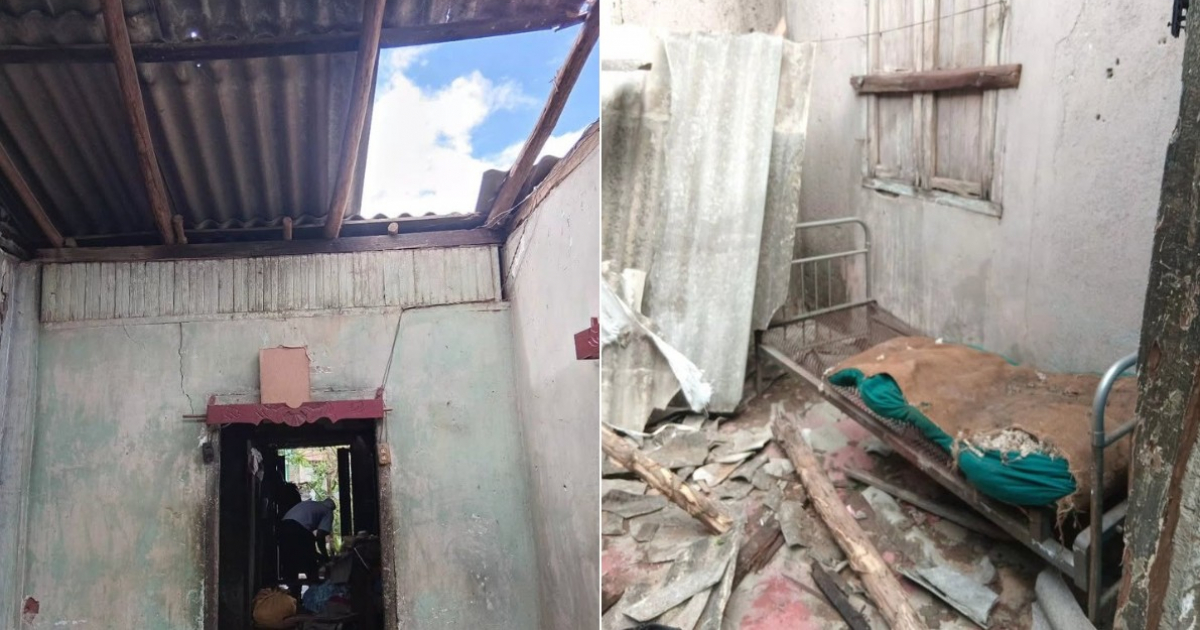
It is about an elderly woman who recounts the dire situation in which she and her family survive after losing their home due to Hurricane Melissa, and to date, they have not received any assistance from the authorities.
The 73-year-old woman with multiple health issues explained that on December 2, her daughter, who has a mental disability, gave birth to a baby girl who was born underweight.
Since then, the family has been facing an extremely vulnerable situation.
In order to care for her daughter's pregnancy, the complainant had to leave her job, which further exacerbated the economic instability of the family unit.
The affected individual reported that their home was destroyed after the passage of Cyclone Melissa, but despite the months that have passed, they have not received any assistance for the repair of the property.
According to what was explained, he does not yet have legal ownership of the house, a process that has been ongoing for three years without completion.
This administrative situation, which is not her fault, has left her out of the assistance programs. Since she does not have the technical documentation for the house, the authorities are denying her access to construction materials.
The woman claims that she is physically and emotionally exhausted after multiple unsuccessful attempts to engage with state institutions, without receiving any concrete responses.
"I am tired and worried about living with the risk of my granddaughter suffering from colds or other types of illnesses, as we are currently living outdoors, exposed to the sun and the chill of the night," she concluded.
The testimony sparked a wave of reactions on social media, where many users harshly criticized government inefficiency and the lack of institutional sensitivity.
Several people lamented the indifference with which donations and resources intended for those affected by natural disasters are managed.
Others pointed out that, in the absence of official solutions, many Cubans see social media as their only way to receive assistance from abroad.
Some internet users also reported corruption in the distribution of construction materials, claiming that these end up in the hands of those who can afford to pay high prices, while truly needy families are left sidelined due to bureaucratic obstacles.
Severe comments characterized the situation as a reflection of institutional collapse, state abandonment, and the loss of ethical values in the public care system.
The case once again puts the government’s response to natural disasters under scrutiny, highlighting the slow processes for legalizing housing and the unequal access to essential resources, in a context where entire families survive in extreme conditions without effective state protection.
Filed under: