
Related videos:
As is customary at this time of year, the Cuban regime has promoted year-end agro-commercial fairs in the country, presenting them as a demonstration of concern for the well-being of the population.
However, for many Cuban families, these fairs once again highlight the gap between official propaganda and the harsh daily reality, marked by constant blackouts, high prices, and low-quality products.
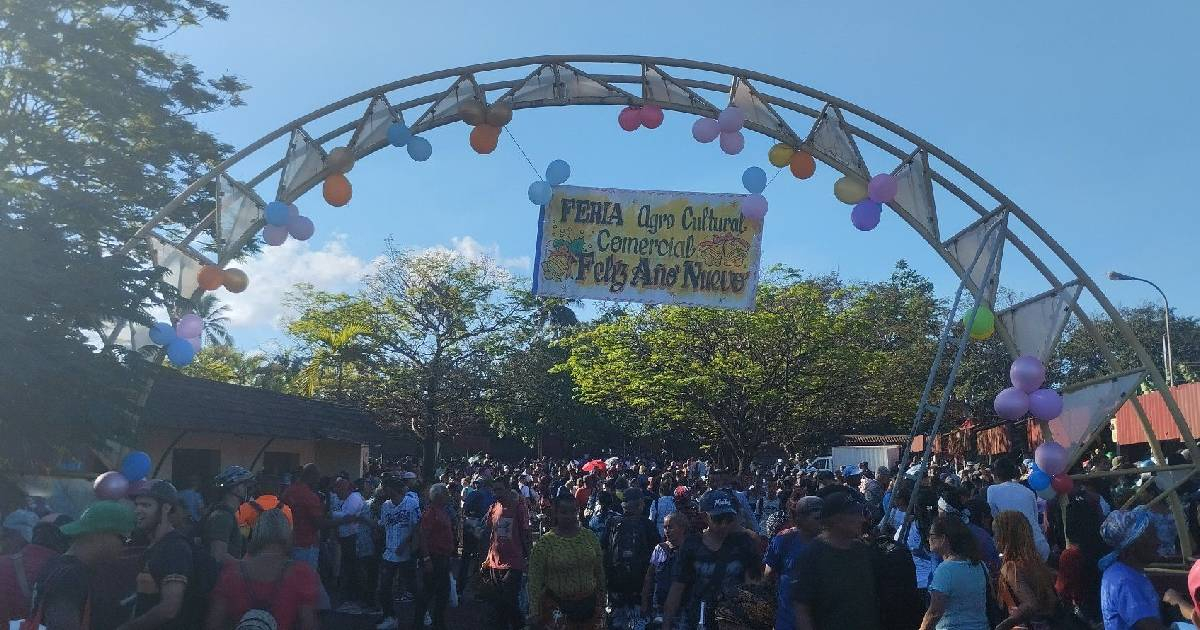
In provinces such as Holguín, Camagüey, and Las Tunas, authorities and state media have highlighted the massive turnout of people, the variety of offerings, and the festive atmosphere. However, behind the images and optimistic headlines, consumers report that a significant portion of the products sold fail to meet minimum quality standards, with repeated instances of "meat" that are, in fact, bones, spoiled vegetables, and food in poor condition.
Multitudes, but without real options
In Holguín, a crowd gathered at the End of Year Agro-Commercial Fair in the 26 de Junio neighborhood, according to a post on Facebook by user Camilo Velazco.
Although the prices were presented as "lower than other establishments," they remain inaccessible compared to the actual purchasing power of the population, especially for retirees, state workers, and families relying on salaries in Cuban pesos.
The presence of state-owned companies, cooperatives, and cultural activities does not mask the fact that many attendees come not out of abundance, but out of desperation, seeking any option to complete the traditional year-end meal.
Organization without quality food
In Camagüey, the official journalist Luis Naranjo highlighted the efforts of "organization and preparation" for the fair, as well as the compliance with economic indicators by the UEB Fruta Selecta.
However, administrative efficiency does not translate into sufficient or quality food, while the population continues to face prolonged blackouts that make it difficult to even cook what little they manage to buy.
"Affordable prices" only in rhetoric
In Las Tunas, the fair was promoted as a space with "more affordable" prices and a variety of products, reported the internet user Katy Baez.
However, some users commented that prices continue to be high in relation to incomes, and that the quality of food leaves much to be desired.
For many families, attending these fairs means spending a large portion of their monthly salary on products that barely cover one meal, all while enduring hours without electricity, without water, and struggling to preserve food.
Festivals as a political showcase
Beyond their commercial function, these fairs serve a clear role as a political backdrop, especially on symbolic dates such as New Year's and the anniversary of the Triumph of the Revolution. The regime attempts to project an image of management, stability, and social concern, while avoiding addressing the structural causes of the food crisis.
The repetition of the model —occasional fairs, scarce products, and poor quality— does not solve the underlying issue: the collapse of the productive and distributive system, uncontrolled inflation, and the complete loss of purchasing power of the Cuban peso.
For Cubans, the year-end fairs no longer symbolize celebration but rather serve as another reminder of hardship, where propaganda attempts to fill the void left by shortages in markets and on household tables.
Filed under: