
Related videos:
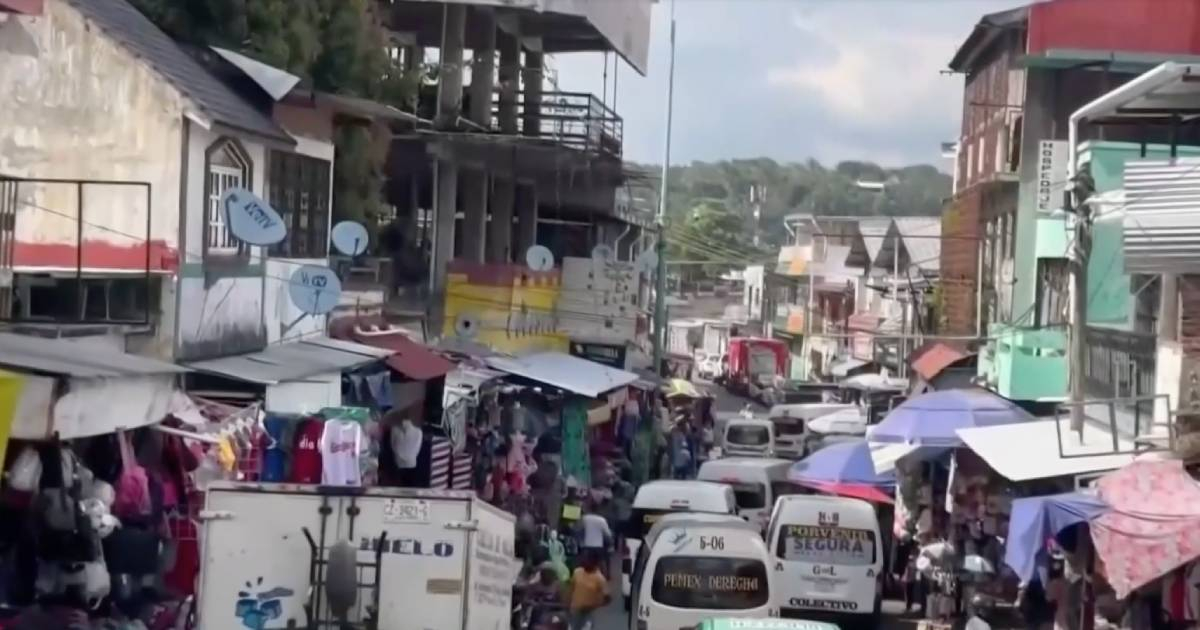
Activists and humanitarian organizations warn that hundreds of migrants are surviving in precarious conditions in Tapachula, on Mexico's southern border, after being deceived with false promises of work and stability.
Authorities and the Catholic Church have expressed concern about the increase of large settlements in parish areas of the city, where migrants from Central America and the Caribbean are concentrated.
Many claim they were convinced to travel to Tapachula with the idea of finding work, but upon arrival, they face enormous difficulties accessing basic services, housing, and documentation, reported the channel Telemundo.
"They are told that this is a good place to work, but that's not the case. Here, they suffer from hunger, diseases, and a lack of opportunities," warned a resident of the area.
Another phenomenon happening in that city in the Mexican state of Chiapas is that many migrants, especiallyCubans, have gone missing in recent months.
The day before, several social media posts recalled that more than twelve months have passed since around 40 migrants—mostly Cubans, but also from Honduras and Ecuador—disappeared off the coast of the Mexican state of Chiapas, with no clear answers from the authorities regarding their whereabouts.
Another report indicates that at the southern border, hundreds of migrants are also living trapped, many of them for over a year, unable to move north due to Donald Trump's immigration policy, nor return.
"These dates are very tough; many are on the streets or in immigration stations, without food or means to celebrate," said América Pérez from the Jesuit Refugee Service (JRS) in Tapachula.
Amin Sánchez Hernández, a Honduran migrant who has been living in Tapachula for two years, told the EFE agency that she has adjusted, although she acknowledges the difficulties: “I’m with my son, I’ve gotten used to it, but it’s not easy. There isn’t much work here, and prices are high.”
Another woman, María Mercedes, also Honduran, spends Christmas with her children and her partner in a shared room with other families. "Being away from family is the hardest part. One tries to be strong for the kids," she stated.
Carmen, a Cuban migrant, lamented that discrimination and mistreatment worsen the situation. "There is a lot of discrimination in Mexico. We fight to be accepted, but without papers or a job, everything becomes more difficult," she explained.
Filed under: