
Related videos:
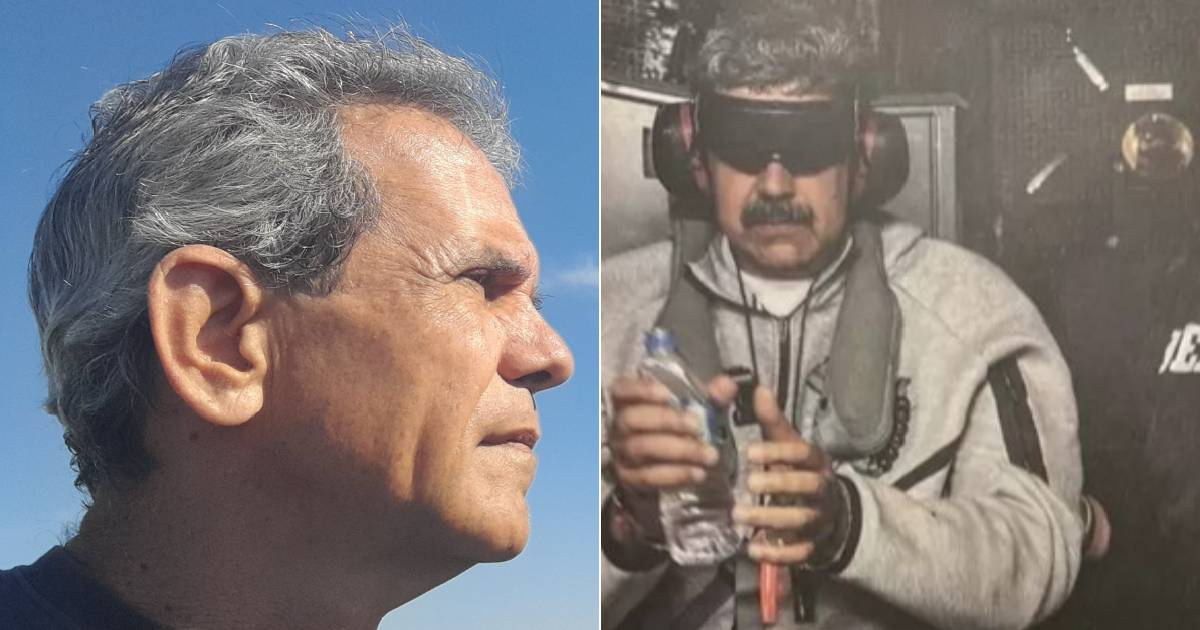
A reflection by Cuban writer Jorge Fernández Era on the capture of President Nicolás Maduro this Saturday by U.S. forces sparked an intense debate among Cubans, labeling the operation as a terrorist act and questioning the decision of a foreign power regarding the fate of Venezuela.
In a post titled Quick Ink, published on his Facebook profile, Fernández Era condemned the military operation by the United States that culminated in the capture of Nicolás Maduro, characterizing it as a terrorist act carried out by a government that acts as if it is the "owner of the world."
The author argued that, even in the case of a dictator, it is up to Venezuelans to determine their political fate and not to foreign intervention.
Fernández Era argued that this is not a new precedent, but rather a historical practice of American imperial power, and questioned the epic narrative built around the operation.
In his view, the absence of a visible military response from Venezuelan forces and the ease with which the capture occurred reinforce the idea of an impunity that is profoundly humiliating for the country's sovereignty.
The text also criticized what it defined as irresponsible propaganda about a "brave and unyielding people," warning of the risk of legitimizing external violence under the guise of overthrowing dictatorships.
"One cannot add shine to the boot that may one day crush you," she concluded.
In a similar vein, Cuban comedian Ulises Toirac criticized the armed action that led to the capture and transfer of Maduro to New York.
Reactions were swift. Numerous commentators emphatically disagreed, pointing out that demanding an unarmed and repressed people to overthrow a dictatorship on their own amounts to an abstract ethical stance, disconnected from the reality of totalitarian regimes.
Several users recalled that in Venezuela all internal avenues—elections, protests, institutions—were closed off, and that the opposition was imprisoned, exiled, or silenced.
Others defended the intervention as the only possible solution after years of repression, electoral fraud, and systematic human rights violations, and described the capture of Maduro not as invasion, but as liberation.
Some even took an openly pragmatic approach: the alternative, they said, was the indefinite continuation of the dictatorship.
There were also voices that, while not agreeing with Fernández Era, defended his right to express a dissenting opinion, emphasizing that a future democratic Cuba will need to learn to coexist with opposing viewpoints without moral lynchings.
The exchange revealed a deep rift in the Cuban debate, between the principled rejection of any foreign intervention and the conviction that certain regimes only fall through force.
A discussion that, beyond Venezuela, inevitably leads to the uncomfortable question that many have raised in the Cuban context itself.
Filed under: