
Related videos:
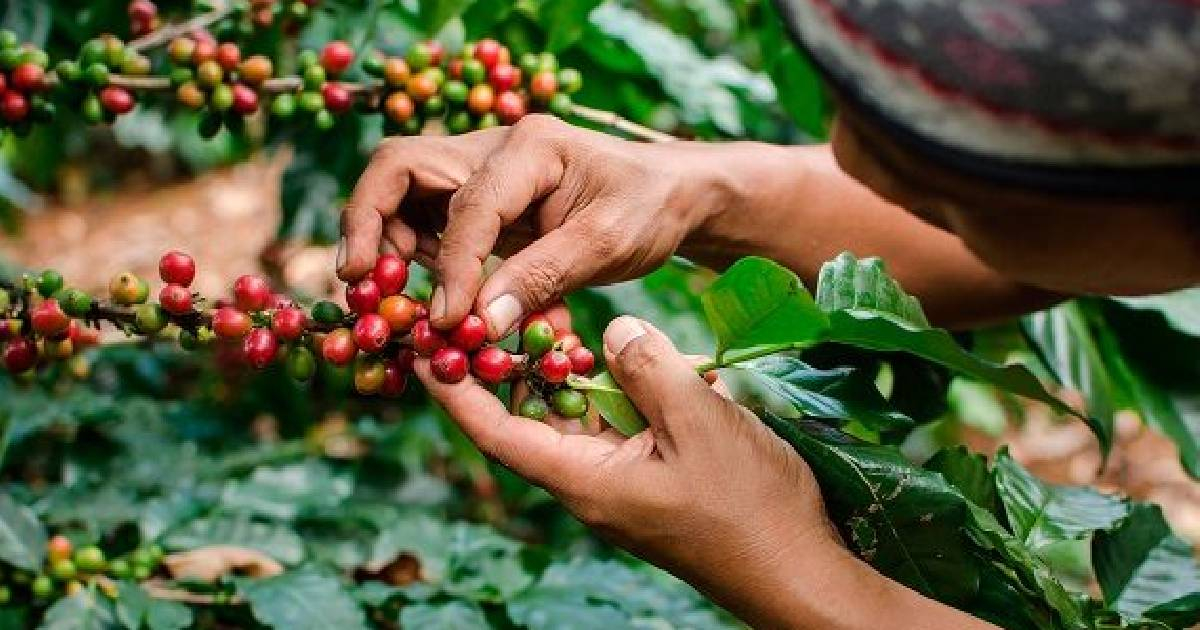
Small coffee growers in the border region of Tapachula, in the Mexican state of Chiapas, claim that Cuban, Venezuelan, and Haitian migrants have become essential to saving the coffee harvest due to the nearly complete disappearance of the local and Guatemalan workforce.
Coffee cultivation is going through one of its most challenging stages due to a lack of labor, a phenomenon linked to the ongoing migration of young people to major cities in Mexico and the United States.
As a result, many coffee-growing communities have become populated almost exclusively by women and elderly individuals.
In this context, coffee producers in southern Mexico have increasingly had to rely on migrants from Haiti, Cuba, and Venezuela to keep the harvest going, highlighted a report by the news agency EFE.
Roberto Tomasini Pérez, a robusta coffee producer, explained that this year it was especially difficult to find Mexican or Guatemalan workers willing to work in the fields.
In that context, the inclusion of Haitian, Cuban, and Venezuelan migrants shifted from being marginal to becoming a central component of the harvest.
“It went from being minimal to being highly representative. We started with 10, which represented 50%, then there were 20, and after that, 30. We transitioned from Central American labor, Guatemalan workers, to Haitians, Cubans, and Venezuelans,” he noted.
Tapachula, the largest city on the southern border of Chiapas, is part of one of the main coffee-growing regions in the country.
According to producers' estimates, between 95% and 100% of the traditional workforce is no longer available, which has forced a redefinition of the labor dynamics within the sector.
Nara Irasema Pérez, a coffee farmer in the area, acknowledged that the integration of migrant workers has not been without challenges, both due to the language barrier and the differences in cultivation techniques. However, she emphasized that their contribution is essential to advancing production.
"It can't be the same as with the Guatemalans, who are already accustomed. They expect a crop like in Brazil, where a lot is harvested, but here the production is smaller and they have to learn as they go," he explained.
From the workers' perspective, the fields represent an opportunity. Zacarías, a Haitian migrant working in the highlands of Tapachula, stated that dozens of migrants are involved in the cleaning, cutting, and drying of coffee.
"There is work and food here. I like to work; we must find a way, we are warriors," he stated.
The scenario unfolds in a context where Mexico has ceased to be solely a transit country and has also become a migration destination, following the tightening of immigration policies in the United States since the return of Donald Trump to the White House in January 2025.
For many migrants, the priority now is to regularize their status and establish themselves in the country, while sectors such as coffee farming increasingly depend on their labor for survival.
Filed under: