
Related videos:
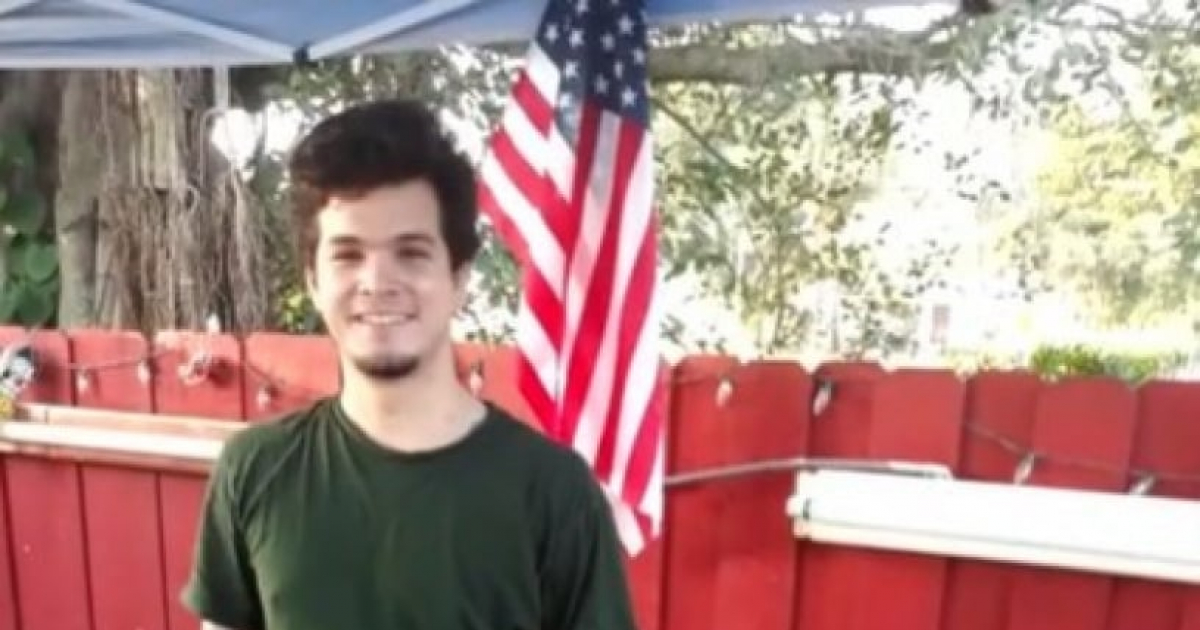
A Cuban content creator known to his audience as "El Oski" went from proudly declaring himself a supporter of Donald Trump to admitting that he now lives in fear and faces legal uncertainty that he did not foresee.
In an interview with Local 10 News, the young man shared that his admiration for the president was so strong that he even tattooed his image on his chest, a commitment that - as he recounted - required three sessions of about four hours each.
"I was very excited about Trump at that time," he recalled.
That enthusiasm, however, began to fade as the enforcement of immigration laws intensified across the country. "I'm afraid," he says, acknowledging that he and many of his compatriots remain exposed to the possibility of deportation.
El Oski is among the hundreds of thousands who entered the United States through the southern border and were released with an I-220A document, which does not guarantee legalization in the country.
That was in 2019. He was convinced that by now, Trump would have helped Cubans like him to regularize their status. But "it's been quite the opposite," he asserted.
"This is not what you expected. It's not what I expected," lamented the young man, who feels trapped "in limbo."
Even so, he said that he does not regret the tattoo and remains hopeful that everything will turn out well.
Between hope and fear, her story encapsulates the dilemma of a community that bet on leadership and now faces the consequences of a system that does not, for the time being, provide a clear path to stability.
Immigration lawyer Mark Prada explained that the federal government does not recognize the I-220A as a legal entry for the purposes of adjusting status. As a result, Cubans who hold that document cannot apply for permanent residency under the Cuban Adjustment Act.
Prada estimates that at least 400,000 Cubans are in the same situation. Therefore, it is challenging in court the policies of the Trump administration, arguing that Cubans released in the country should be considered on parole regardless of the label they received.
"We have been arguing that all of them have been placed on parole and that the paperwork is just that—paper," he said.
More disappointments
The story of El Oski is part of a broader trend: more and more voices are emerging that, after having strongly supported Trump, now express disappointment over the human impact of immigration policies.
It is not a complete ideological rejection, but rather a clash between expectations and reality that becomes evident in communities such as the Cuban one in South Florida.
In December, one of the most visible Hispanic allies of the president, Florida Republican Senator Ileana García, distanced herself by describing the current immigration policy as inhumane.
Daughter of Cubans and founder of the "Latinas for Trump" movement, García emphasized that her stance did not mean breaking away from the Republican Party, but rather expressing a deep concern for the human cost of those decisions.
García asserts that the immigration measures are "unacceptable and inhumane," and that they have caused unnecessary suffering and disproportionately affected vulnerable sectors.
"This is not what we voted for," he stated in June.
And although he acknowledges the need to deport criminals, he warned that there is a "witch hunt" against law-abiding individuals who fear returning to their countries.
Filed under: