
Related videos:
In a move that redefines the international approach to the Gaza Strip, U.S. President Donald Trump has announced the establishment of a key body to oversee the reconstruction and management of the Palestinian enclave: the Gaza Peace Council.
This new entity, officially named the Executive Board for Gaza, will consist of influential figures from the global diplomatic, economic, and strategic arenas, featuring prominent personalities close to the White House.
Marco Rubio, Tony Blair, Jared Kushner, and Steve Witkoff among those appointed
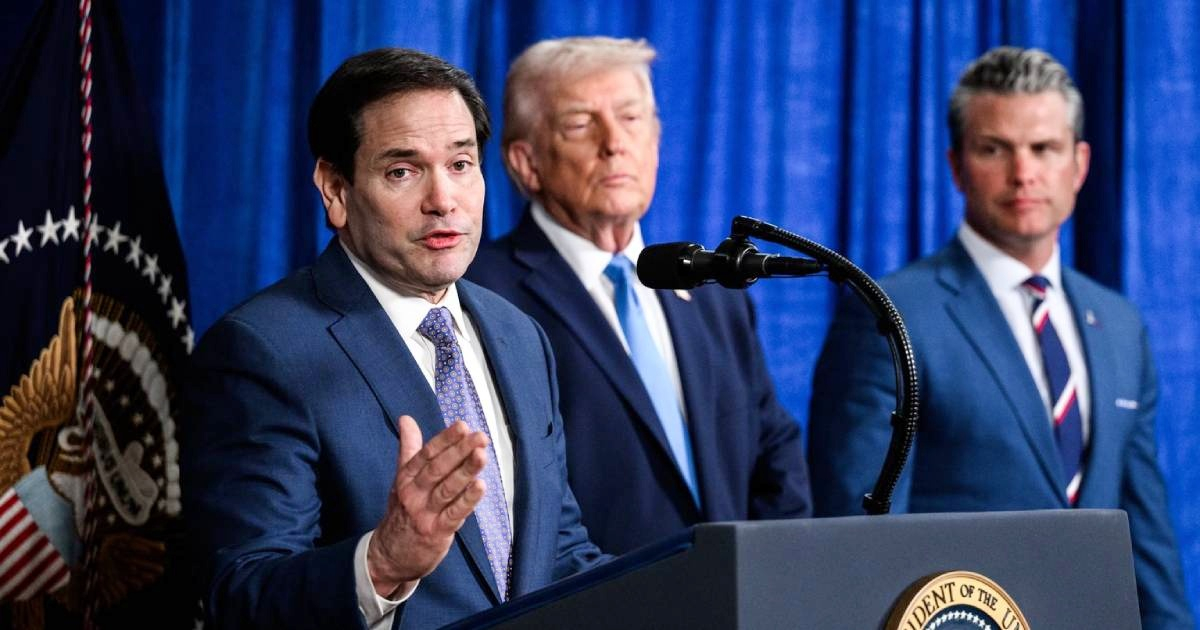
One of the names that has surprised the most is that of Senator Marco Rubio, the current Secretary of State, to whom Trump has entrusted one of the strategic portfolios of the Board.
Alongside him, the council will include former British Prime Minister Tony Blair, presidential envoy Steve Witkoff, and Jared Kushner, the president's son-in-law and a recurring figure in the current administration's international negotiations.
Other announced members include World Bank President Ajay Banga; financier Marc Rowan, CEO of Apollo Global Management; and Roberto Gabriel, advisor on national security issues.
The White House specified that each member "will take on specific portfolios, including strengthening governance capacity, regional relations, reconstruction, attracting investments, securing large-scale financing, and mobilizing capital."
A council with global ambitions
Trump's vision for this body is ambitious. In his own words, it is the "largest and most prestigious council ever assembled at any time and place."
The U.S. president has directly taken over the presidency of the Board, highlighting the political significance of the organization in his administration's global strategy.
In addition to the previously mentioned names, the Executive Board will include regional and international representatives: Turkey's Foreign Minister, Hakan Fidan; Qatari diplomat Ali al Zawadi; the head of Egyptian intelligence, Hasán Rashad; Emirati Minister Rim al Hashimi; Cypriot-Israeli businessman Yakir Gabay; and Dutch diplomat Sigrid Kaag, who has coordinated various peace initiatives in the Middle East.
Second phase of the peace plan: Technocratic governance and disarmament of Hamas
The establishment of this Peace Council marks the formal beginning of the second phase of Trump's peace plan for Gaza, which envisions a transition to a technocratic governance model, emphasizing the demilitarization of the Islamist group Hamas.
The White House has reiterated that one of its central objectives is the establishment of a local government independent of armed structures, for which the National Committee for the Administration of Gaza (NCAG) has been created.
This committee will be chaired by Ali Shaath, a Palestinian economist with administrative experience.
According to the official statement, the NCAG "will oversee the restoration of essential public services, the reconstruction of civil institutions, and the stabilization of daily life in Gaza, while laying the groundwork for long-term sustainable governance."
An international military device led by the U.S.
To ensure the security of the enclave during this transition, Washington has promoted the creation of an International Stabilization Force (ISF).
This will be led by U.S. Major General Jasper Jeffers, commander of special operations, and will serve as the UN contingent responsible for ensuring security, disarmament, and the safe delivery of humanitarian aid.
To complement this military structure, the Bulgarian diplomat Nickolay Mladenov, former Minister of Foreign Affairs of Bulgaria and former special coordinator of the UN for the peace process in the Middle East, has been appointed as the High Representative for Gaza.
Their role will be to serve as a political liaison between the Peace Council and the Palestinian technical government.
Strategic oversight of an ongoing plan
The Executive Board will be tasked with implementing the 20 points of the U.S. presidential plan, aimed at achieving “lasting peace, stability, reconstruction, and prosperity in the region.”
Key measures include the complete disarmament of Hamas, the reconstruction of civilian infrastructure, the development of non-partisan government institutions, and the international mobilization of economic resources.
"The committee will govern Gaza until a reformed Palestinian Authority can take power," the White House explained, opening the door to a broader transition that would include, in future phases, a possible pathway to Palestinian self-determination.
Critiques and Questions
Despite the strength of the announcement, doubts remain. The official statement and Witkoff's remarks—Trump's personal friend from his days as a real estate developer in New York—omit references to Israeli obligations, such as the complete military withdrawal from Gaza, one of the main Palestinian demands.
A timeline for the establishment of a Palestinian state has not been mentioned either, as originally contemplated in the peace plan presented by Trump in 2020. Meanwhile, since the ceasefire began in October, hundreds of Palestinians have died in Israeli attacks, casting doubt on the viability of a peaceful transition.
Conclusion: a plan under U.S. control
With this Executive Board, Trump not only reinforces U.S. control over the transition process in Gaza but also establishes an unprecedented structure, heavily influenced by figures close to his political and business circle. The presence of Marco Rubio as a Latino face and former British Prime Minister Tony Blair as an international figure aims to lend legitimacy and breadth to the body, although critics warn about its lack of actual Palestinian representation and the geopolitical interests that underlie it.
The execution of this second phase of the plan will depend not only on the coordination capacity of the Council but also on regional political will, Hamas's response—which so far has shown no intention of disarming—and international commitment to a reconstruction that avoids repeating past mistakes. In the meantime, Gaza's future remains uncertain, marked by diplomacy, tensions, and a power dynamic that, for now, bears the imprint of the United States.
Filed under: