
Related videos:
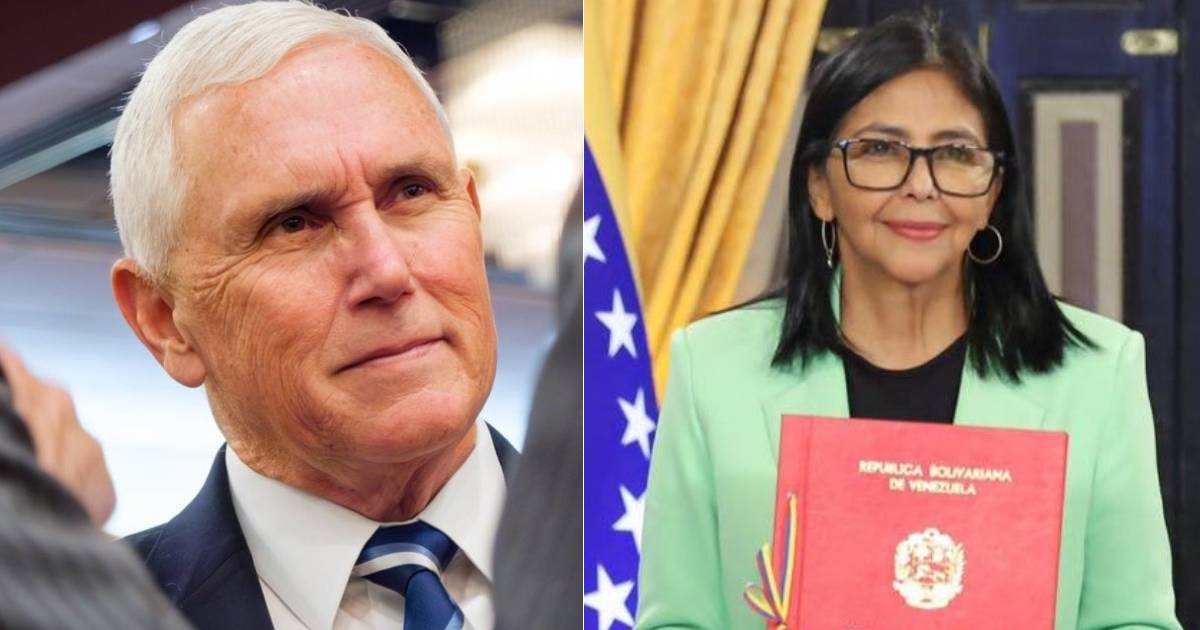
Statements by former U.S. Vice President Mike Pence have once again stirred controversy in the Washington strategy towards Venezuela, especially as Donald Trump has intensified his outreach to Delcy Rodríguez and has endorsed her as a key figure in the transition government following the capture of Nicolás Maduro.
In an interview with Jake Tapper on the program State of the Union on CNN, Pence, who was the primary person in charge of the Venezuela dossier during his time in the White House, issued a direct warning: although Maduro's exit was a "historic and significant" step, the subsequent course is equally crucial, and at this point, he asserted, the United States is making a mistake.
"Delcy Rodríguez is not the right leader for Venezuela," he stated bluntly. Pence acknowledged that an interim stabilization period might be necessary, but insisted that Washington's goal should be to expedite the return of basic freedoms and lead the country to free and fair elections.
In his view, opposition figures like María Corina Machado, or any other leadership that has emerged from popular vote, better represent the Venezuelans' aspiration for freedom.
The words of the former vice president stand in stark contrast to the current narrative of Donald Trump. In recent weeks, the president has described Rodríguez as an "ally", a "fantastic person" and a leader willing to meet the conditions imposed by the United States, particularly regarding energy and security.
Trump has openly defended that Washington should oversee Venezuelan oil, manage the revenues, and ensure a “controlled” transition, avoiding, as he argues, a chaotic scenario like that of Iraq after the fall of Saddam Hussein.
For Pence, however, the risk is not the immediate disorder, but the abandonment of the democratic commitment that has characterized the U.S. policy towards Venezuela for years.
He recalled that before chavismo, the country was one of the most prosperous nations in the hemisphere and that the current devastation has caused the exodus of between eight and ten million people. In that context, he warned that maintaining recycled chavista figures in power as managers of the transition period could send the wrong message both to Venezuelans and to the rest of the region.
The former vice president also hinted at a broader criticism regarding the rise of a new isolationism within Trump's environment, which, he said, threatens to weaken the historical role of the United States as a guarantor of democracy in the hemisphere. "America remains the leader of the free world and needs to act as such, especially in our region," he emphasized.
Meanwhile, in Caracas and beyond, Delcy Rodríguez's figure continues to generate deep divisions. For some, she represents a pragmatic exit after Maduro's fall; for others, she is just a different face of the same power structure.
In the midst of that debate, Pence's words reopen an uncomfortable question: if the Venezuelan transition moves forward under Washington's control, who is the future of the country actually answering to?
For millions of Cubans, both on the island and abroad, the outcome of this story is not unfamiliar. For years, Venezuela has been an economic and political support for the regime in Havana, and any redefinition of power in Caracas, whether democratic or overseen, has direct effects on daily life in Cuba, at a time marked by blackouts, economic crisis, and mass migration.
Filed under: