
Related videos:
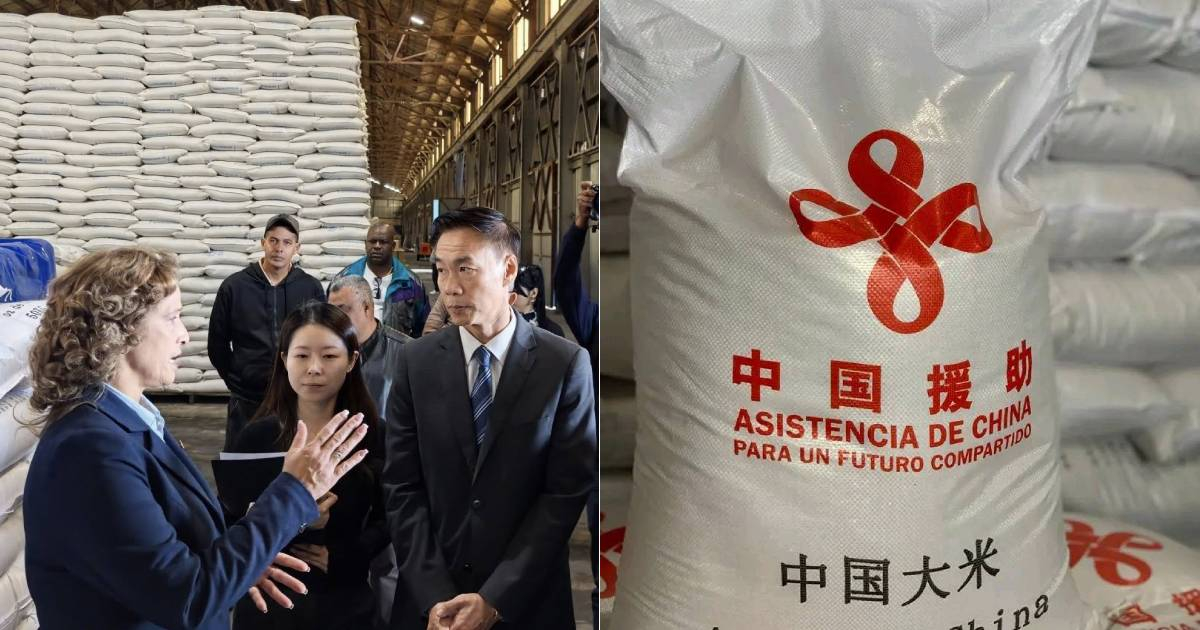
This week, Cuba began receiving a donation of 30,000 tons of rice sent by China as part of an emergency food assistance program, amid a crisis characterized by a persistent shortage of basic goods and the collapse of national agricultural production.
According to information published by Cubadebate, 4,800 tons of rice have already been unloaded, distributed between the ports of Havana and Santiago de Cuba, with the aim of distributing them immediately and free of charge to the population.
The Minister of Domestic Trade, Betsy Díaz Velázquez, explained that the shipment is part of a phased program that includes the arrival of the total committed by the Chinese government.
According to the details provided by the Chinese ambassador to the island, Hua Xin, a third shipment of 15,000 tons is ready to set sail for Cuba, while another 9,600 tons, amounting to nearly a quarter of the total, will be dispatched in the middle of next month, which will complete the announced donation.
During the official reception, the Cuban Vice Prime Minister and Minister of Foreign Trade and Foreign Investment (Mincex) Óscar Pérez-Oliva Fraga assured that the aid would be distributed among the population, in a context of significant deterioration in access to food.
The Chinese donation occurs in a critical context for the country's food security. Cuba allocates around 2 billion dollars annually for food imports, including basic basket products, against a backdrop of prolonged economic crisis, high inflation, and frequent blackouts, according to data cited by the agency EFE.
This new shipment adds to other recent deliveries of rice received by the island. At the end of December, South Korea donated 24,600 tons, channeled through the UN World Food Programme, aimed primarily at vulnerable populations in the eastern part of the country. In both cases, the shipments have been presented by official media as gestures of international solidarity during difficult times.
However, the repeated arrival of donations contrasts with the internal debate promoted from official spaces regarding the eating habits of the population. In recent weeks, statements made on state television blamed Cubans for the high consumption of rice, a narrative that was challenged by economists like Pedro Monreal, who provided official data showing a 41.5% decline in the total availability of rice for consumption since 2005, as well as a sustained drop in national production since 2019.
While the official discourse insists on "food sovereignty," the figures and emergency shipments themselves reveal that rice, a staple of the Cuban diet, continues to reach the tables of millions of families thanks to imports and external donations, in a country where agricultural production fails to meet even the basic needs of its population.
Filed under: