
Related videos:
A forensic report published this Wednesday by the El Paso County Medical Examiner's Office concluded that the death of the Cuban immigrant Geraldo Lunas Campos, who passed away in early January while in ICE custody in Texas, was a homicide.
The report was obtained and published by the agency Associated Press (AP). The 55-year-old Cuban died from “asphyxia due to neck and torso compression.”
The determination directly contradicts the official version, which from the outset pointed to a frustrated suicide attempt.
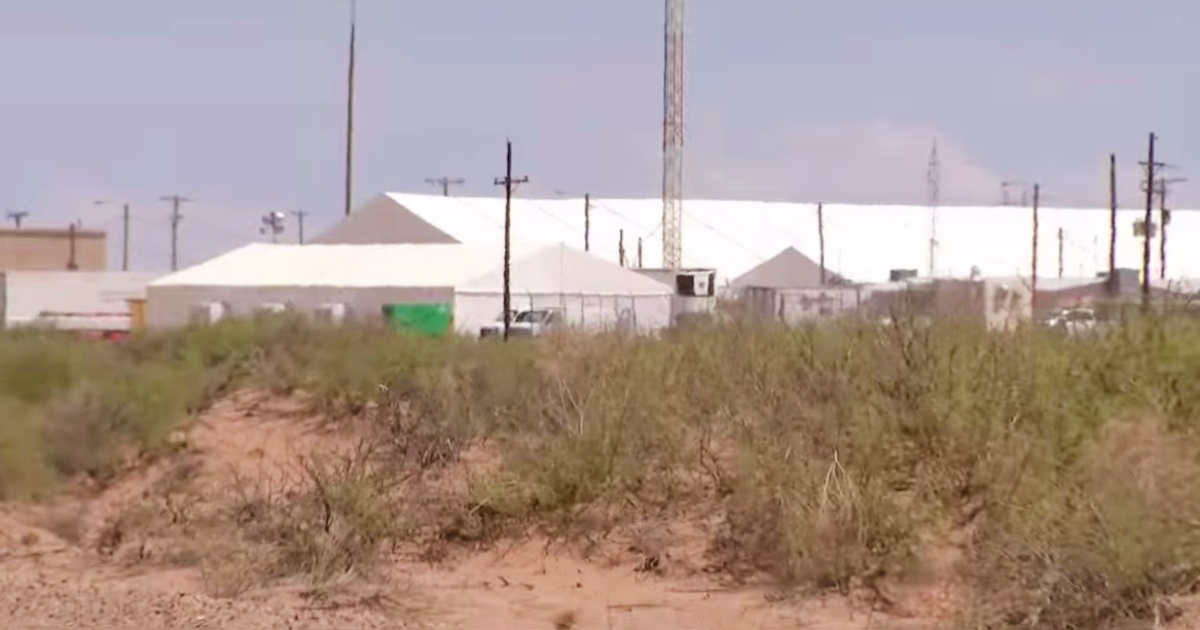
Lunas Campos passed away on January 3 at the Camp East Montana detention center, a large facility operated by private contractors on U.S. Army land in Fort Bliss.
For weeks, the Immigration and Customs Enforcement (ICE) defended that the guards attempted to save his life after a self-inflicted incident.
However, the autopsy reveals that her body showed multiple signs of struggle, injuries to the neck, torso, and limbs, and bleeding associated with a violent restraint.
The circumstances of death: testimonies vs official version
According to ICE, Lunas Campos was placed in isolation due to "disruptive behavior" and there he attempted to take his own life.
In a statement issued on January 9, the agency assured that "staff observed the detainee in danger" and "contacted medical personnel," who attempted to resuscitate him without success.
But a witness, previously cited by the AP agency, recounted that Lunas Campos was handcuffed while at least five guards held him, and that one of them put an arm around his neck until he lost consciousness.
This testimony aligns with the findings of the forensic report, which documents abrasions on the chest and knees, hemorrhaging in the neck, and injuries consistent with violent physical restraint.
Dr. Adam González, the county's deputy forensic physician, confirmed that "witnesses saw Lunas Campos lose consciousness while being physically restrained by law enforcement."
Changes in the government version
After weeks of maintaining an explanation based on a suicide attempt, the Department of Homeland Security (DHS) partially modified its version after the family of Lunas Campos was notified that the case would be classified as a homicide.
The spokesperson for the DHS, Tricia McLaughlin, then claimed that the Cuban "violently resisted" while attempting to take his own life, and that "during the struggle, he stopped breathing and lost consciousness."
With the forensic report now published, McLaughlin emphasized the deceased's criminal history, labeling him a "convicted child sex predator."
Court records indicate that Lunas Campos was convicted in New York in 2003 for sexual contact with an 11-year-old minor and in 2009 for attempted drug sales, which led to ICE detaining him in July 2025 for the purpose of deportation.
Opacity in management and lack of oversight
Camp East Montana has become a symbol of an opaque and dangerous management of detention centers for migrants.
With a $1.2 billion contract awarded to Acquisition Logistics LLC -a company without prior experience in prison management- the camp has delegated operations to subcontractors, whose performance has been heavily criticized.
It has not yet been confirmed whether the guards involved in the death of Lunas Campos were federal or private employees.
This ambiguity is relevant because the criminal or civil liability arising from homicide may vary depending on the status of the custodians.
Additionally, the fact that the center is located at a military base like Fort Bliss could limit the jurisdiction of local civil authorities to investigate the events.
An alarming pattern: three deaths in a month
The death of Geraldo Lunas Campos was not an isolated incident. ICE reported two other recent deaths at Camp East Montana:
On December 3, 2025, Francisco Gaspar Andrés, a 48-year-old Guatemalan migrant, passed away, allegedly due to liver and kidney failure.
On January 14, 2026, Víctor Manuel Díaz, a 36-year-old Nicaraguan, died in an apparent suicide.
Unlike the other cases, his body was not sent to the local forensic doctor but to a military medical center, raising more doubts about the transparency of the process.
Democratic representative Verónica Escobar, whose district includes El Paso, demanded explanations from the DHS and the acting director of ICE, and called for a halt to the deportations of witnesses.
"I reiterate my call for the closure of the East Montana Camp and the termination of the contract with the corporation that manages it," stated Escobar this Wednesday.
A criminal record and a country that expelled him
Lunas Campos legally arrived in the United States in 1996, as part of a wave of Cuban migrants attempting to reach Florida by boat.
Based in Rochester, New York, he was arrested in 2003 for sexual contact with an 11-year-old minor, and in 2009 for attempted drug dealing.
He was also charged with possession of weapons, theft, and driving under the influence of alcohol.
These circumstances led to the issuance of a final deportation order in 2005, although it could not be enforced due to difficulties in obtaining travel documentation from the Cuban government.
However, his family has defended his memory. Kary Lunas, his eldest daughter, 25 years old, stated that the accusation of sexual abuse was the result of a custody dispute
“My father was not a pedophile”, he stated. “He was a good father. He was a human being.”
His ex-partner and mother of two of his minor children, Jeanette Pagán-López, confirmed that despite his past, Lunas Campos always stayed in touch with his children and was working in a furniture store for minimum wage, the only job he could find due to his history.
In his last family call, shortly after Christmas, he told them that he was expecting his imminent deportation to Cuba and asked his children to visit him on the island to maintain the connection.
"He wasn't a bad guy. I just want justice and for them to bring his body here. That's all I want," said Pagán-López.
Filed under: