
Related videos:
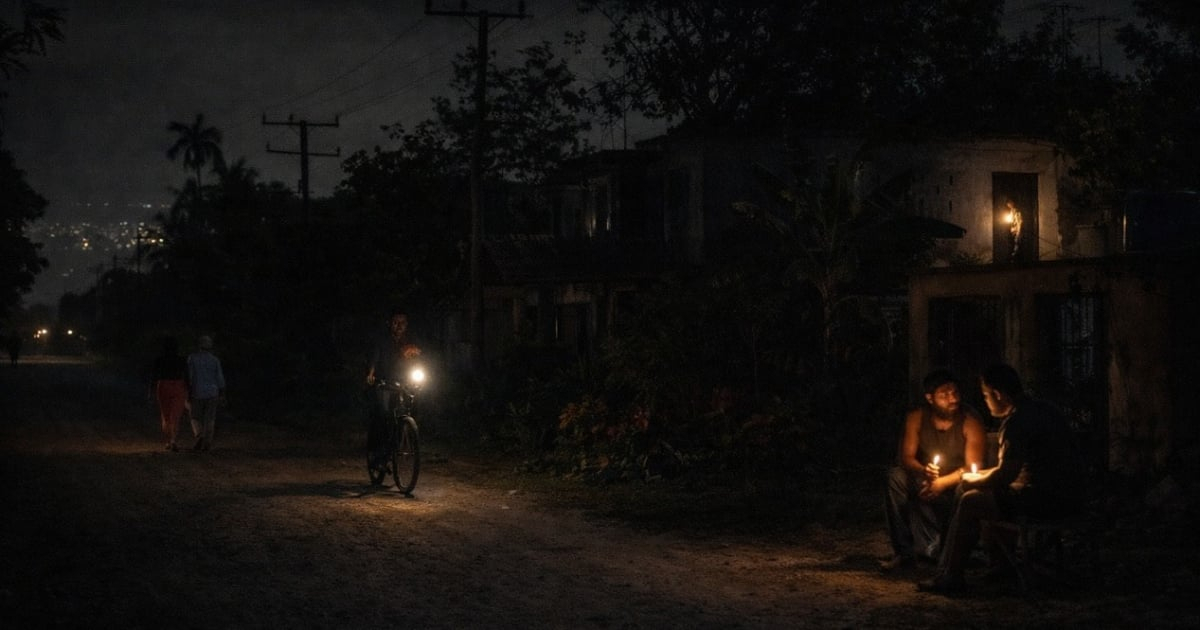
Cuba's national electrical system is experiencing an unprecedented crisis that keeps the country on the brink of prolonged blackouts and power cuts of over 20 hours.
According to the statement from the Electric Union (UNE), on Wednesday the service was affected for 24 hours, and the maximum impact due to a generation capacity deficit reached 1,973 MW at 7:00 PM.
At 6:00 am, the availability of the National Electric System (SEN) was only 1,350 MW, compared to a demand of 2,080 MW, leaving 759 MW out of service.
During peak hours, the impact is estimated at 1,100 MW, highlighting the structural fragility of power generation in the country.
The main causes of this energy crisis, according to the UNE, are multiple breakdowns and maintenance issues in critical units of thermal power plants, along with general limitations in thermal generation that keep 619 MW out of service.
Four units of the CTE Carlos Manuel de Céspedes, Nuevitas, Felton, and Antonio Maceo are experiencing breakdowns.
This is complemented by maintenance work on two blocks of the Santa Cruz and Carlos Manuel de Céspedes power plants.
The forecast for peak hours is even more alarming.
With the expected entry of Unit 3 of CTE Renté with 50 MW and the Regla barge with 55 MW, the availability of the SEN will only reach 1,455 MW, compared to a maximum demand of 3,200 MW, resulting in a deficit of 1,745 MW.
If these conditions persist, the impact during peak hours could reach 1,775 MW, leaving millions of Cubans without electricity at the same time.
On the other hand, the 49 new photovoltaic solar parks generated 2,613 MWh, with a maximum output of 502 MW delivered at noon.
The situation in Havana illustrates the magnitude of the problem.
The Electric Company reported that on Wednesday the city experienced outages for 16 hours and 17 minutes, with the peak impact reaching 346 MW at 7:00 PM.
The partial restoration of the service occurred at 11:13 PM.
The low availability in base generation prevented adherence to the planned schedule, and 80 MW were affected by additional emergencies.
At the end of the report, four blocks representing 138 MW remained out of service, and the authorities warned that if the situation does not improve, other blocks and entire circuits will be affected by emergencies.
The energy crisis in Cuba intensifies as January progresses.
Despite the seriousness of the situation, the Cuban government insists on attributing the blackouts to the "economic and financial war" waged by the United States, without taking responsibility for the lack of investment, the obsolescence of the thermoelectric units, and the failure to plan a stable energy system.
Specialists have warned that excessive dependence on imported fuels, lack of structural maintenance, and scarcity of internal resources worsen the situation, and as long as these shortcomings persist, prolonged blackouts will remain the norm on the Island.
The energy shortage, which leaves entire families without electricity for more than 20 consecutive hours, also impacts critical sectors such as hospitals, schools, transportation, and essential services.
The population, lacking reliable alternatives, suffers the consequences while the regime continues to blame external factors as the main cause of the electrical collapse, disregarding structural solutions and strategic planning to ensure supply.
Filed under: