
Related videos:
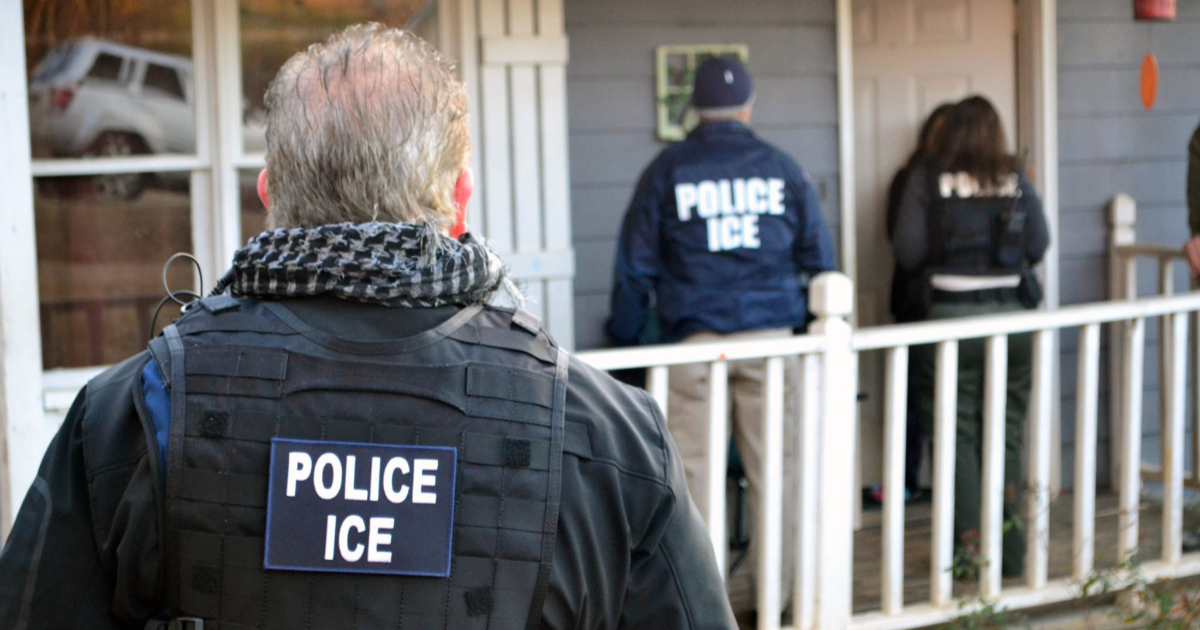
An immigration lawyer referred to the recent memorandum issued by ICE, which authorizes its agents to enter homes without a signed order from a federal judge.
In an interview with Univision, Ezequiel Hernández clarified the legality of such operations, which have raised concern and fear in communities across the United States, especially following cases involving minors.
Hernández firmly stated that this is not legal from a constitutional standpoint.
"The fact that an institution like the Department of Homeland Security, through its sub-agencies such as ICE or USCIS, implements a policy does not mean that the policy adheres to the Constitution," he stated.
He explained that the Constitution has not changed and continues to protect citizens. "It does not allow any person, specifically the government, to enter a private property without a judge's order that can grant and endorse that institution's entry."
When discussing how families should respond to these intrusions, Hernández advised caution: "If you have doubt and fear, do not open the door; that force will either open or break the door whether you open it or not."
He emphasized that these abuses must be challenged in court, but lamented that the existing legal mechanisms are operating very slowly.
"If someone breaks into your home and you are detained, it takes a long time to file a claim for constitutional violation, and people are more worried about their deportation, and that is the calculation I believe the government is making," he questioned.
The lawyer discussed the latest cases involving children detained by ICE, such as that of Liam Conejo Ramos, who is five years old, who was used to detain his father.
"Since the immigration law has existed, it has been possible to detain and initiate deportation proceedings against undocumented children. Immigration courtrooms have always had this. The difference here is that the president and his administration have stated that they are only targeting the worst of the worst. (...) But this is not the danger in the United States. Obviously, a five-year-old child is not." he clarified.
The expert stated that he felt "the inability to help and see an entire population that wants to do what's legal and cannot in any way."
Hernández noted that these actions have instilled fear in the communities and that local, state, and federal agencies must respond legally to protect the rights of the affected families.
"What institutions like schools, local governments, and federal courts must do when these demands arise to be able to stop or counteract this force," she concluded.
Filed under: