
Related videos:
The Cuban electrical system collapsed once again on Friday, January 23, with blackouts lasting 24 hours and a deficit reaching extreme levels.
According to the official statement from Unión Eléctrica (UNE), the maximum impact due to lack of generation capacity was 1905 megawatts (MW) at 6:30 PM, a figure that confirms the ongoing seriousness of the energy crisis that the country has been experiencing for months.
At 6:00 am this Saturday, the actual availability of the National Electric System (SEN) was only 1170 MW, compared to a demand of 2280 MW, leaving 1120 MW impacted since the early hours of the day.
By noon, the UNE estimated that the impact would rise to 1,280 MW, indicating that the deficit is not a temporary issue, but rather structural and persistent.
The incidents in generation are numerous and simultaneous. Six units from the CTE Mariel, Carlos Manuel de Céspedes, Nuevitas, Felton, and Antonio Maceo are out of service due to breakdowns.
Additionally, there are two units under maintenance at the Santa Cruz and Carlos Manuel de Céspedes power plants.
Additionally, there are 513 MW out of service due to thermal generation limitations, which further reduces the actual capacity of the system.
For the nighttime peak hours, the UNE anticipates the operation of 7 Fuel Moa engines with 105 MW, the addition of Unit 1 from Energás Jaruco with 30 MW, and the completion of Unit 6 from Energás Jaruco with 30 MW.
However, the estimated availability would barely reach 1335 MW, compared to a projected maximum demand of 3150 MW, resulting in a deficit of 1815 MW.
As a result, an impact of up to 1845 MW is forecasted during the peak demand hour.
Although the report indicates that the 49 new solar photovoltaic parks produced 3,366 MWh, with a maximum capacity of 559 MW during midday hours, that figure is clearly insufficient in light of a deficit of thousands of MW.
Situation in Havana: one bad day after another
The Electric Company of Havana reported that on Friday, service was disrupted for 22 hours and 12 minutes. The peak impact was 303 MW at 6:30 PM. The disruption could not be restored due to the deficit.
Due to the low availability in the base generation, it was not possible to meet the reported schedule. 80 MW were impacted due to an emergency.
At the time of this report, there are six affected blocks and 80 MW in emergency (280 MW).
"If the conditions of availability of the SEN do not improve, it is expected that the reported schedule will not be met, and blocks and circuits will be affected due to emergencies," the notice specifies.
An everlasting crisis with known culprits
These figures translate into blackouts lasting over 20 hours a day in many areas of the country. Behind this is a system collapsed by years of mismanagement, lack of investment, and technical neglect.
The government has been unable to ensure proper maintenance of the thermoelectric plants, which are currently operating with units out of service due to breakdowns or prolonged work.
In this context, it is the population that pays the price of a failed energy model that cannot sustain even the bare necessities for daily life.
It's not just about discomfort: the lack of electricity halts domestic life, spoils food due to lack of refrigeration, prevents cooking, affects the sick, children, and the elderly, and turns each day into a struggle for survival.
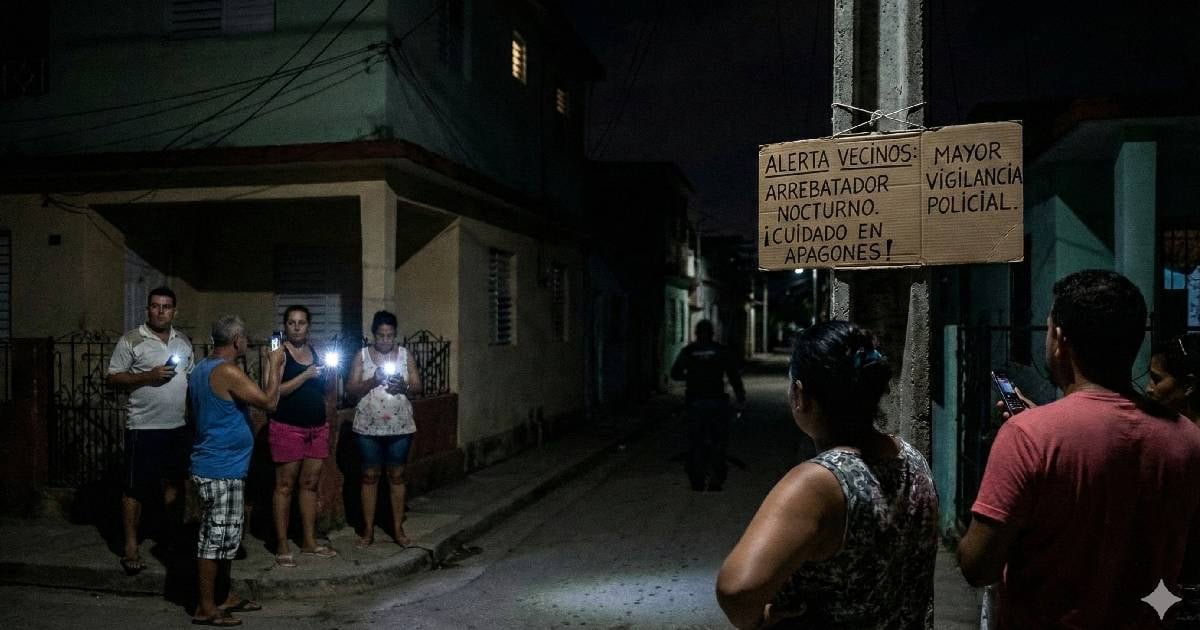
The population lives among candles, makeshift plants, and a constant anguish that the official narrative fails to hide.
The crisis is not the result of an isolated incident, but rather the result of a prolonged neglect of the electrical system. The responsibility lies directly with a government that for years prioritized political control and propaganda over real investment in basic infrastructure.
The result is a country where electricity has ceased to be a reliable service and has become an intermittent privilege.
Meanwhile, millions of Cubans continue to be trapped in darkness, paying with their quality of life the price of a model that doesn't guarantee even the basics: light to live.
Filed under: