
Related videos:
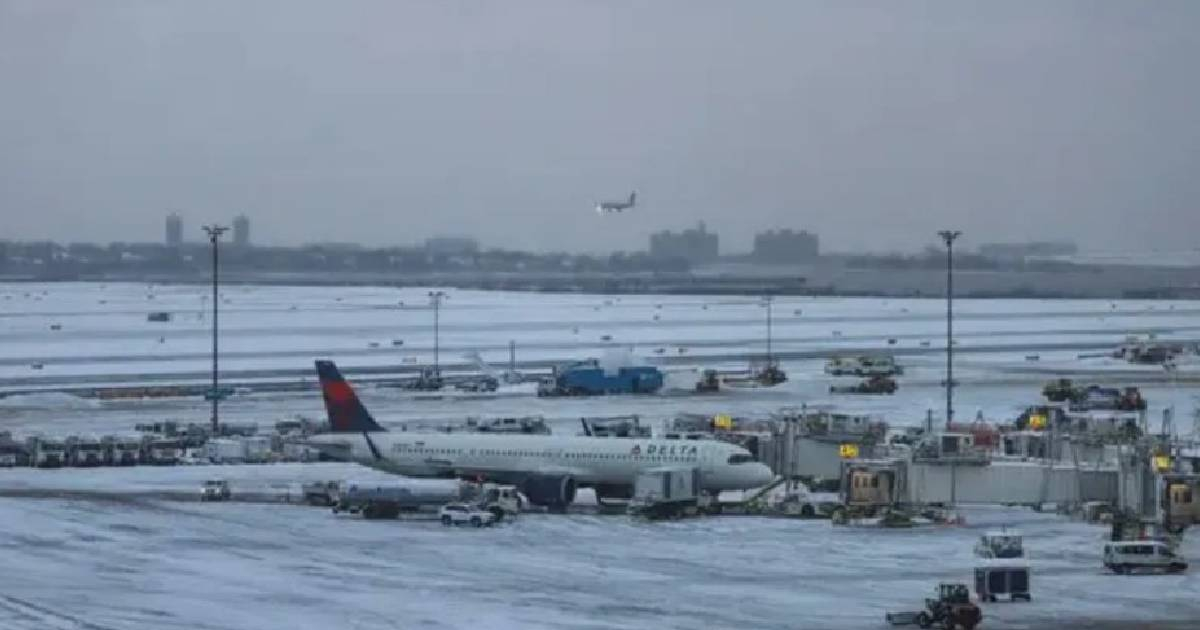
A major winter storm caused the cancellation of thousands of flights in the United States this Saturday and left more than 120,000 users without electricity, in an event that impacts over half of the country's population and threatens to last several days.
The system, which combines heavy snow, ice, freezing rain, and extreme temperatures, stretches from the southern Rocky Mountains to New England and threatens approximately 180 million people, according to the National Weather Service, which warned of a series of frigid days that will complicate recovery efforts, noted a report from the AP agency.
According to FlightAware, around 13,000 flights were canceled for this Saturday and Sunday, making Sunday the day with the highest number of cancellations in a single day since the pandemic began.
Key airports such as Dallas–Fort Worth, Chicago, Atlanta, Nashville, Charlotte, and Ronald Reagan Washington National Airport reported massive disruptions, while all flights in Oklahoma City were suspended on Saturday and much of Sunday.
Blackouts struck hard in southern states that are not accustomed to such phenomena.
Texas and Louisiana experienced nearly 100,000 power outages, with counties where up to a third of customers lost service due to fallen trees and power lines under the weight of ice.
Damage to homes and traffic accidents were reported in several locations.
In light of the magnitude of the event, President Donald Trump approved emergency declarations for at least 10 states, including Tennessee, Georgia, North Carolina, Maryland, Arkansas, Kentucky, Louisiana, Mississippi, Indiana, and West Virginia.
The Federal Emergency Management Agency (FEMA) prepositioned resources, personnel, and search and rescue equipment in multiple regions.
State and local authorities imposed traffic restrictions, speed limits, and urged residents to stay home.
In Georgia, officials warned that it could be the largest ice event in more than a decade, while in New Jersey, the movement of commercial vehicles was restricted.
The impact also extended to daily life: schools and universities canceled classes, churches moved services to a virtual format, Mardi Gras parades in Louisiana were suspended, and cultural events like the Grand Ole Opry took place without an audience.
Meteorologists warned that, in addition to the vast geographical area affected—over 2,000 miles (about 3,220 kilometers)—the phenomenon is notable for the extreme cold that follows, with wind chill temperatures dropping to as low as −40 °F (−40 degrees Celsius) in the Midwest. These conditions raise the risk of hypothermia, failures in critical infrastructure, and accidents, especially in southern states that are less prepared for storms of this nature.
Filed under: