
Related videos:
The Cuban government reaffirmed that it will not abandon state-controlled gastronomy, although it acknowledged that its current operation relies on agreements with micro, small, and medium-sized enterprises (mipymes) and other private actors to ensure supplies, basic services, and a minimum offering to the population.
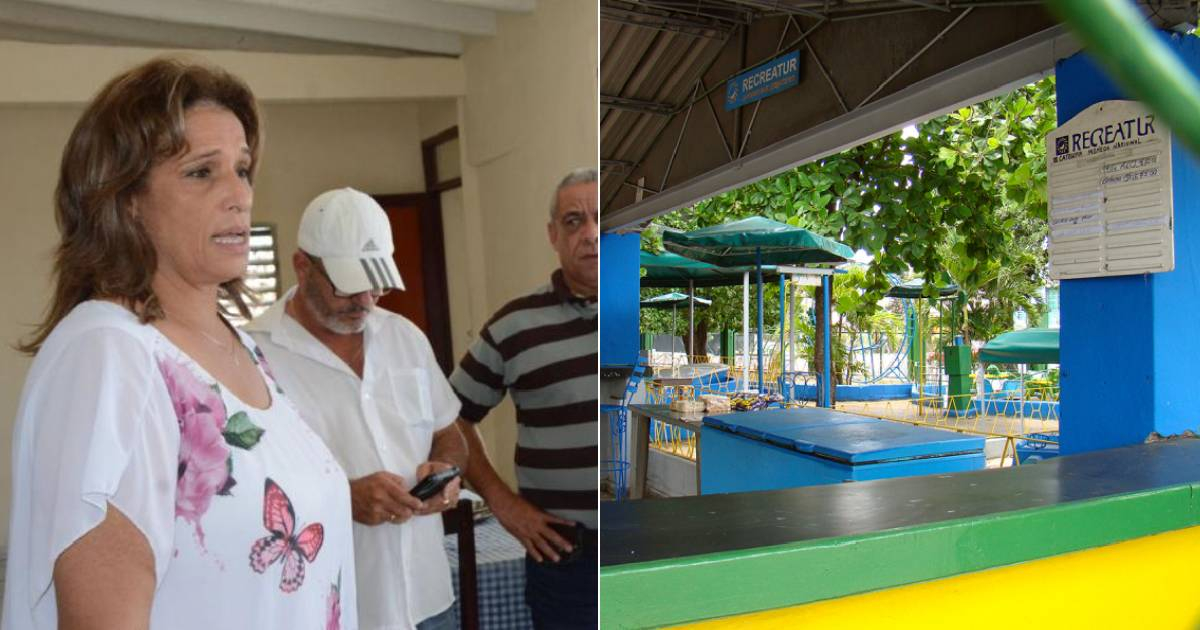
During a recent work exchange in Sancti Spíritus, the Minister of Domestic Trade, Betsy Díaz Velázquez, defended the continued existence of state-run Gastronomy as an official policy, even while admitting that the sector lacks its own supplies and is forced to purchase practically everything from the non-state market.
“The first thing is to maintain state gastronomy, with autonomy, with powers, with self-management, and, above all, with good service. However, we also have the option for certain units in specific locations to be managed by non-state economic actors, as these actors were approved to complement the economy,” emphasized Díaz according to a report from the provincial newspaper Escambray.
The head of Commerce explained that one way to sustain the food establishments is to incorporate activities that were previously not considered essential, such as agricultural production.
In this regard, he mentioned the possibility of promoting rice cultivation in municipalities such as La Sierpe and Yaguajay, with the aim of ensuring raw materials intended for basic products, including those for the Family Care System.
He acknowledged that the increase in product varieties at production centers is only feasible through a direct relationship with new economic players, whom the State intends to engage for the purchase of inputs such as ground meat (mechanically deboned meat), wheat flour, and sugar.
He stated that this relationship would allow for the reactivation of units in Commerce and Gastronomy, and advance towards more flexible management schemes.
Díaz suggested that some state centers could transform into state-owned micro, small, and medium-sized enterprises and, subsequently, even partner with private entities, as part of what he referred to as "reserves" in the sector that are yet to be exploited.
He stated all of this with the aspiration to improve efficiency and sustain services that are currently operating at a loss.
The energy crisis was also addressed as a central obstacle. The head of Commerce called for managing energy transition projects, requesting credits, and “negotiating with some actor to get us solar panel units”, under the premise that without seeking alternative energy sources, it will not be possible to maintain services.
Despite reiterating the need for a change in mindset, the minister was explicit that the approved policy prioritizes state gastronomy.
He pointed out that it should operate with greater autonomy, authority, and self-management, although he acknowledged that the public's perception of lower prices in state establishments no longer reflects reality, given that the state sector "now buys everything in the non-state sector."
To resolve that contradiction, he proposed that private actors who lease premises or sell wholesale offer products at retail prices, so that the State can compete "on equal terms."
However, he admitted that maintaining state-run gastronomy today “has become a heroic feat,” due to the lack of supplies guaranteed by the central balance.
In his statements, Díaz emphasized the importance of leveraging local initiatives to generate income and sustain basic services, ranging from the sale of light snacks to community recreational activities.
Still, he made it clear that any alternative formula will only be applied if it benefits the State, reiterating that, despite the structural deterioration of the sector, the government does not give up on maintaining state gastronomy as a cornerstone of the system.
The official defense of a state-run gastronomy has coexisted for years with an inverse process in practice.
In various regions of the country, the government has turned to tenders to transfer the management of bars and dining establishments to self-employed workers, cooperatives, and local projects, as happened in mid-2025 in the municipality of Rafael Freyre, in Holguín.
There, the Municipal Company of Commerce and Gastronomy announced the leasing of four state-owned bars, requiring interested parties to present business projects that included everything from budgets and repairs to plans for cultural activities and the use of renewable energy, a clear sign of the state's inability to sustain these services on its own.
This mechanism is not isolated. Since 2023, there has been a surge in tenders for state-owned spaces, including locations at Antonio Maceo International Airport in Santiago de Cuba, facilities of the Empresa de Grabaciones y Ediciones Musicales (Egrem), and, more recently, areas along the Havana Malecón.
Although framed as development opportunities, these initiatives have faced strong criticism due to the lack of legal guarantees and the shift of deterioration costs onto entrepreneurs.
In this context, the government's insistence on not relinquishing state-controlled gastronomy contrasts with a reality where the sector increasingly survives by relying on private capital, management, and risk to prevent its collapse.
Filed under: