
Related videos:
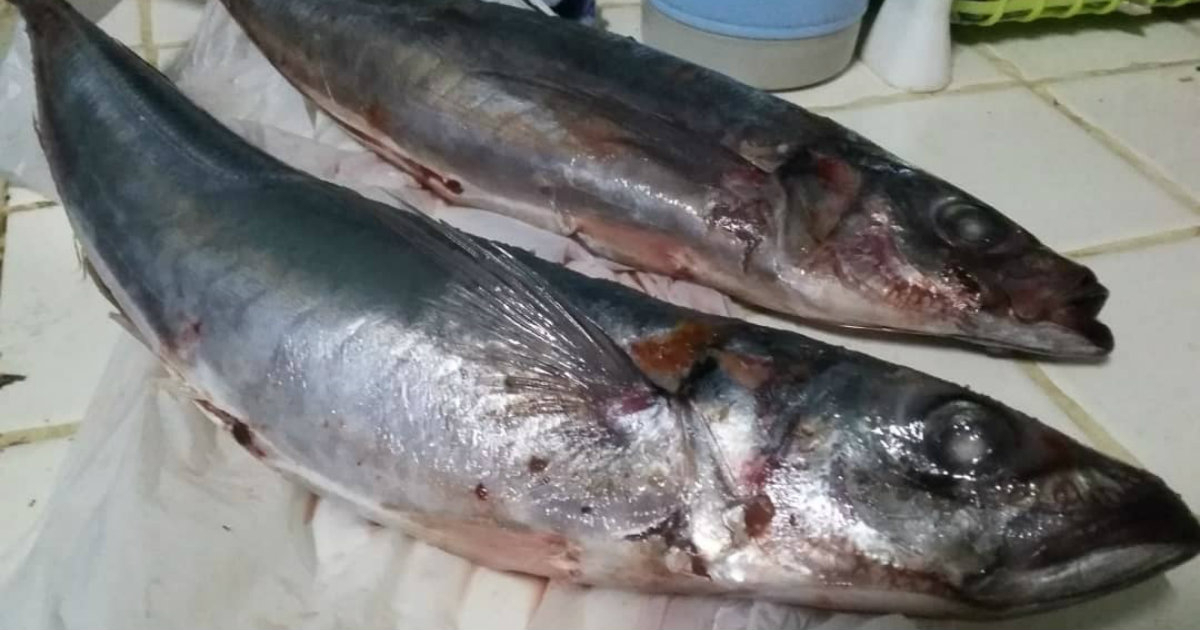
The authorities in Cienfuegos have established that only 20% of the 640 tons of fish expected to be caught in the marine platform this year—128 tons—will be sold to the public, a proportion that confirms the marginalization of popular consumption in the official planning of the sector.
This was revealed during the extraordinary Provincial Government Council held this Friday in the Pearl of the South, in which the Prime Minister Manuel Marrero Cruz participated.
According to the report by the provincial newspaper 5 de Septiembre, 80% of the 640 tons of planned fish catch will be allocated to other state-prioritized destinations, with no explanation provided on mechanisms to ensure citizen access to fish.
During the meeting, there was a strong emphasis on "increasing production" as a response to the food crisis. However, the amount allocated for popular consumption omits the majority of households in a coastal province where fish is practically non-existent in state markets.
The allocation of only one fifth of the total reinforces a common practice: fishing planning is not designed based on population data, but rather on administrative and financial commitments.
The authorities did not specify how that 20% will be distributed, nor what prices it will reach for consumers.
Fishermen in the province have repeatedly reported that they are compelled to deliver the majority of their catch to the State, with delayed payments and prices that do not cover the actual costs of the activity.
This is compounded by the scarcity of fuel, the deterioration of vessels, and the constant risk of fines and confiscations, factors that limit production and disincentivize work.
In that context, the goal of 640 tons contrasts with the daily reality of the people of Cienfuegos, for whom fish remains an exceptional food.
The official figure confirms that, even if the plan is fulfilled, the supply for the people will remain minimal.
The limited access of the population to fish occurs in a context where the government itself has attempted to explain the scarcity through official discourse.
In June 2023, on the government program Mesa Redonda, the Deputy Minister of Food Industry, Mydalis Naranjo Blanco, attributed the absence of fish in state stores to the alleged lack of fish in Cuban waters, a claim that provoked outrage and mockery on social media amid the food crisis facing the country.
Although experts have indicated that the Caribbean is a region with high biodiversity but low nutrient concentration—which limits the available biomass—this argument contradicts frequent reports of exceeding the targets for the capture of exportable products.
In April of that year, the Cienfuegos Industrial Fishing Company reported favorable results in the fishing of shrimp, crab, and lobster for the international market, while failing to meet its commitments for scaling fish and aquaculture intended for domestic consumption.
Scarcity is not a recent phenomenon either. Despite the approval in 2019 of a new Fishing Law, presented as part of the "food sovereignty" strategy, fish remains out of reach for most Cubans, who have relied on the informal market to obtain it for years.
In February 2023, Prime Minister Marrero Cruz announced potential modifications to that law, including the expansion of catch zones and the authorization of sales at designated points, although these changes have not yet resulted in greater access for the population.
Experts also recall that the crisis in the sector has structural roots. Since the 1990s, Cuba has gradually withdrawn its fleet from international fishing grounds due to the obsolescence of the vessels.
According to official data, in previous decades the country captured more than 100,000 tons in international waters and exceeded 70,000 tons in national waters, allowing for an annual per capita consumption of around 18 kilograms. By 2020, that figure had dropped to less than 4.0 kilograms per person.
Filed under: