
Related videos:
The disruption of Venezuelan oil supplies has struck at the heart of the Cuban economy. Without fuel to operate tractors, generate electricity, or preserve food, the country is facing a food crisis that threatens to escalate into famine.
The NGO Food Monitor Program (FMP) warned that the loss of Venezuelan oil support marks the end of an era of subsidies that have sustained the Cuban economy for over two decades.
What began as an ideological alliance between Hugo Chávez and Fidel Castro evolved into a system of exchange that allowed the Cuban regime to survive the Soviet collapse without implementing structural reforms.
The Comprehensive Cooperation Agreement between Venezuela and Cuba, signed in 2000, guaranteed the Island between 53,000 and 115,000 barrels of oil daily at preferential prices.
Cuba paid with professional services, thereby keeping the state machinery running.
According to estimates, Venezuela transferred over $35 billion in energy subsidies between 2003 and 2015, a sum that enabled the Cuban government to import food, finance its healthcare system, and re-export oil derivatives to obtain foreign currency.
With the decline in PDVSA's production, which fell from 3.2 million barrels per day in 1998 to less than 700,000 in 2025, the flow to Cuba collapsed.
The 105,000 barrels per day that were received in 2012 decreased to less than 30,000 by 2025, leading to prolonged blackouts and the collapse of agriculture and the food industry.
The final blow came in January 2026, when U.S. forces, under the orders of President Donald Trump, captured Nicolás Maduro and his wife in Venezuela.
Interim president Delcy Rodríguez, in an effort to normalize relations with Washington, has effectively suspended oil shipments to Cuba, responding to the U.S. government's demands to cease all commercial ties with the island.
According to FMP, the impact has been devastating: without Venezuelan oil, Cuba faces a total energy deficit.
Power outages exceed 12 hours daily (in many places, up to 35 consecutive hours), and water pumping and cooling systems are shut down.
The breakdown of the cold chain prevents the preservation of basic food; the collection centers have ceased operations, and families can hardly cook or store food.
FMP warns that food security has ceased to be a logistical issue and has become a survival challenge.
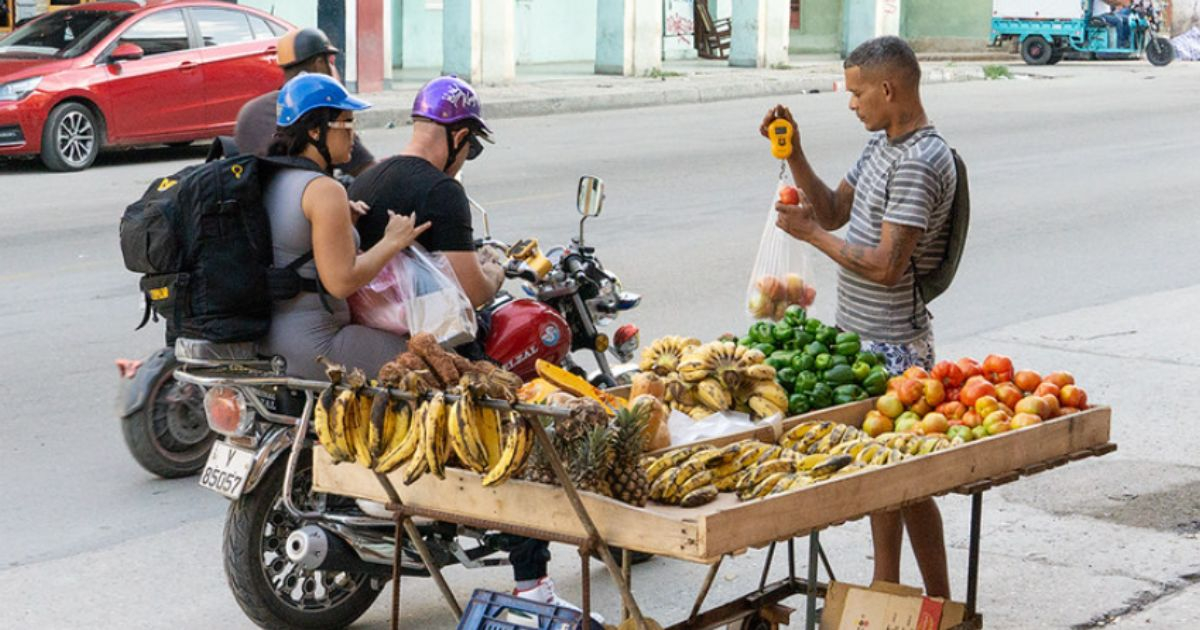
Food prices have increased tenfold in the last five years: a carton of eggs costs 3,000 pesos, and meat, rice, or oil have become luxury items.
The supply booklet has lost its meaning, and the black market and small businesses are now the only sources of food.
The result is a nutritional apartheid. Only those with access to foreign currency can purchase imported food in the private sector, while the rest of the population faces malnutrition, a lack of protein, and the risk of the return of deficiency diseases such as neuritis from the 1990s.
Agriculture is also coming to a standstill: tractors are running out of diesel, irrigation systems are not functioning, and the lack of fertilizers is reducing production to historically low levels.
Without crude oil, the country cannot generate enough electricity or maintain its productive infrastructure.
Analysts warn that without genuine agrarian reforms that return land to private hands and free up production, the State will face a systemic famine that will jeopardize social stability.
Food, in this new scenario, will be much more than a nutritional issue: it will become the determining factor for the survival of the regime itself.
On the other hand, the outlook will not improve for Cubans. On one side, Mexico –currently the main supplier of oil– is assessing stopping oil shipments to Cuba; and on the other side, Trump is considering a naval blockade to cut off access to hydrocarbons that support the Cuban regime.
Filed under: