
Related videos:
While Argentine media describes Cayo Largo as a "worry-free paradise," with "perfect" food, family-friendly hotels, and pristine beaches, official figures from Cuba confirm that tourism is experiencing its worst crisis in decades. Two narratives that coexist in parallel, yet remain disconnected.
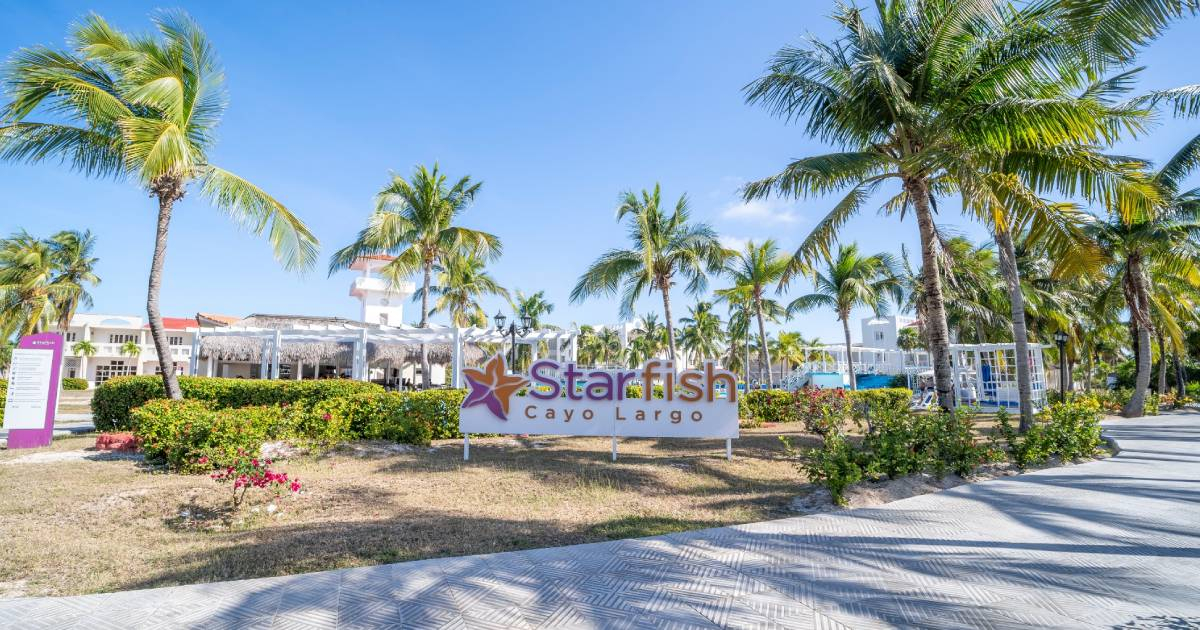
In recent days, Cadena 3 Argentina has published a series of reports from Cayo Largo del Sur that border on promotional content. Tourists from Córdoba are celebrating Cuban hospitality, the all inclusive experience at the Starfish Hotel, and they claim that “nothing is missing.” They talk about indulging in food, receiving constant attention, and experiencing a “spectacular” time on an island where only hotel employees live, rotating in shifts.
The contrast is striking.
While an idyllic Cuba is being marketed from Argentina, data from the National Office of Statistics and Information (ONEI) reveals that the country lost more than 350,000 tourists in the first nine months of 2025. International tourism decreased by 20.5% compared to the previous year, and the most optimistic projections indicated that the closing of 2025 would be far from pre-pandemic levels.
Cayo Largo appears in those reports as a perfect bubble: free from blackouts, without sargassum, featuring electric vehicles, internal flights, and excursions to Havana for 250 dollars. An enclave isolated from the real country, where the dollar and the euro circulate freely and scarcity seems nonexistent.
But outside of that secure circuit, Cuba is sinking as a tourist destination. Hotels are experiencing occupancy rates close to 25%, with power and water outages, food shortages, reduced flights, and streets filled with garbage painting a grim picture, even highlighted by international media. The crisis is not just a temporary issue or a result of the weather: it is structural.
Not even the Russian market, touted for years as the salvation, was able to sustain the sector. In 2025, Russian visitors decreased by more than 37%, despite new flight routes and official campaigns promising a "revival" of tourism. Canada, the main historical source market, also declined by nearly 20%, along with the Cuban community abroad.
The promotional narrative additionally contrasts with another uncomfortable reality: the tourism that does function in Cuba operates disconnected from the local population. In places like Cayo Largo, there are no civilian communities, only workers who live in shifts, without families, without daily lives. The "paradise" exists, but it is not Cuba; it is an encapsulated resort.
Meanwhile, the regime continues to prioritize the construction of luxury hotels controlled by GAESA, the military conglomerate that dominates the sector, even as the country faces prolonged blackouts, a collapse of public services, and a deep economic crisis exacerbated by the loss of Venezuelan oil following the capture of Nicolás Maduro.
Thus, while Argentina invites people to discover “the jewel of the Caribbean” for $1,500 all-inclusive, Cuba is consolidating itself as a destination divided in two: one for foreign tourists, carefully curated, and another for millions of Cubans who lack stable electricity, sufficient food, and future prospects.
The problem is not that Cayo Largo is beautiful. The problem is pretending that this postcard represents a country that, according to its own statistics, is becoming increasingly empty.
Filed under: