
Related videos:
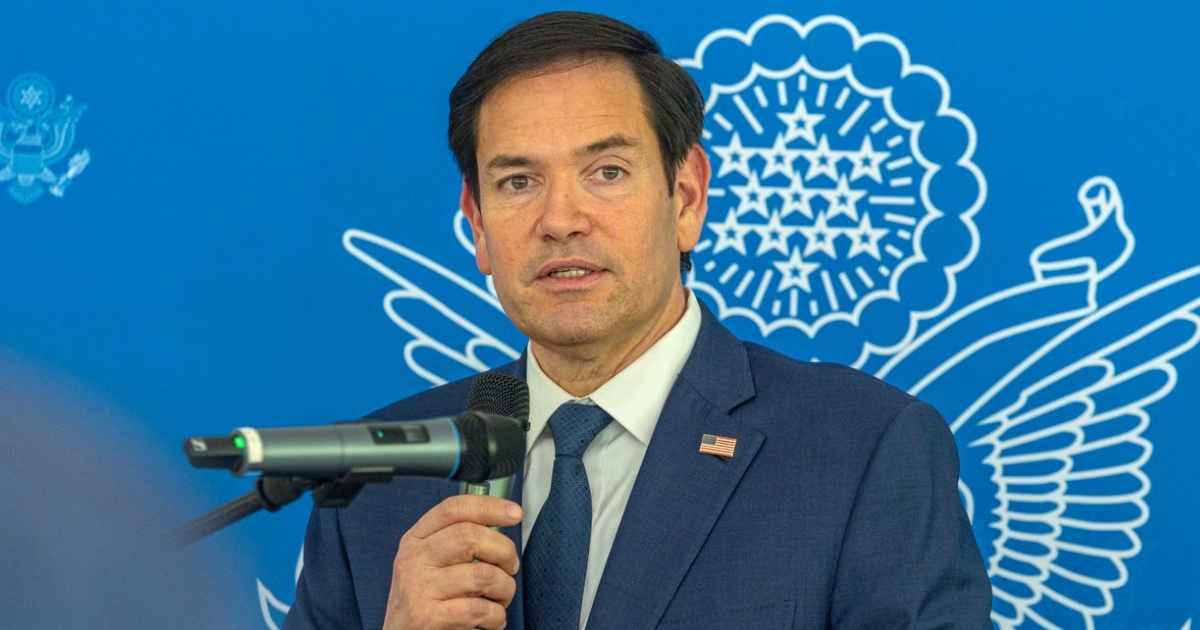
During the hearing in the Senate Foreign Relations Committee held this Wednesday, Secretary of State Marco Rubio made the administration's position clear regarding the economic embargo against Cuba and the possibility of a regime change on the island.
In a context of international tensions marked by the recent capture of Venezuelan leader Nicolás Maduro, the statements of the senior official—son of Cuban immigrants—gained particular significance.
The embargo and the Helms-Burton Act: "It is not a political preference"
Rubio emphasized that U.S. policy toward Cuba is anchored in current legislation, not in circumstantial foreign policy decisions.
During his intervention, he recalled that the Helms-Burton Act of 1996, which codified the economic embargo, stipulates that a regime change on the island is a condition for lifting the sanctions.
In his own words, the Secretary of State stated that this requirement "is not just a political preference, but part of what U.S. law mandates."
He argued that its compliance is essential for any substantial modification in the relations between the two countries.
This dismissed the possibility that the U.S. government would unilaterally lift the sanctions, at least while the current political system in Havana persists.
“The lifting of sanctions and the embargo will only materialize once a regime change occurs,” Rubio reiterated, aligning this stance with what federal regulations stipulate.
Regime change? "We would love for it to happen."
The issue of regime change was directly addressed when Democratic Senator Brian Schatz of Hawaii asked whether the Trump administration—under which Rubio serves as the head of diplomacy—would be willing to abandon any attempts to promote a political transition in Cuba.
Rubio, without hesitation, responded that the administration "would love to see a change" in the Cuban government.
However, he clarified that this “does not mean we are going to provoke it directly,” suggesting that although the United States desires change, the initiative must come from within the island.
"We would love for that to happen. It would be a benefit to the U.S. if Cuba were not governed by an autocratic regime," Rubio emphasized, making it clear that this goal aligns with Washington's strategic interests, even if it needs to occur through internal means.
These statements reflect an ambiguous yet consistent stance: the United States will not openly declare its intention to intervene in Cuba, but it does maintain the desire for the current system to be replaced by a functioning democracy.
Economic crisis and historical regression: “Not even the Soviets would acknowledge it.”
Rubio also took the opportunity during the hearing to hold the Cuban regime accountable for the deep economic crisis the country is experiencing. In his remarks, he rejected the narrative that attributes the island's structural problems to the U.S. embargo.
According to him, the true origin of the economic collapse lies in the autocratic and ineffective model that has prevailed for over six decades.
"The economic model implemented has not demonstrated functionality in any global context," he stated, adding that the situation in Cuba has reached a point where "even the founders of Soviet thought would not recognize the current version of the system on the island."
As an example of the productive decline, Rubio mentioned the sugar industry, recalling that Cuba was historically the world's largest producer of sugar, while today it is forced to import this product
"Suffering in rural areas is a direct consequence of the regime's inability to manage the national economy," he said, harshly pointing to internal policies as the determining factor in the country's impoverishment.
A political message with multiple layers
Rubio's appearance before the Senate took place in a particularly sensitive political context.
Although the initial focus of the hearing was the situation in Venezuela, the discussion about Cuba clearly outlined the general principles guiding Washington's foreign policy towards Havana: sustained pressure, an embargo conditioned on structural changes, and a rhetoric that identifies the Cuban regime as the root of the social and economic ills of the island.
In summary, Marco Rubio confirmed what various figures from the exile community and Republican political sectors have been advocating for years: the lifting of the embargo is non-negotiable without a regime change.
At the same time, their intervention prevented support for direct destabilization actions, leaving the responsibility (and the cost) of generating a transition in the hands of the Cuban people.
Filed under: