
Related videos:
The Cuban regime announced a progress “in the control of arboviruses,” according to a report published by Cubadebate, which claims that “the endemic channel of the Febrile Syndrome in the country is at a safe level” and that cases “decreased by 29.3 percent compared to the previous week.”
The message, however, sparked a flood of critical responses on Facebook, where many Cubans mocked the official statement. "Of course it decreased after nearly all of us got sick, despite the landfills remaining active; there’s no achievement there," commented one person. Another pointed out, "It's not Cuba, it's the weather; as temperatures drop, the mosquitoes decrease. Just wait for summer to see what happens."
The idea that the decline in infections is due to what is called "herd immunity" was often repeated. "If so many people have already gotten sick, there are only a few left to do so. So the herd is already immunized," someone wrote. "Of course, if it has already affected almost all of us," added another user.
Other comments were harsher: “Is the idea of ‘advancing in control’ a joke, right? It decreased because most people are suffering from the illness that was said to be ‘mild,’ because there is no control at all.”
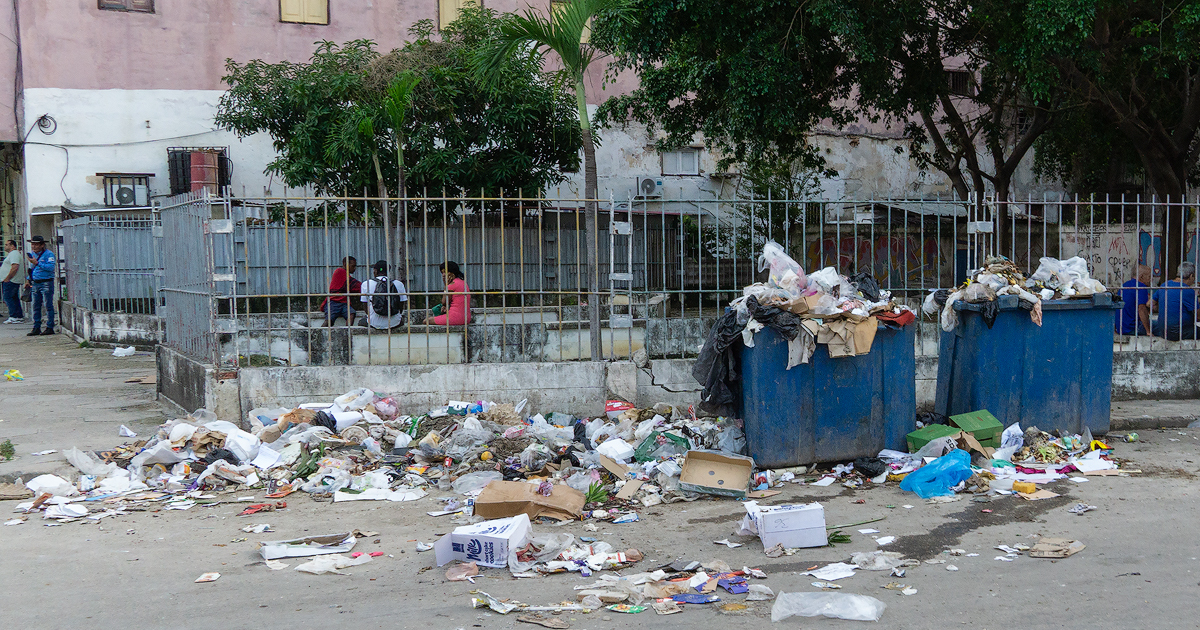
The lack of preventive measures was also a point of criticism. “Trash continues to litter the streets, sewage is overflowing and flooding the roads as a legacy of their work,” wrote one person. Another summarized the general sentiment with irony: “Yes, of course, there’s no one left to get sick, and antibodies are being created.”
Many pointed out that the supposed "control" arrived after the damage was already done. "After more than half of Cuba got sick," wrote one user. "They call it herd immunity... that's not control," noted another. "So much control, mind you! In the cold we are covered up, the mosquitoes hide, reproduce, and charge their batteries for the summer," another person sarcastically remarked.
There were also open criticisms of the government: “You have to be cynical, of course, if almost everyone has already taken it and the temperature has dropped. Trash remains on the streets, sewage overflows and floods the streets as a legacy of their work.” Another comment summarized with sarcasm: “Cuba is moving forward. Everything is perfect and fine, the streets are clean, food is guaranteed… blah blah blah.”
Among the most bitter messages, some recalled the aftermath still faced by those who contracted the virus: “Who will restore our health to those of us who got sick and are still in pain?” Another wrote: “Of course, almost everyone caught it due to the ineffectiveness and lack of control. Many of us are left with disabilities, possibly for life. I have been suffering for three months and I am not getting better.”
Distrust of state information was almost unanimous. "It's a lie... nearly 90% of the people got sick," someone wrote. "You can see the progress, the cemeteries are overflowing," another one joked. "All controlled, hahahaha, everyone is sick, they're just controlling us," commented a third.
In contrast to the reactions on social media, the official discourse continues to focus on demonstrating positive results. In his most recent meeting with experts, Miguel Díaz-Canel warned that "the country cannot relax in the face of this virus" and called for the maintenance of hygiene and health measures. The Deputy Minister of Public Health, Carilda Peña García, stated that cases of fever syndrome "have dropped by 29.3% compared to the previous week" and that "mathematical models confirm a downward trend for both dengue and chikungunya," according to recent reports from the Cuban government.
But the events of recent months paint a very different reality. The State itself acknowledged that a portion of patients with chikungunya suffers from persistent joint inflammation, a chronic consequence that may last for months or years, although without providing precise figures, according to previous statements from the Ministry of Public Health. In Matanzas, for instance, it was reported that 60 percent of the patients treated required rehabilitation, but this data vanished from subsequent reports.
According to a report from the Cuban Citizen Audit Observatory (OCAC), deaths from arboviral diseases in Cuba could exceed 8,700, which is approximately 185 times more than the 47 officially reported. The study documented underreporting in death certificates and noted that many doctors receive instructions not to record viral infections as a cause of death.
While the regime proclaims a "progress" in health control, another narrative emerges on social media: "They call it herd immunity, that's not control," "There's no one left to get sick," "Thanks to the cold and herd immunity."
Filed under: