
Related videos:
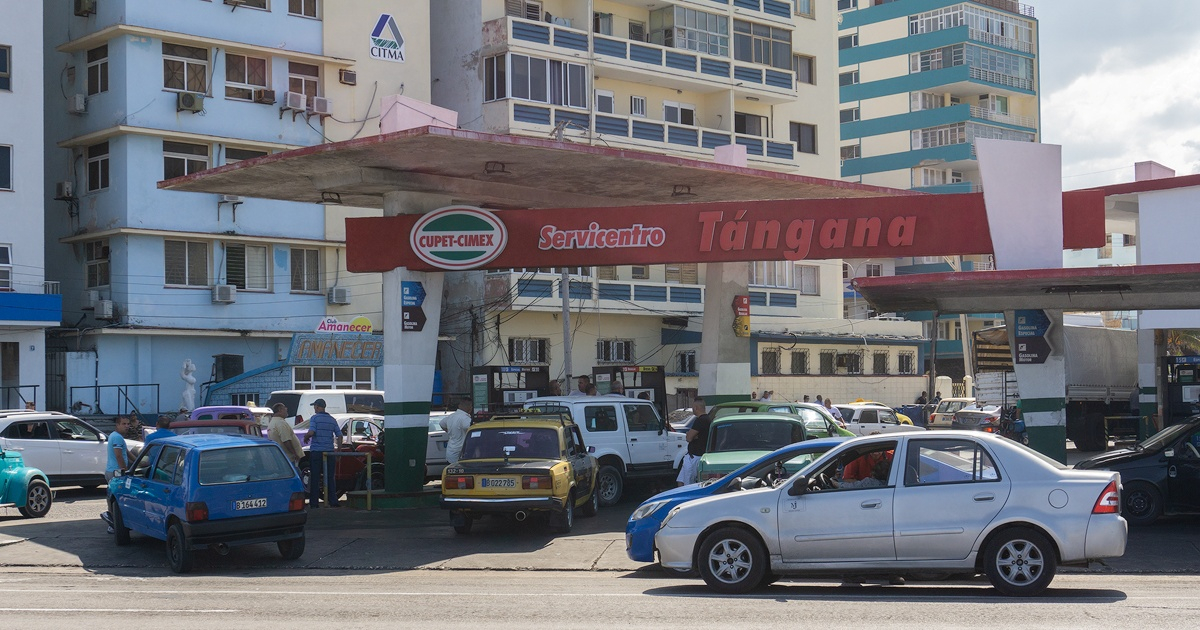
Cuba-Petroleum Union (CUPET) has denied recent information circulating on social media claiming that the supply of fuel at the country's service station network had been halted.
In a brief note published on its official profiles, the Cuban state company clarified:
"This note circulating in some digital media is false. There has been no interruption in the supply of fuel to the country's service stations."
The statement was accompanied by a screenshot of the alleged “joint statement” between CUPET and the Ministry of Tourism (MINTUR), which rapidly went viral due to the critical shortage situation already being experienced in numerous areas of the country.
The company urged the public to stay informed through its official channels and national media, emphasizing the need to avoid the spread of rumors.
The "false note" and its alarming content
The discredited publication —falsely attributed to CUPET and MINTUR, dated January 29— claimed that, in light of the energy crisis and "the intensification of the economic, commercial, and financial blockade imposed by the United States government," a decision had been made to:
"Temporarily halt the general supply of fuels at gas stations and state sales points from the date of issuance of this notice until further notice."
According to the apocryphal text, the alleged suspension was due to a "disruption of imported supplies," caused by "hostile actions and foreign sanctions."
The statement also included mentions of the “genocidal blockade” and calls for “unity, discipline, and solidarity among all Cubans.”
In addition, it stated that fuel would be prioritized for strategic sectors and authorized vehicles, while the population was to "avoid non-essential travel" and coordinate with local authorities for any urgent needs.
The message concluded with political slogans such as “Homeland or Death! We Will Overcome!”, in an attempt to lend credibility to the institutional tone.
Citizen reactions
Despite the official clarification, many citizens have expressed on social media that supply issues are real and that, although there is no order for a widespread suspension, fuel remains scarce or nonexistent in many areas of the country.
"This statement may claim that the news is false, but the reality at CUPET tells a different story," wrote a user. "Or perhaps they are only referring to stable service for those operating in USD, and even then," they added.
Other testimonies, gathered from comments on CUPET's social media, reveal the frustration of users:
"Since January 2, 2026, they have not been supplying gasoline to the CUPET at G and 25. I would like to know if they will never do so again so that I can take my ticket to another CUPET."
“At the CUPET in Tropicana, I have a ticket for the plant and I move up between 0 and 20 positions per day.”
"The sale of gas has been halted despite having stock, according to comments from workers. I believe it may not be for selling it in foreign currency."
"In Santiago de Cuba, they should start selling liquefied gas. Since the sale was suspended, they haven't said anything, and the people are struggling and in need."
Other users reported irregularities, favoritism, and corruption: "Cimex charges for the turn, and the shameless ones take it all," said an angry user.
Most comments reflect a situation of uncertainty and frustration. Many assert that supplies are available, but "only in dollars," and not through the ticket system.
A context of energy crisis and increased international pressure
This clash of narratives occurs at a particularly delicate moment for Cuba.
The publication of the false statement coincided with the announcement by U.S. President Donald Trump of an executive order empowering the imposition of tariffs on countries that supply oil to the island.
According to the document, the Cuban government "collaborates with malign actors such as Russia, China, Iran, Hamas, and Hezbollah," and poses an "unusual and extraordinary threat" to regional stability.
"The United States has zero tolerance for the depredations of the Cuban communist regime," the text warns, holding Havana accountable for the "harboring of terrorist organizations," the "use of intelligence infrastructures" for rival powers, and its alleged destabilizing role in the region.
According to The Wall Street Journal, this diplomatic and economic offensive aims to accelerate the collapse of the Cuban regime, following the loss of Venezuelan support and the worsening of the internal crisis.
A denial that does not reflect reality?
Although CUPET categorically denies the disruption in supply, citizen reports and the partial paralysis in distribution suggest a disconnect between the official narrative and the daily experience of Cubans.
The denial, moreover, only refutes the existence of the false statement but does not provide figures, logistical details, or any explanation regarding the lack of fuel in many areas.
There is also no mention of immediate plans to restore normal sales flow.
The omission of these elements, combined with the atmosphere of social tension and the intensification of external pressure, fuels the perception that the situation could be significantly more severe than what the authorities acknowledge.
Filed under: