
Related videos:
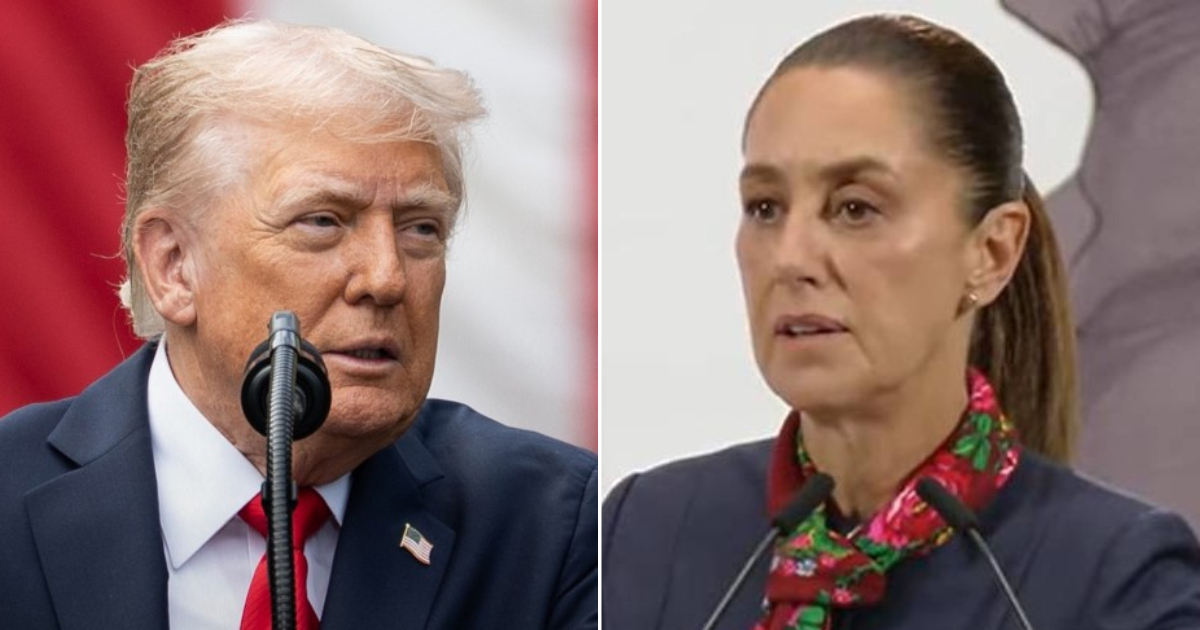
Mexico is at the center of a new geopolitical tension following the executive order signed by U.S. President Donald Trump, which authorizes the imposition of tariffs on countries that sell or supply oil to Cuba.
The measure paves the way for direct economic sanctions against one of the island's main energy partners: the Mexican government.
These supplies, often regarded as "humanitarian aid" or "cooperation agreements," have been crucial in keeping the few operational power plants in Cuba running amid its most severe energy crisis in decades.
However, Trump's new order changes the rules of the game.
The document, issued this Thursday and effective the following day, declares a national emergency and states that the United States may impose additional tariffs on products from any country that sells or provides oil to Cuba, either directly or indirectly.
The provision grants the Secretary of Commerce the authority to determine which countries engage in that practice and gives the Secretary of State — in coordination with the president — the power to decide whether tariffs will be imposed and to what extent.
So far, Mexican President Claudia Sheinbaum has insisted that oil shipments to Cuba are carried out "within the framework of contracts with Pemex and based on humanitarian criteria," denying that her government has interrupted the supply.
However, if this policy is maintained, Mexico could be directly exposed to the trade sanctions outlined in Trump's executive order, with which it is also negotiating the Free Trade Agreement.
The White House believes that countries supplying oil to the Cuban regime are contributing to the maintenance of a political structure "that poses an unusual and extraordinary threat" to the national security and foreign policy of the United States.
Despite this, Sheinbaum has shown conflicting signals regarding energy cooperation with Havana, which could lead to a diplomatic clash with Washington.
The question now is whether Mexico will decide to maintain its policy of support for Cuba—even with the economic and political costs that the new U.S. tariffs would entail—or if it will seek a negotiated solution that preserves its strategic relationship with both countries.
Before Trump's order, Sheinbaum had already confirmed that Mexico would continue sending oil to Cuba as "humanitarian aid."
The President of Mexico, Claudia Sheinbaum, confirmed on Wednesday that her government would continue sending oil to Cuba under the premise of "humanitarian aid," although she acknowledged that Petróleos Mexicanos (Pemex) also has commercial contracts with institutions of the Cuban regime.
"There are two ways in which oil is sent to Cuba," Sheinbaum explained during her morning conference from the National Palace. "One is through contracts that Pemex establishes with a Cuban government institution, and in those cases, the oil company determines when to send and when not to. The other is humanitarian aid, which also includes oil, along with other items sent for humanitarian reasons," the official stated before Trump signed the new executive order.
At that moment, the leader clarified that her government had not suspended the shipments, denying reports circulating about a possible interruption following diplomatic pressure from the United States.
The statements were made despite the fact that Cuba has accumulated a debt of over 1.5 billion dollars with Mexico for the exports of crude oil and diesel that the Latin American country carried out between May and November of last year, according to calculations by energy sector analyst Ramses Pech.
On the other hand, in just two or three weeks, Cuba could run out of oil, warned the British newspaper Financial Times, after analyzing data from the company Kpler, which tracks real-time ship movements, inventories, and energy transactions worldwide.
Filed under: