
Related videos:
The Institute of Meteorology of Cuba (Insmet) issued a Special Notice this Friday regarding the arrival of a new Arctic cold front, which will cause a significant drop in temperatures, strong winds, and coastal flooding along the northwestern coast of the country.
A mass of dry and cold air persists over the Cuban archipelago, especially in the western and central regions, where winter conditions have prevailed in recent days.
According to Inmet, in the coming hours a new cold front will move in from the Gulf of Mexico and reach the western part of the country by late morning and early afternoon on this Saturday, the 31st.
During the passage of the frontal system, cloud cover will increase, accompanied by showers and rains that will gradually spread to the rest of the national territory as the front moves eastward.
Behind the front, a new mass of dry and very cold air of Arctic origin will enter, reinforcing the already existing winter conditions in Cuba.
The forecast indicates notably cold early mornings, with minimum temperatures below 10 degrees Celsius, mainly in the western and central regions.
Maximum temperatures will also be low, ranging from 15 to 18 degrees Celsius in much of the country, and up to 20 degrees Celsius in the east.
After the arrival of the cold front, winds will shift to the northwest in the west, with speeds ranging from 35 to 50 kilometers per hour and higher gusts.
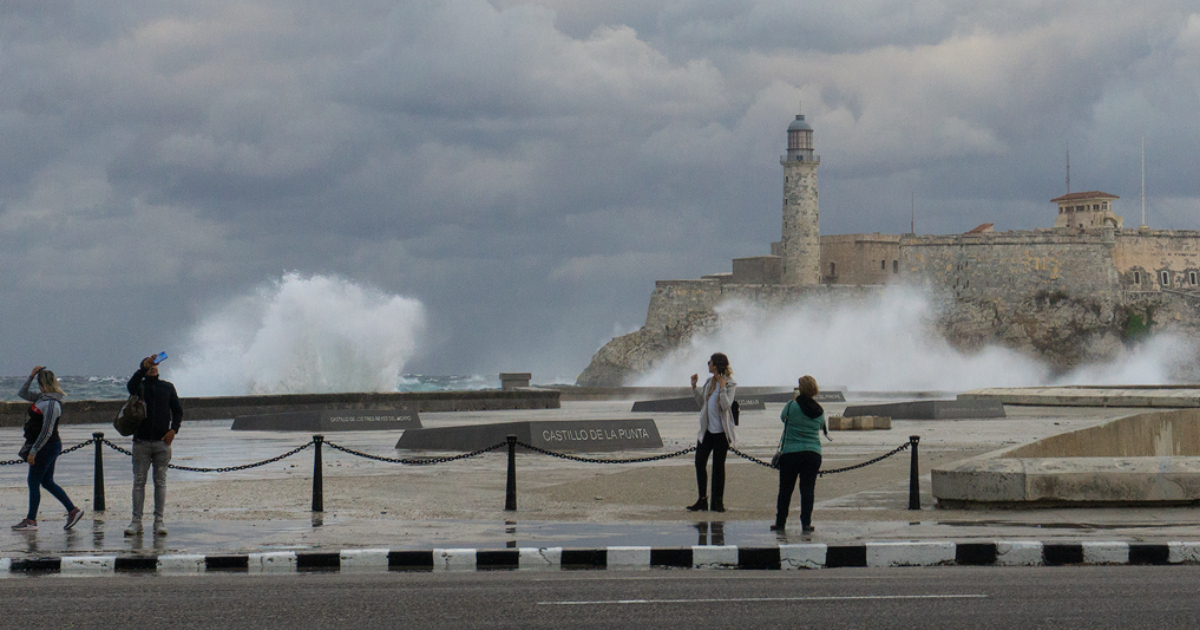
The wave heights will reach between three and four meters, leading to strong swells. From the afternoon of Saturday the 31st until the afternoon of Sunday the 1st, light to moderate coastal flooding is expected in low-lying areas of the northwestern coast, including the Havana seafront.
Recent developments underscore the seriousness of the event. Meteorologist Raydel Ruisánchez recently warned that much of the country is already under the influence of a very cold and dry air mass, and that the new front will further intensify the drop in temperature.
According to their estimates, the minimum temperatures could approach 5 degrees in areas of the interior and southern parts of the western and central regions of the country, with maximums between 16 and 19 degrees.
In the same vein, the meteorologist Ariel Maturell Salina pointed out that between January 27 and February 3, Cuba could experience one of the most intense cold periods in recent years, due to the influx of extremely cold air over North America and the Gulf of Mexico, reinforced by icy masses coming from Canada.
Both specialists warned about health risks, particularly in areas where temperatures drop below 10 degrees, and recommended taking extra protective measures due to the possibility of mild or moderate hypothermia in individuals exposed without adequate shelter.
Insmet reported that it will issue new special advisories if the situation requires it.
Filed under: