
Related videos:
Those who know me and follow me understand that I am critical of the Cuban regime. I have no doubts about its authoritarian nature, its structural corruption, its ongoing repression, and its inability to guarantee a dignified life. But precisely for that reason, I refuse to accept, without question, this new discourse that suggests cutting flights, remittances, and even the flow of content from the United States to Cuba as if it were a serious strategy for liberation.
Because it must be said plainly: these measures do not strike at the power, they strike at the people.
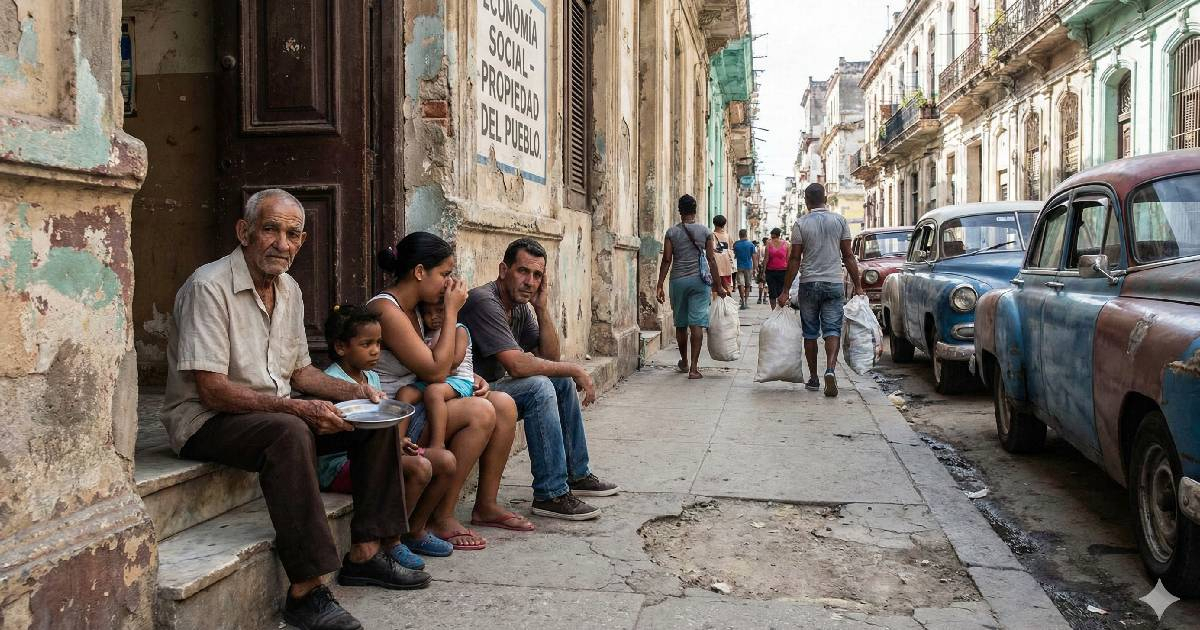
Remittances do not support the regime: they support families. They help mothers feed their children, grandparents buy medication, and young people survive on the bare minimum. The flights are not ideological tourism: they are reunions, farewells, emergencies, funerals, hugs that have been years in the making. The videos, the information, the culture that come from outside are not propaganda: they are mental oxygen for a society living under censorship.
We are being sold the idea that if the population is sufficiently suffocated, there will be an “internal explosion” that will overthrow the dictatorship. But then the question is inevitable: where was that real support on July 11, 2021? When the people took to the streets unarmed, without leaders, without protection, crying for freedom, they were repressed, imprisoned, and abandoned. There was no intervention, no structural backing, no international safety net. The people were left alone.
And now, from the comfort of exile, some propose more punishment as if suffering were a political strategy. As if hunger organized revolutions. As if despair produced democracy. History shows the opposite: authoritarian regimes know how to survive misery; it's the citizens who do not survive.
Cutting flights, remittances, and communication does not weaken the system; it weakens civil society. It isolates, fragments, pushes people into the black market, into illegality, into silence. It takes away tools from the average citizen, not from the repressive apparatus.
Freedom is not built from isolation or collective punishment. It is built with information, human connections, real support for those inside, and smart political pressure, not through decisions that increase the suffering of those who are already trapped.
Being critical of the dictatorship cannot mean losing one’s moral compass. Because if to "overthrow" a regime one must first destroy its people, then the problem is not just political; it is deeply ethical.
And that also needs to be said. Without fear. Without slogans. Without hypocrisy.
Filed under:
Opinion article: Las declaraciones y opiniones expresadas en este artículo son de exclusiva responsabilidad de su autor y no representan necesariamente el punto de vista de CiberCuba.