
Related videos:
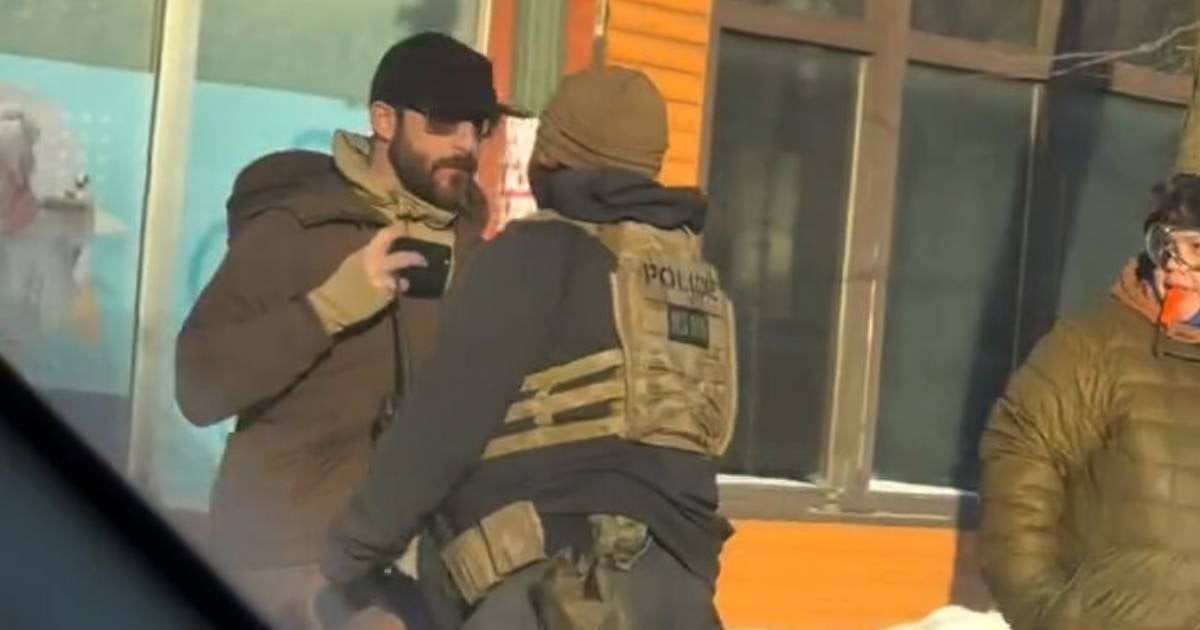
The two federal agents who shot the demonstrator Alex Pretti in Minneapolis have been identified in government records as Jesús Ochoa, a Border Patrol agent, and Raymundo Gutiérrez, an officer with Customs and Border Protection (CBP).
Both are identified in documents reviewed by ProPublica as the shooters during the incident on January 24 that left Pretti dead and sparked mass protests, as well as calls for criminal investigations at both state and federal levels.
Ochoa, 43 years old, and Gutiérrez, 35, were assigned to Operation Metro Surge, an initiative launched in December that deployed dozens of armed and masked agents across various areas of Minneapolis.
Both are from southern Texas.
Ochoa joined the CBP in 2018. His ex-wife stated that he was a firearms enthusiast and owned about 25 firearms, including rifles, handguns, and shotguns.
Gutiérrez joined in 2014 and is part of a special response team that conducts high-risk operations similar to SWAT units.
The CBP, which employs the two men, initially refused to disclose their identities and offered few details about the shooting, which occurred just days after another federal agent shot and killed another protester in the city: Renee Good, a 37-year-old mother of three.
Pretti, 37 years old, was a nurse in the intensive care unit at a hospital of the Department of Veterans Affairs. He died after being shot at close range during a struggle with federal agents.
His case generated an unusual political reaction. Legislators from both parties, Democrat and Republican, demanded a transparent investigation.
The Department of Homeland Security (DHS), which oversees CBP, confirmed that the agents were suspended following the shooting. Subsequently, the Department of Justice announced that its Civil Rights Division has opened a formal investigation into the case.
A report cited by CNN and CBS indicates that during the altercation, an officer shouted, “He has a gun!” and about five seconds later, one fired a Glock 19 and another a Glock 47. It is unclear whether both shots hit while Pretti was already on the ground.
According to the same document, after the shooting, an officer reported that he had in his possession Pretti's firearm.
However, videos recorded by witnesses show that the weapon was removed from Pretti's waistband before the shots were fired, contradicting the federal government's initial version that he approached the officers armed.
Days later, it was revealed that the shooting was recorded by multiple body cameras worn by federal agents. The DHS confirmed that there are recordings from various angles, which are being analyzed as a central part of the investigation and could be crucial in establishing legal responsibilities.
Following the scandal, Gregory Bovino, who had led intensive immigration raids in cities governed by Democrats since early 2025, was removed from his position as Chief of the Border Patrol and reassigned to a previous post in California.
The death of Pretti occurs within the context of a federal migration offensive characterized by aggressive operations, masked agents, and a level of opacity that hinders accountability.
For many critics, the concealment of identities undermines a basic mechanism of public control over the use of force.
Minnesota Governor Tim Walz blamed agents “without the proper training.” Minneapolis Mayor Jacob Frey urged to avoid further misinformation and confrontation.
Meanwhile, Trump sent border czar Tom Homan to the city to lead ICE operations, a decision that heightened tensions even further.
The death of Pretti was the second fatal shooting involving a federal agent in Minneapolis in less than a month. Both deceased were U.S. citizens, a fact that has intensified the national debate about the scope, methods, and limits of the power of immigration agencies.
Filed under: