
Related videos:
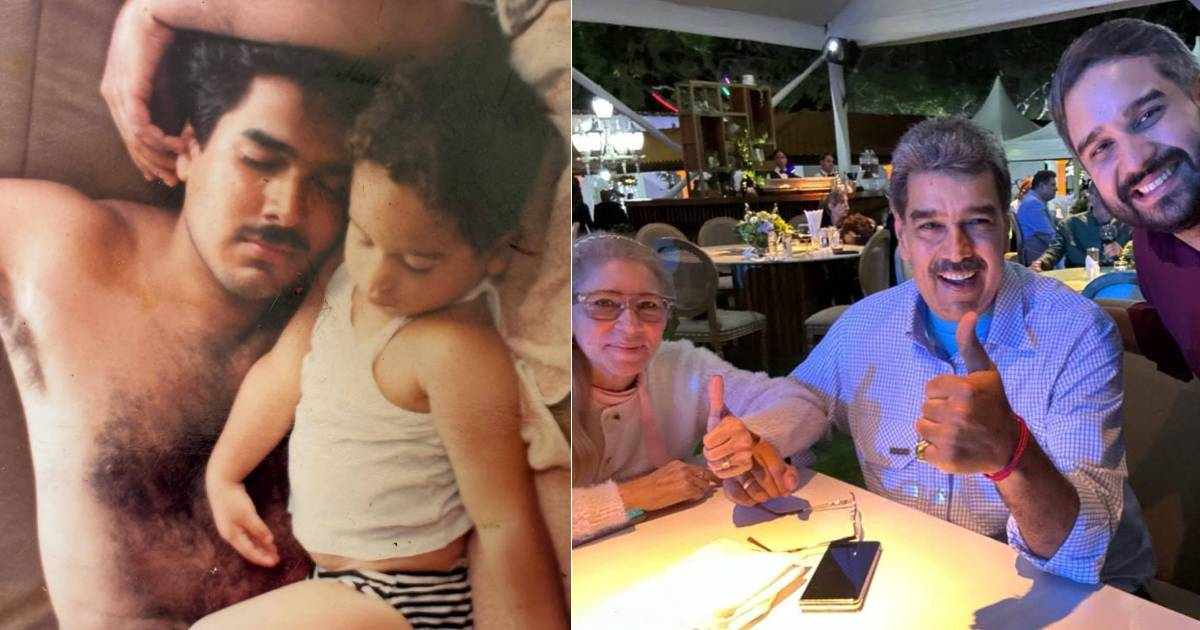
Nicolás Maduro Guerra, “Nicolasito,” wanted to demonstrate strength, faith, and loyalty. However, his message ended up fueling a fire that has been burning for years, namely the anger of thousands of Venezuelans who feel expelled from their country, separated from their families, and marked by the crisis.
"One month, without your advice, without your quick response..." he wrote on Facebook, in a text filled with solemn phrases and an epic tone. He stated that it has been "very hard" to go 30 days without directly hearing from or seeing his father. He swore that they remain "united and steadfast," and promised that when he sees him again, they will share "a hug" and continue "the path of Bolívar and Chávez." He closed with a slogan shout: "Long live Venezuela! Long live the homeland!"
The detail is that, for a large part of the networks, that “one month” felt not like pain, but like a privilege. And the “embrace” stirred an uncomfortable echo, reminiscent of the millions who have gone years without being able to hug their loved ones.
In the comments, the post became a fierce thermometer of reactions. "Reading this almost made me cry, but from laughing, hahaha… one month and counting," said one user. Another mocked the dramatic tone with a blunt remark: "leave the drama… And be grateful you don't have him dead. Happy first month." Someone even suggested turning the date into a celebration: "You have 4F… we now have 3E, a day we will always celebrate."
Sarcasm mingled with a sense of collective joy. “Today more than 80% of Venezuelans are celebrating,” wrote one user, while another marked the “first month” as an anniversary: “Happy first month… and may many more come.” A phrase echoed like a chorus: “One month and the ones to come.”
But beyond the mockery, the post uncovered the resentment of those who feel that Chavismo took away the life they once knew. “I haven't felt a hug from my parents in almost 10 years because I had to migrate,” commented a woman, recalling endless lines to get food. Another summarized the migration crisis with a simple image: “I haven't hugged my son in years... just like millions of others.”
Among the messages, there were also those who softened the tone and intertwined it with memory and pain. One user wrote: “It almost moves me; I remembered the children of Oscar Pérez, and it passed.” Others recalled political prisoners and families without news: “Now imagine the relatives... who have no quick or slow answers.”
The contrast was striking. While some called for "support" and spoke of "divine justice," others defended Maduro with language of resistance and slogans, accusing the United States of "empire" and "kidnapping." This clash depicted the fractured country left by chavismo... and the symbolic weight that the absence of the man who governed it for years carries today.
The backdrop: capture, trial in New York, and a country in tension
The post by “Nicolasito” comes a month after an event that changed the regional political landscape. On January 3, 2026, Donald Trump confirmed the capture of Nicolás Maduro and Cilia Flores in a U.S. military operation carried out in the early morning, with their transfer outside of Venezuela.
A few hours later, the then Vice President, Delcy Rodríguez, acknowledged that the government had lost communication with Maduro and Flores and demanded "proof of life," while denouncing an "unprecedented imperial aggression." On the same day, explosions and clashes were reported in areas such as Caracas, Aragua, La Guaira, and Miranda, with images of detonations near Fuerte Tiuna and the Palacio de Miraflores.
In the United States, the Department of Justice announced charges against Maduro and Flores for narco-terrorism, conspiracy to import cocaine, and possession of military-grade weapons, with proceedings in the Southern District of New York. Attorney General Pamela Bondi stated they would face “the full weight of U.S. justice.” Days later, Maduro appeared before a judge in Manhattan, pleaded not guilty, and uttered a phrase that still resonates: “I was captured, I am still the president of my country.”
Meanwhile, the case has been expanding. On January 26, it was reported that the Prosecutor's Office included Nicolás Maduro Guerra in the accusation for alleged involvement in an international drug trafficking and conspiracy network, with indications of links to FARC dissidents and the use of state resources for logistics. “Nicolasito” himself has maintained a public presence in Caracas.
Filed under: