
Related videos:
The Cuban regime dismissed on Tuesday any possibility of including the release of political prisoners in a potential dialogue with the United States, in a new gesture that confirms the rigidity of its stance in the face of increasing international pressure.
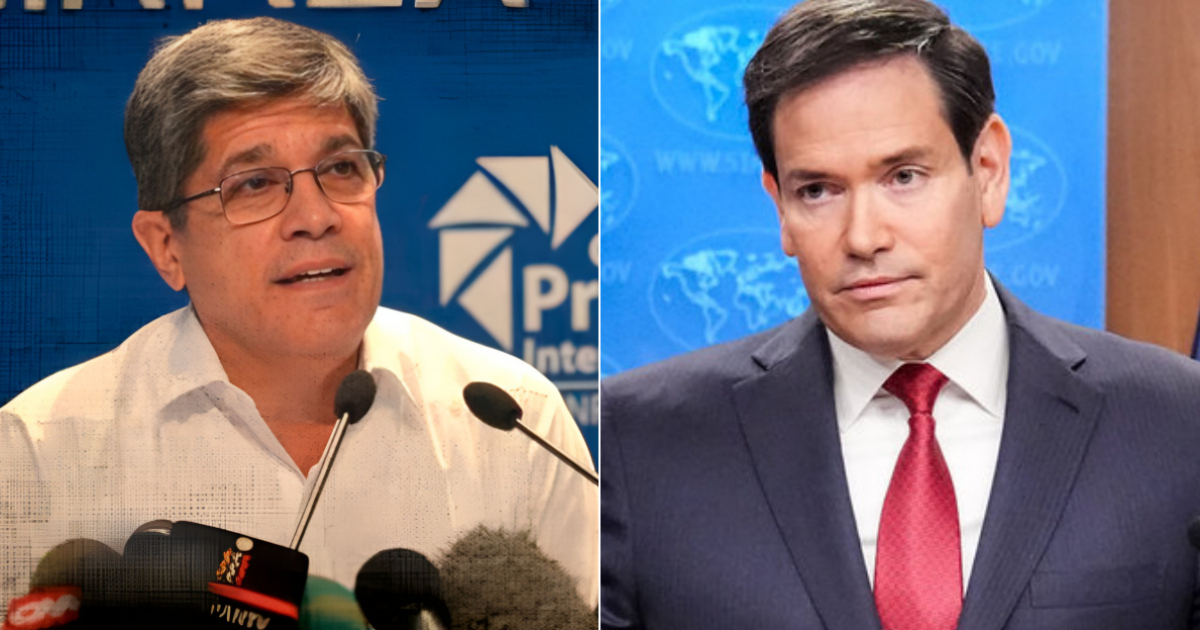
In an interview with the agency EFE, the Deputy Minister of Foreign Affairs, Carlos Fernández de Cossío, stated that “there is no intention to discuss that topic,” when asked about a possible release of prisoners held for political reasons.
"We see no reason, we see no connection between one issue (oil blockade) and the other (prisoners)," stated the official.
The words of Fernández de Cossío come amid the process of releasing hundreds of political prisoners in Venezuela, which is part of the roadmap promoted by the United States following the capture of Nicolás Maduro on January 3rd.
In Caracas, the interim administration led by Delcy Rodríguez has announced reconciliation measures supervised by representatives from the Department of State, under the framework of the three phases outlined by Secretary of State Marco Rubio: stabilization, recovery, and democratic transition.
In contrast, Cuba maintains its refusal to engage in any similar gesture. The Cuban deputy minister insisted that the regime will not agree to discuss internal matters such as the Constitution, the economy, or the socialist system of government.
"We have the same limitation that Washington would have in discussing with Havana about the Constitution of the United States or the migrant raids in Minneapolis," asserted Fernández de Cossío.
Analysts interpret these statements as a direct response to the Venezuelan situation and Washington's "phased transition" strategy, which is now targeting the island.
The tightening of Cuba's diplomatic rhetoric aims to distance itself from Caracas and send a signal of internal control at a time when the White House views Cuba as the core of the Latin American authoritarian axis.
The refusal to release political prisoners also reveals the regime's insecurity in the face of a potential transition scenario.
"Speaking about political prisoners would be to acknowledge their existence," said an academic consulted in Havana, recalling that the regime hides them behind the guise of Crimes Against State Security and similar charges. "Acknowledging that there are political prisoners would mean admitting that there is opposition in Cuba, something the system denies by definition," he added.
While Venezuela moves towards a process of controlled opening, the Cuban regime is entrenched: technical dialogue, yes; political concessions, none.
Hundreds of political prisoners that the regime refuses to acknowledge
While the Cuban regime insists on denying the existence of political prisoners, the figures collected by human rights organizations and civic groups contradict that narrative.
According to the latest report from Prisoners Defenders, based in Madrid, the Cuban dictatorship currently holds over 1,000 political and conscience prisoners, the highest number in the Western Hemisphere.
The report details that at least 781 people are still serving sentences or precautionary measures for political or conscience reasons, while another 300 remain under house arrest or surveillance.
Among them are 11J protesters, activists, artists, independent journalists, and ordinary citizens who expressed criticism on social media.
The group Justicia 11J, formed after the protests in July 2021, documents cases with names, ages, and sentences, and denounces the use of the Penal Code as a tool for political punishment.
According to their database, more than 60% of political prisoners are young people under 35 years old, many of whom have no prior criminal records, and several have received sentences of over 10 years for offenses such as "public disorder," "sedition," or "enemy propaganda."
Both Human Rights Watch and Amnesty International have pointed out that Cuban authorities criminalize dissent through trials lacking procedural guarantees and arbitrary detentions.
Amnesty has repeatedly called for independent access to the prisons and has denounced the lack of judicial transparency in the processes related to the protests of 2021 and 2022.
International organizations such as the UN, the European Parliament, and the Inter-American Commission on Human Rights (CIDH) have also demanded the immediate release of those detained for political reasons, reminding that repression in Cuba constitutes a systematic violation of the International Covenant on Civil and Political Rights, to which the country is a signatory.
Despite the evidence and international calls, the Cuban regime maintains the narrative that there are no political prisoners on the island, but rather "individuals sanctioned for common crimes."
That denial—now reiterated by Fernández de Cossío—is part of the regime's discursive armor, which seeks to prevent any comparison with the transition process being experienced in Venezuela.
Filed under: