
Related videos:
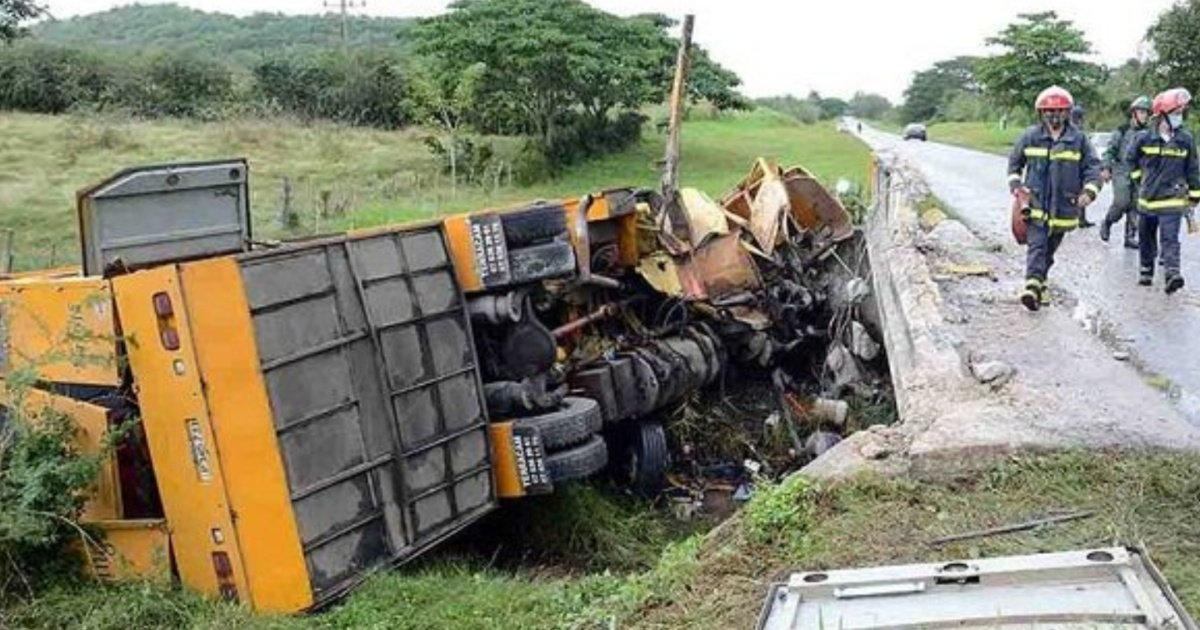
Traffic accidents in Cuba resulted in 750 fatalities and 6,718 injuries in 2025, according to official figures presented at a recent meeting of the National Road Safety Commission.
In the meeting chaired by the Minister of Transport, Eduardo Rodríguez Dávila, and reported by the state-run Cubadebate, it was revealed that a total of 7,538 accidents were recorded, a number that the authorities deemed "high."
According to the data presented at that meeting, three behaviors were behind 72% of the accidents: failing to yield the right of way, not paying adequate attention, and speeding.
The official presentation again pointed to the human factor as the predominant cause of the events, as it involved "preventable" decisions behind the wheel.
The report placed the 2025 figures in the context of changes in the vehicle fleet, characterized by a “sustained growth” of vehicles considered vulnerable, particularly motorcycles and mopeds.
According to the released data, motorcycles, mopeds, and pedestrians were involved in 63% of the recorded incidents, which reflects an increased risk for those navigating with less physical protection on a road infrastructure described as deteriorated and shared with larger vehicles.
In the territorial breakdown, the provinces with the most unfavorable behaviors were Havana, Villa Clara, and Ciego de Ávila, as they stood out negatively in terms of the number of accidents, fatalities, and injuries.
From an institutional perspective, official data indicated a significant role of the state sector in accident rates: it was noted that the sector is responsible for "half" of the accidents involving its vehicles and that, in fact, "one in two" incidents involving a state vehicle is caused by it.
The administrative response reflected in the meeting included measures regarding licenses: in 2025, 545 licenses were suspended, and 98% were related to drivers in the state sector. Additionally, there were reports of 97 canceled licenses.
Risk factors
The report also mentioned other risk factors. Although alcohol-related accidents may have decreased in number, there was an indication of an increase in their severity. As on previous occasions, the regime avoided mentioning the poor condition of the roads and the terrible state of the vehicle fleet.
At the time of the incident, 580 drivers had consumed alcoholic beverages, according to the data provided.
Another warning was the participation of unlicensed drivers: the report revealed that 31% of drivers involved in accidents during 2025 did not possess a driver’s license, which would equate to “three out of ten” incidents attributable to that group, according to the text.
Regarding incidents involving loose animals, the Ministry of Agriculture reported a general decrease compared to the previous year; however, it was noted that Villa Clara and Santiago de Cuba experienced an increase in accidents due to this reason. Four territories—Mayabeque, Villa Clara, Holguín, and Sancti Spíritus—accounted for 49% of these cases.
In the railway sector, there were 9 incidents involving loose cattle on the tracks, compared to 20 the previous year.
Filed under: