
Related videos:
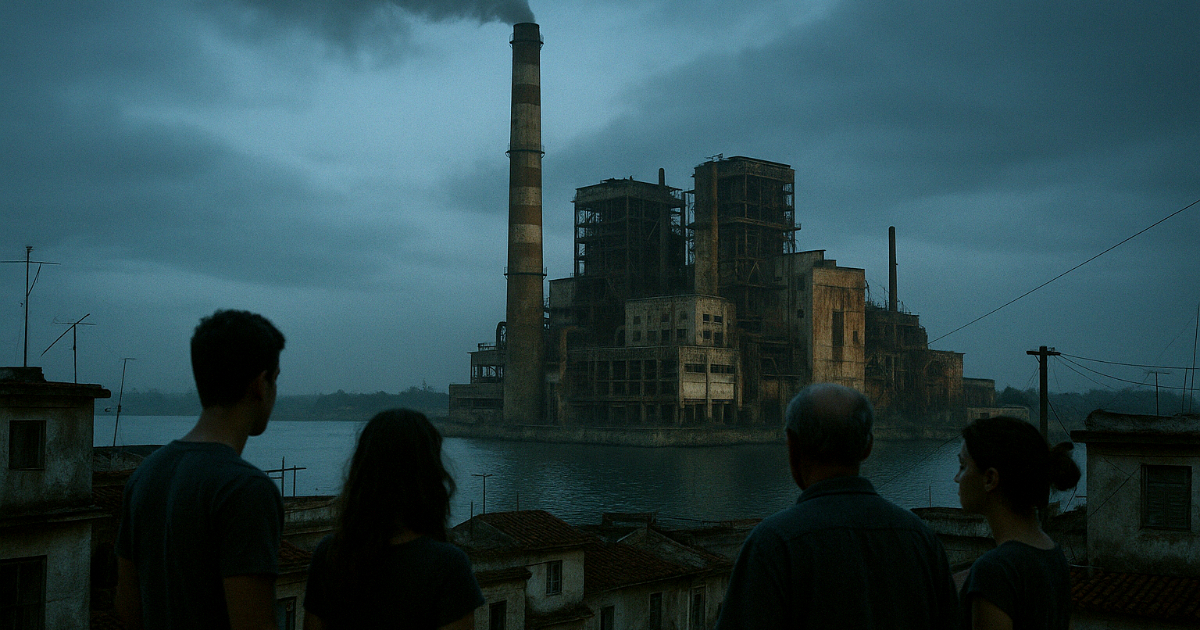
The energy crisis in Cuba once again highlights the extent of the collapse of the national electrical system, a result of decades of inefficiency, lack of investment, and poor maintenance by the government.
According to the from the Electric Union (UNE), the service was disrupted yesterday due to a capacity deficit throughout the day, with the highest impact recorded at 6:20 PM, when 1,844 MW were out of service.
The total availability of the National Electroenergetic System (SEN) early in the morning was only 1,255 MW, compared to a demand of 1,745 MW, resulting in an impact of 519 MW, and during the midday period, an impact of 950 MW was estimated.
Among the thermal units that are out of service are four thermoelectric units from the CTE Mariel, Santa Cruz, Felton, and Renté. Additionally, maintenance work is being carried out on two blocks of the CTE Cienfuegos and Diez de Octubre.
On the other hand, the general limitations in thermal generation reach 525 MW.
During peak hours, the entry of five Fuel Moa engines with 75 MW and five Regla barge engines with 64 MW is expected.
This would allow for only 1,394 MW to be reached against a demand of 3,100 MW, resulting in a deficit of 1,730 MW and an estimated impact of 1,760 MW.
Despite the inauguration of 49 new solar photovoltaic parks, the production from this renewable source reached 2,091 MWh, with a maximum output of 393 MW during peak demand hours, which was insufficient to offset the decline in thermal generation and ensure electric supply for the population.
In Havana, the Electric Company reported that the service was interrupted on Thursday for 14 hours and 55 minutes.
"The maximum sufficiency was 387MW at 6:20 PM, due to an emergency there were 75 MW," details the note on Facebook.
The total restoration occurred at 8:20 PM, and the institution warned that if the availability conditions of the SEN do not improve, further disruptions due to energy contingencies are expected without scheduled times.
The power collapse affects not only households but also industry, agriculture, food production, and the provision of basic services.
The accumulation of breakdowns, delayed maintenance, and reliance on emergency generators highlight the government's inability to ensure energy for Cubans.
The widespread power outages, in some cases lasting over 20 hours, are a direct consequence of decades of neglect, poor planning, and the obsolescence of thermoelectric plants.
The situation once again highlights that, despite the inauguration of solar sources, the country remains trapped in a cycle of chronic energy insufficiency, where the population endures continuous outages and severe restrictions, while state authorities insist on temporary measures and appeal to "savings" as if it were enough to address a structural problem.
Filed under: