
Related videos:
For decades, Cubans have used a phrase that, blending humor and resignation, encapsulates the country's stagnation: "the little room is just the same".
It was said when someone returned home, or to reality, and everything remained the same: the poverty, the lines, the speeches, the unfulfilled promises.
Over time, the "cuartico" became a metaphor for a stagnant country, a closed room where nothing changes despite the passing years.
But today, something is changing. The little room is no longer the same.
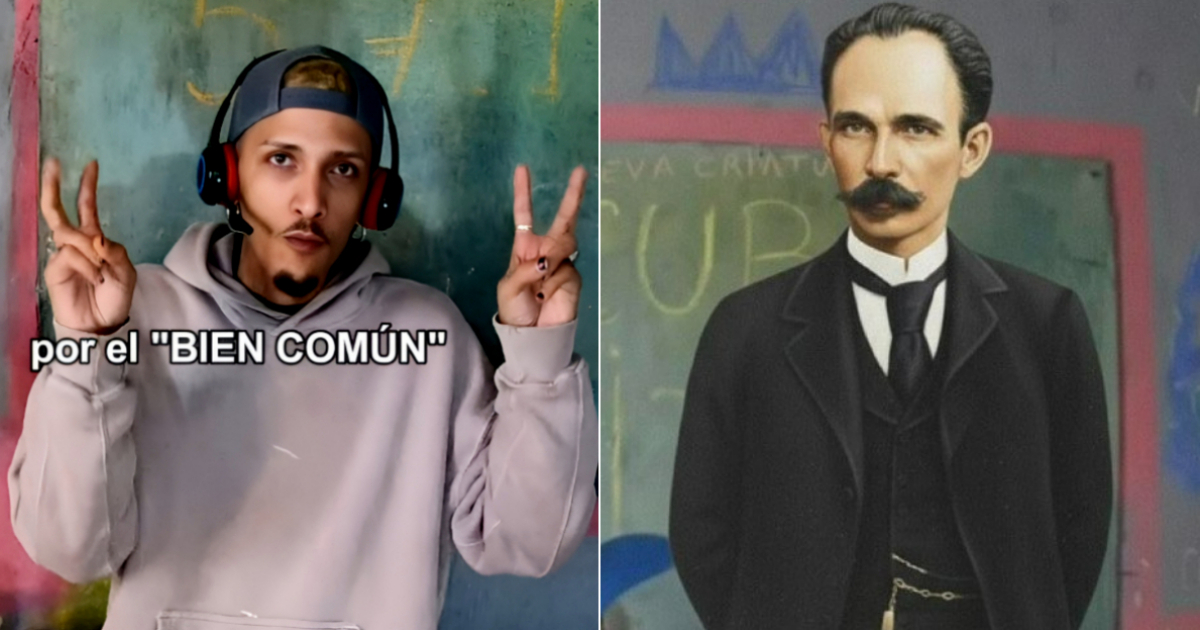
The new Cuban generation is opening windows in that dusty room. Young creators, activists, and ordinary citizens are losing their fear and reclaiming their voices.
Projects like El4tico or Fuera de la Caja Cuba, and figures such as Anna Sofía Benítez, are part of a civic awakening of a new generation that is no longer content with mere survival.
These young people use social media to explain what those in power silence: that Cuba exists under a totalitarian, corrupt, and exhausted system, where expressing an opinion is a risk and remaining silent has become a form of internal death.
The case of El4tico illustrates this starkly. After releasing a series of videos exposing the repressive and extractive nature of the Cuban government, two of its members, Kamil Zayas Pérez and Ernesto Ricardo Medina, were detained in Holguín.
His equipment was confiscated and his family was placed under surveillance. A few hours later, a posthumous letter written by Kamil revealed that the young man had anticipated his arrest: "I am not being arrested for stealing, I am being arrested for the only crime that a dictatorship cannot tolerate: thinking for myself."
But what the regime did not foresee was the echo. Dozens of young people responded on social media with videos, messages, and campaigns under the hashtag #WeAreAllEl4tico. Artists, activists, and other members of civil society have come forward to denounce this new violation by State Security.
In their messages, they repeat a key idea: "They didn’t arrest El4tico, they kidnapped the voice of all Cubans." It reflects a generation that no longer speaks from fear, but from dignity.
This social change occurs in an unprecedented political context. Following the capture of Nicolás Maduro and the collapse of the Chavista apparatus, Cuba lost its main ally and supplier, leaving it more exposed and isolated than ever.
United States, under the leadership of Donald Trump and Marco Rubio, has implemented a strong regional pressure strategy against the dictatorships of the Bolivarian axis. In this new landscape, Havana has lost its room to maneuver, while the internal crisis —economic, moral, and political— deepens.
However, the most important transformation does not take place in the halls of power, but in people's minds.
Each video, each letter, each public denunciation shows that Cuban society is changing. It's no longer just about surviving or emigrating; it's about claiming rights, demanding freedom, and naming reality with its true words. This is the silent revolution that frightens the regime: the one of free thought.
"The little room is exactly the same" was, for years, the lament of a stagnant country. Today it has transformed into its opposite: a warning to those in power that the little room is no longer under their control.
The young people have started moving the furniture, opening the curtains, and letting the light in. And when that happens, no matter how much the repressors try to pretend that everything is in its place, the little room will never be the same as before.
Filed under: