
Related videos:
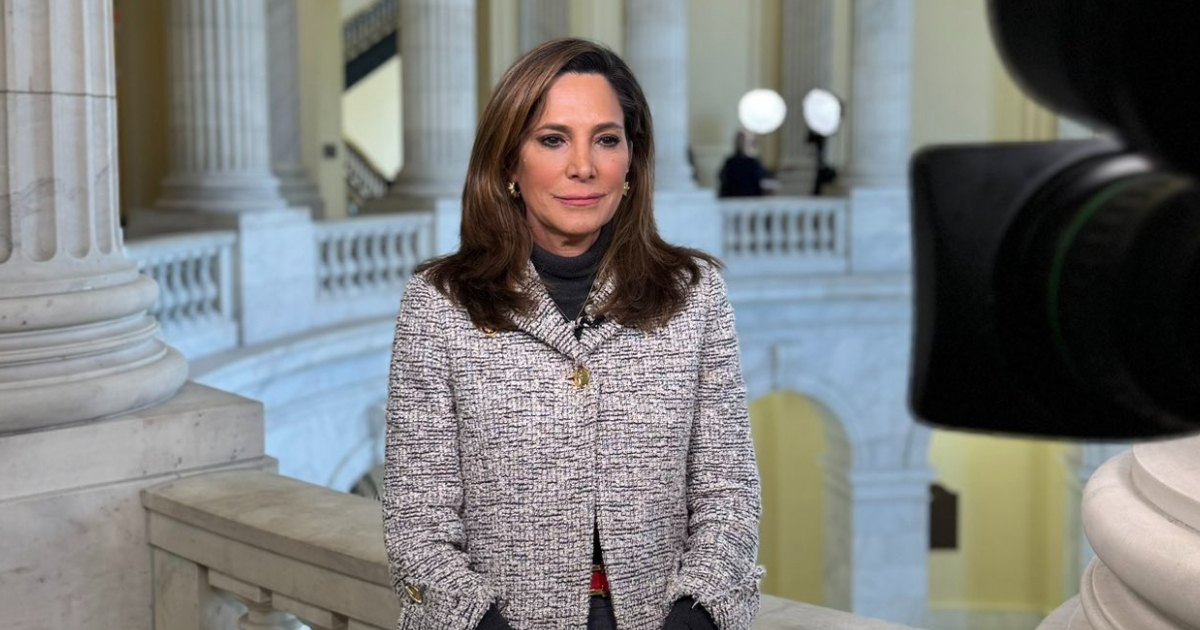
The Cuban-American congresswoman María Elvira Salazar issued a strong condemnation of the Venezuelan regime following the re-arrest of opposition leader Juan Pablo Guanipa, just hours after he was released.
Through her official account on X, the Republican representative from Florida not only condemned the events that occurred but also held the main leaders of the Venezuelan interim government directly responsible and warned of potential diplomatic consequences.
"The kidnapping of Juan Pablo Guanipa, just hours after his release, confirms the usual pattern: every communist tyrant pretends to engage in dialogue and reconciliation only to buy time and cling to power. If the regime genuinely wanted real reconciliation, it would allow free parties, freedom of expression, and free assembly. It does not.", Salazar wrote.
“Los hermanos Rodríguez are responsible for this kidnapping. The regime must be held accountable for the safety of Juan Pablo Guanipa and release him immediately. If anything happens to him, there will be very serious consequences. The United States is watching, concluded the lawmaker, raising the tone of her demand.”
Salazar's words point directly to Delcy Rodríguez, interim president of Venezuela following the capture of Nicolás Maduro by U.S. forces on January 3, and to Jorge Rodríguez, president of the National Assembly, as the political responsible for the incident.
From hope to uncertainty: the release that lasted hours
The case of Juan Pablo Guanipa, one of the main allies of María Corina Machado - opposition leader and Nobel Peace Prize winner 2025 - reflects the instability of the political prisoner release process in Venezuela.
Released on Sunday after more than eight months in detention, Guanipa spoke to the press with an optimistic tone:
"I am convinced that our country has changed completely. I am convinced that it is now our responsibility to focus on building a free and democratic country."
However, that freedom was short-lived. Hours later, he was captured again by a group of armed men, dressed in civilian clothing, who intercepted him in a residential neighborhood of Caracas. Machado reported this:
“Strongly armed men, dressed in civilian clothes, arrived in four vehicles and violently took him away. We demand his immediate release.”
The version was supported by the leader's son, Ramón Guanipa, who demanded an immediate certificate of life.
"A group of about 10 unidentified individuals intercepted and abducted my father," he wrote on X.
Official justification: Violation of release conditions
Hours after the incident, the Venezuelan Prosecutor's Office confirmed that Guanipa had not been "kidnapped," but rather that his release had been revoked due to alleged non-compliance with the judicial conditions imposed. The measure was replaced with a house arrest regime.
The statement from the Public Ministry emphasized:
"The precautionary measures agreed upon by the courts are contingent upon strict compliance with the imposed obligations."
Although the specifics of the violations were not detailed, local media reported that Guanipa had visited detention centers in Caracas, met with the families of inmates, and made statements to the press.
These actions could have violated common prohibitions associated with such measures, such as avoiding political acts or contact with the media.
More releases, more doubts
The release of Guanipa was part of a package of releases initiated by the government of Delcy Rodríguez, following a meeting with representatives of the UN High Commissioner for Human Rights. At least 30 people were freed, as confirmed by the NGO Foro Penal.
Among the released were figures close to Machado, such as his lawyer María Oropeza—who was arrested during a violent raid broadcast live—and his attorney Perkins Rocha.
Despite these gestures, human rights organizations and the Venezuelan opposition have criticized the process for its opacity, slowness, and lack of guarantees.
The National Assembly is currently discussing an amnesty bill, but even its approval has not dispelled suspicions about the regime's true intentions.
María Elvira Salazar as an international voice of pressure
Salazar's intervention is not isolated.
From his position in Congress, he has maintained a strong stance against the authoritarian regimes in Latin America, especially in Cuba, Nicaragua, and Venezuela.
In the case of Guanipa, his message was direct, political, and tinged with a strategic warning: “The United States is watching,” he emphasized.
With this, he left the door open to future sanctions or diplomatic reactions if the Guanipa case becomes a new breaking point in the already tense relations between the government of Venezuela and the United States, despite the new political context following Maduro's fall.
The recapture of Juan Pablo Guanipa, under unclear accusations and amid a process supposedly aimed at national reconciliation, has once again brought Venezuela into the international spotlight. María Elvira Salazar's words not only reflect the indignation of political sectors in Washington, but also serve as an explicit warning: scrutiny of the regime's actions continues, and impunity will not be tolerated.
Meanwhile, Guanipa remains under house arrest, once again becoming a symbol of a persecuted opposition that demands real guarantees for democratic practice. And the international community, as the congresswoman warned, continues to observe.
Filed under: