
Related videos:
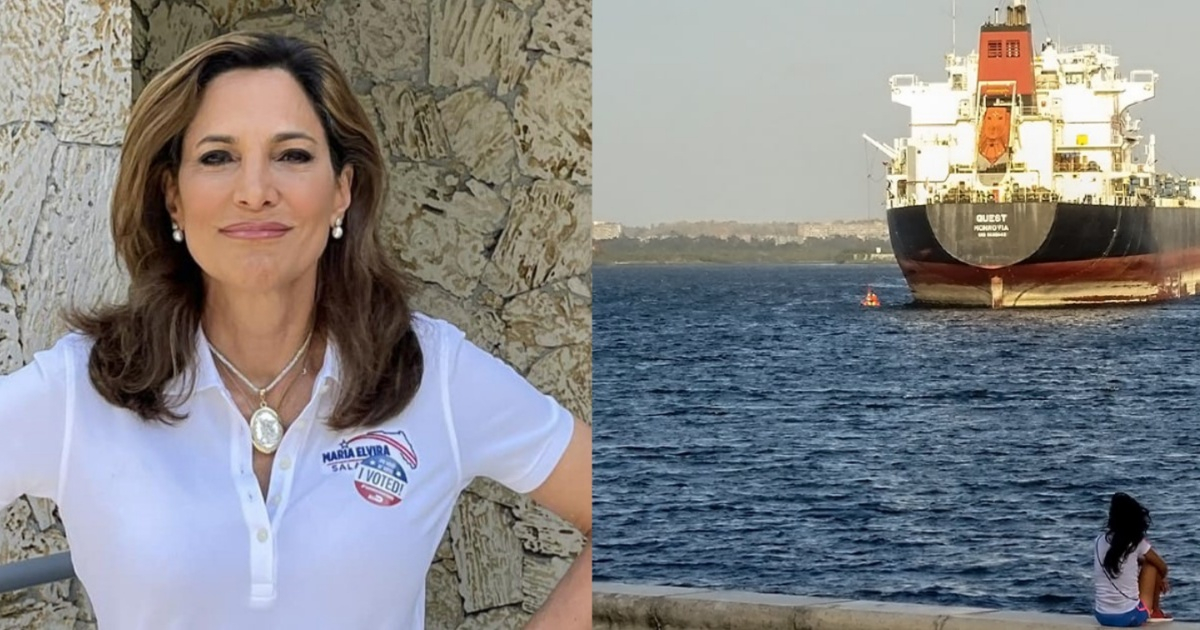
Cuban-American congresswoman María Elvira Salazar argued that the oil arriving in Cuba is not for the Cuban people following reports that the regime on the island resold 60% of the oil sent by Venezuela
“Where are those who justify the Cuban regime now? Where are those who claim that the United States is to blame, while the dictatorship chooses to feed its repressive apparatus instead of providing electricity to its own people?” said the Republican from Florida on X.
"As I have said time and time again: the oil that arrives in Cuba is not for the Cuban people. It is to sustain the military elite, the political police, and a system designed to repress, not to light homes or put food on the table. The blackouts are not an accident. They are a decision of the regime," he added.
Resold oil
While millions of Cubans endure prolonged blackouts and a chronic fuel shortage, the island's government has allegedly resolda significant portion of the subsidized oil it received from Venezuela, according to a senior U.S. official.
The information was revealed to El Nuevo Herald, which published an investigation based on previously undisclosed data from a United States government analysis.
According to that source, Cuba received about 70,000 barrels per day of Venezuelan crude and derivatives between late 2024 and late 2025, but later sent approximately 40,000 barrels per day, close to 60%, to Asia for resale.
The official, belonging to the State Department, described the resale of oil as “yet another proof that the illegitimate Cuban regime only prioritizes its own enrichment,” while the people suffer the consequences of the most severe energy and economic crisis in decades.
“Ordinary Cubans deserve to know the truth about why the regime hides billions in bank accounts abroad instead of investing in electricity, infrastructure, and basic needs,” he stated.
For years, experts had suspected that a portion of Venezuelan oil was not ending up in Cuban thermoelectric plants. Last December, U.S. forces seized a tanker from the so-called "dark fleet" off the coast of Venezuela that had transferred part of its cargo to a vessel bound for Cuba before continuing its course towards Asia, likely headed to China.
The figures revealed now far exceed previous estimates. Researchers and agencies like Reuters estimated that shipments from Venezuela ranged from 27,000 to 30,000 barrels per day, enough to cover nearly half of Cuba's oil deficit. The new analysis from the U.S. government suggests that the actual volume was much higher and that a significant portion never made it to the island.
Tariffs for those supplying oil to Cuba
The president Donald Trump intensified this week his maximum pressure policy against the Cuban government by signing an executive order on Thursday that declares a "national emergency" and threatens to impose additional tariffs on countries that supply oil to the island.
The decision directly aims to worsen the fuel shortage that is already causing prolonged blackouts, transportation paralysis, and severe economic and social impacts.
Trump justified the measure by accusing the Cuban regime of posing an "unusual and extraordinary" threat to national security and U.S. foreign policy, highlighting its connections with Russia, China, Iran, and groups such as Hamas and Hezbollah.
Although he denied seeking to suffocate Cuba, the president himself stated that the regime "will not be able to survive" under these conditions, the BBC recalled.
The executive order aims to deter third countries from selling oil to Cuba under the threat of increased tariffs, expanding a strategy that Trump initiated in 2017 by reversing the opening promoted by Barack Obama and reinstating strict restrictions.
In 2026 so far, Cuba has received only one shipment of 84,000 barrels from Mexico, equivalent to less than 3,000 barrels daily, according to data from the company Kpler cited by The Financial Times. At this rate, the island would have reserves for only about 15 to 20 days.
For years, Venezuelan oil not only met part of domestic consumption but also allowed the Cuban government to generate foreign currency through its resale.
With that flow cut off, Mexico became the main energy supplier, with shipments estimated at around 12,000 barrels per day in 2025.
That is precisely the objective of Trump's new order: to warn Mexico not to replace Venezuela as a key supplier, the source emphasized.
President Miguel Díaz-Canel reacted strongly, and accused the Trump administration of trying to "suffocate the Cuban economy" while labeling its government as "fascist, criminal, and genocidal."
Filed under: