
Related videos:
It feels as though they are killing a child of mine every time they deny a man the right to think.
José Martí
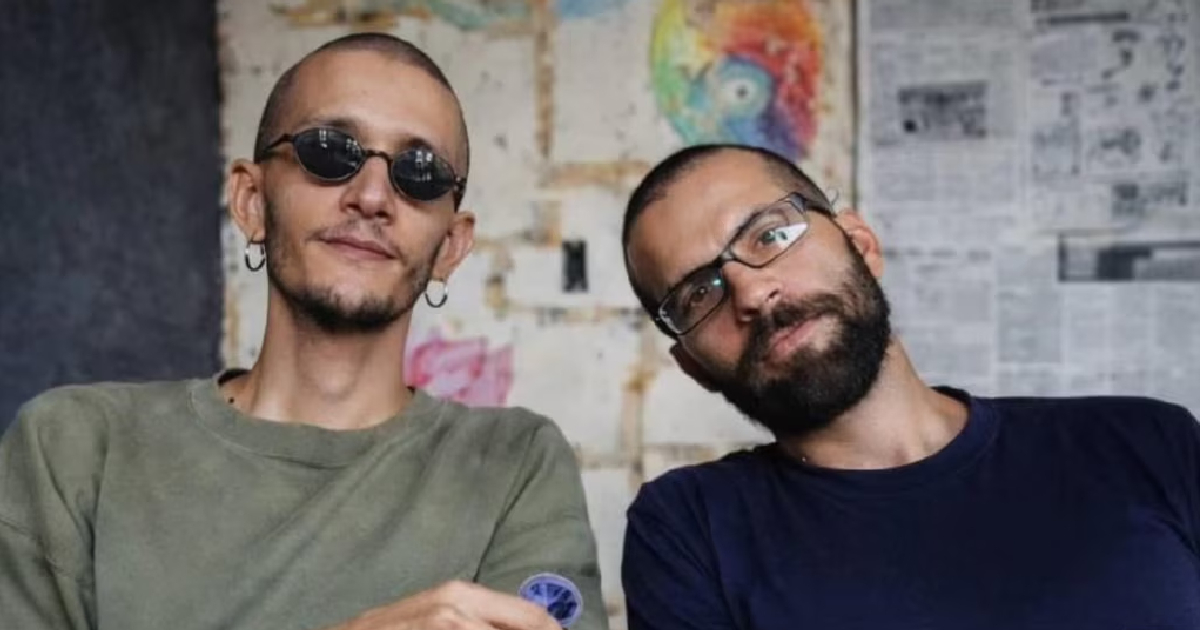
There are phrases that do not age because they arise from the deepest pain and the purest truth. Martí's words resonate today with an unbearable intensity when we think of the young people from the El4tico platform detained in Cuba for doing the only thing that should not be a crime in any country: to think, to speak, to question.
Every detention of a young person expressing their opinion, every interrogation for an idea, every threat for a word, is an open wound in the soul of a nation. It is not just an arrest. It is not merely a record. It is, as Martí said, the feeling that something alive is being extinguished, that something human is being forcefully torn away. Because when thought is punished, what is being confined is not just a person: it is their voice, their perspective, their dignity.
Cuba has been, for generations, a land of young people who dream. Young people who write, who question, who envision a better country. And yet, those same young people are treated as enemies when they dare to articulate what they feel, what they see, what hurts them. The power fears free speech because free speech cannot be controlled. It cannot be tamed. It cannot be silenced without leaving deep scars.
The detention of young people who create content, who express their opinions, who exercise their basic right to free speech, reveals an uncomfortable truth: where thought is punished, freedom does not exist. And where freedom does not exist, fear becomes the norm.
There is something particularly heartbreaking about this happening to young people. Because youth represents what can still change. They are the future that has not yet been defeated. Silencing them is an attempt to amputate tomorrow. It is telling an entire generation that thinking is dangerous, that questioning is a risk, that speaking out could cost you your freedom.
But Martí understood something that remains true: the right to think is sacred. It does not belong to the State. It does not belong to a party. It does not belong to an ideology. It belongs to the human being.
When a regime confines those who think differently, it does not demonstrate strength. It shows fear. Fear of criticism. Fear of the truth. Fear of losing control over a narrative that can no longer stand without punishment and imposed silence.
And then the phrase echoes again, more relevant than ever: every time a young person is deprived of the right to express themselves, not only is their voice silenced, but a part of the country is also extinguished. Every cell that confines a young person for what they said is a silent confession of fragility, a testament that power no longer convinces and can only impose.
Today, they are not abstract names. They are someone's children. They are someone's friends. They are young people who could be studying, creating, dreaming, living. Instead, they are being punished for speaking from a room, for turning on a camera, for saying what many think but few dare to express.
And that should hurt the world.
Because when it becomes normal for a country to detain young people for expressing themselves, international silence also becomes a form of complicity. Freedom of thought cannot have borders. It cannot be a geographical privilege. It cannot depend on fear.
Martí felt it like the death of a child. Today, in Cuba, there are too many mothers with hearts in anguish, too many fathers waiting for a call, too many young people learning too soon that thinking can be costly.
This is not just a Cuban story. It is a human wound. And the world should not turn away while, one by one, they continue trying to kill thought.
Filed under:
Opinion article: Las declaraciones y opiniones expresadas en este artículo son de exclusiva responsabilidad de su autor y no representan necesariamente el punto de vista de CiberCuba.