
Related videos:
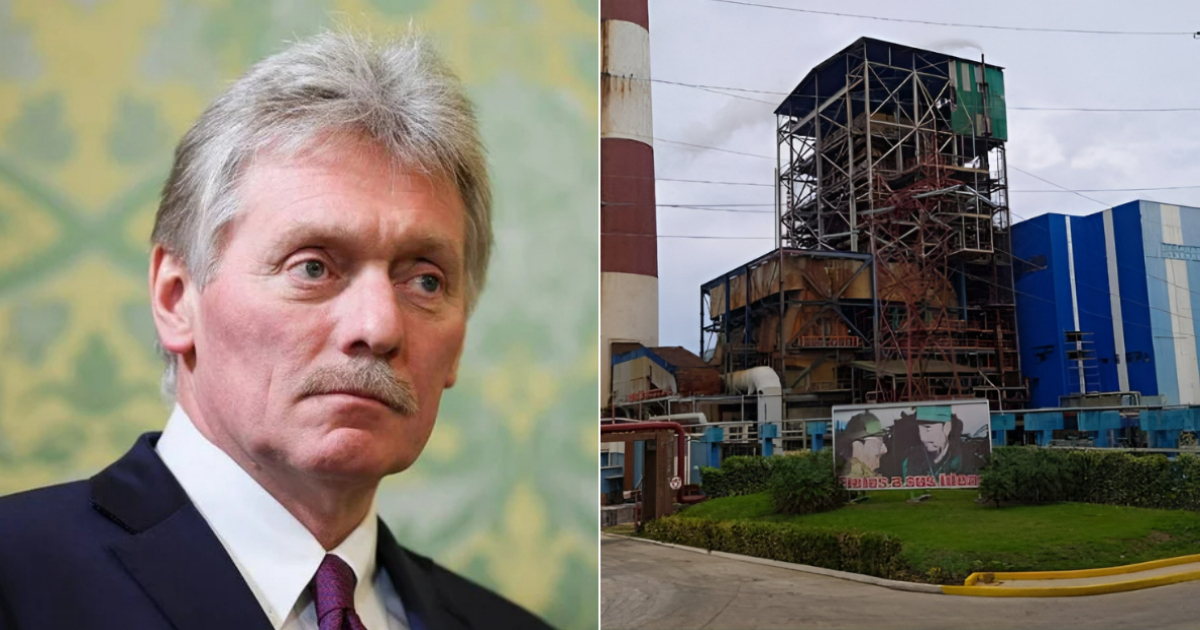
The Kremlin assured on Thursday that it "would not want any escalation" with the United States following Washington's threat to impose tariffs on countries that send oil to Cuba.
However, the statements from the Russian presidential spokesperson, Dmitri Peskov, hinted at a more complex position: Moscow is not seeking a direct clash, but it also does not shy away from its energy support for Havana amid increasing U.S. pressure.
Peskov reacted to the warning stemming from the executive order signed on January 29 by President Donald Trump, which declares a "national emergency" concerning Cuba and enables sanctions and tariffs against third countries that supply oil to the island.
In that context, the Russian spokesperson stated that Moscow does not wish for an escalation, although he downplayed the extent of possible reprisals by noting that bilateral trade between Russia and the United States is currently "practically non-existent".
The statement contains an evident paradox. If trade exchanges between both powers are nearly non-existent due to previous sanctions, the scope for tariff pressure on Russia would be limited, which would not effectively prevent Moscow from supplying fuels to Havana.
In this way, the Kremlin conveys a dual message: it does not want confrontation, but it also does not seem particularly concerned about the economic impact of the measures announced from Washington.
The most significant element of Peskov's appearance arose when he was questioned about the concrete plans for energy support to Cuba.
According to a report from the Russian media RT, at that point, the spokesperson refrained from providing details and maintained that it is not possible to speak publicly about these matters "for understandable reasons". The argument of secrecy adds a strategic layer to the Russian stance.
Moscow does not deny the shipments nor rules out new deliveries of oil or derivatives, but it refuses to disclose volumes, dates, or logistical mechanisms in a context of heightened geopolitical tension.
The acknowledgment that there are ongoing contacts with the Cuban authorities confirms that assistance formulas are being evaluated, albeit without public transparency.
In diplomatic terms, the Kremlin seeks to preserve its maneuvering room: avoiding an outright provocation while keeping support options open.
Peskov's verbal caution contrasts with the political tone of other figures in the Russian government.
The Minister of Foreign Affairs, Serguéi Lavrov, recently reaffirmed Russia's “solidarity” with the peoples of Venezuela and Cuba, reinforcing the message of support for governments facing U.S. pressure.
In the same vein, the spokeswoman for the Russian Foreign Ministry, Maria Zajárova, described Washington's actions as an "energy blockade."
These statements come amid a severe energy crisis in Cuba. The island is experiencing rationing, prolonged blackouts, and operational limitations in strategic sectors.
The disruption of traditional supplies and the hesitance of potential suppliers due to the threat of tariffs have exacerbated the fragility of the electrical system, which has already suffered from years of lack of investment and dependence on fuel imports.
In that context, any Russian support gains geopolitical significance. It would not be the first time Moscow sends crude oil or facilitates financing to alleviate energy deficits on the island.
In recent years, Russia has granted credits for the purchase of fuel and has dispatched significant shipments of oil and diesel during critical times. However, the current scenario is different: US pressure is more direct and explicit, and the warnings of reprisals are formalized in an executive order.
The balance that the Kremlin seeks to project corresponds to this new environment. Russia aims to maintain its influence in the Caribbean and support a historic ally, but without opening an additional front of confrontation with Washington.
The secrecy surrounding the specific plans allows him to buy time, assess risks, and gauge political and logistical costs.
Meanwhile, the reality in Cuba continues to be marked by fuel shortages and difficulties in ensuring basic services.
Beyond the diplomatic nuances, the tension between Moscow and Washington places the island back at the center of a larger dispute, where each shipment of oil can become a key piece in the international strategy.
Filed under: