
Related videos:
The Cuban regime activated diplomatic efforts to garner support from its traditional allies —Russia, China, and Vietnam— in a context described as one of increasing pressure from the United States on the island's energy supply, according to a report by the EFE agency this Wednesday.
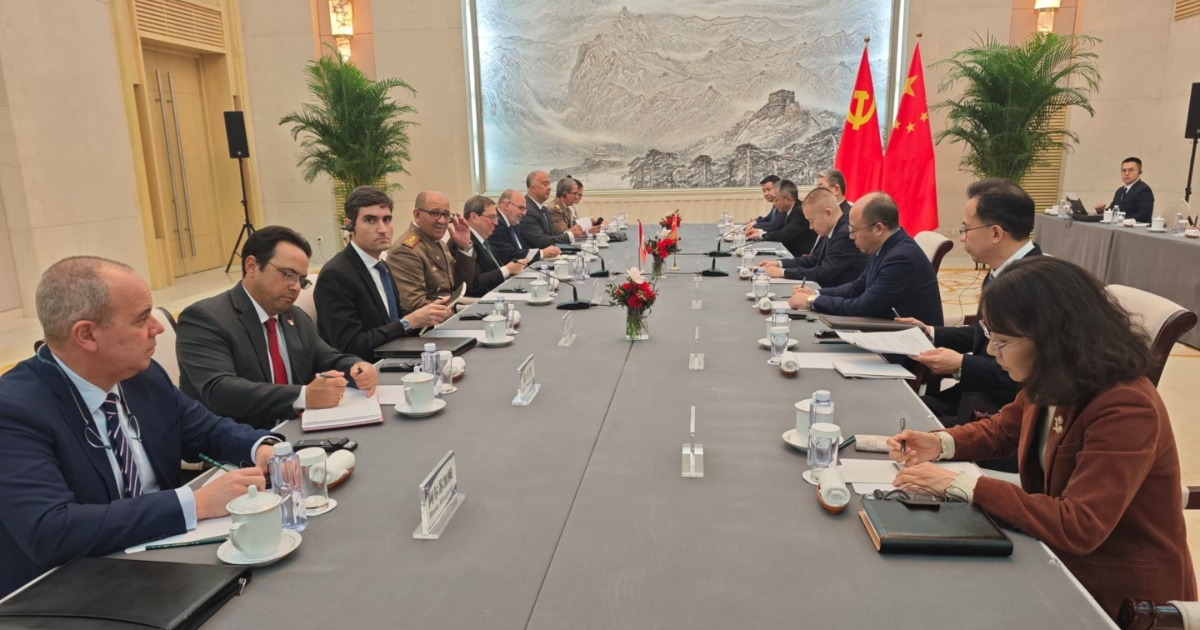
According to the same source, Havana is facing an "energy blockade" that has reportedly escalated in recent weeks. In this context, Foreign Minister Bruno Rodríguez announced on social media that he was in China as a "special envoy of the Communist Party of Cuba and the Government" to hold meetings with key figures in the Asian country.
Those messages were generated after others published the day before regarding a visit to Vietnam and a phone conversation with Russian Foreign Minister Sergey Lavrov.
According to images released by the regime official, the Cuban delegation included the Chief of the General Staff and member of the Political Bureau of the PCC, Army Corps General Roberto Legrá Sotolongo, as well as the First Deputy Minister of Foreign Trade, Carlos Luis Jorge.
The tour —according to EFE— was not announced in advance, unlike usual, and it was not specified whether it would continue to other allies or friendly countries.
In Vietnam, the report indicates that Rodríguez was received by the General Secretary of the Communist Party, To Lam, and the President of the Republic, Luong Cuong.
According to press reviews cited by EFE, To Lam reaffirmed support for Cuba and stated that his country is willing to help "within its capabilities."
Vietnam has established itself as Cuba's second-largest trading partner and the main investor from Asia-Pacific on the island, with an exchange of approximately 340 million dollars. Furthermore, the Vietnamese government donated 15 million dollars to Cuba in September.
During his stay in Vietnam, Rodríguez spoke on the phone with Lavrov, according to the report.
On social media, the Cuban chancellor expressed gratitude for the “solidarity” and the “historic and firm rejection” from Russia regarding Washington's policies against Cuba, and mentioned that they discussed current international and regional issues, without providing further details.
On its part, the Russian Foreign Ministry announced —according to EFE— that at the meeting reiterated Moscow's rejection of any pressure (economic or military) against Cuba and warned about the worsening humanitarian situation on the island.
The agency frames Russia as a political ally of Cuba since the Cold War and one of its main trading partners, with ties that both sides label as a "strategic partnership."
Recently, the Russian Minister of the Interior, Vladimir Kolokóltsev, visited Cuba, where he met with leader Miguel Díaz-Canel and Raúl Castro, while Havana emphasized the "enormous significance" of the trip.
In China, Rodríguez met with the director of the China International Development Cooperation Agency (CIDCA), Chen Xiaodong, and with the head of the International Liaison Department of the Central Committee of the Communist Party of China, Liu Haixing.
Chinese President Xi Jinping approved an emergency aid package for Cuba at the end of January, which includes 80 million dollars in financial assistance and a donation of 60,000 tons of rice, described as the largest announcement of its kind for the island in recent years. Furthermore, in 2024, China granted a donation of 100 million dollars to Cuba.
In diplomatic terms, the Chinese government publicly urged Washington last week to "immediately" end the blockade, sanctions, and any coercive measures against Cuba.
Although the Cuban regime has moved to activate support from its main partners, the question remains about what specific help it expects to obtain amid the situation described as a petroleum siege and increased pressures from the United States.
Filed under: