
Related videos:
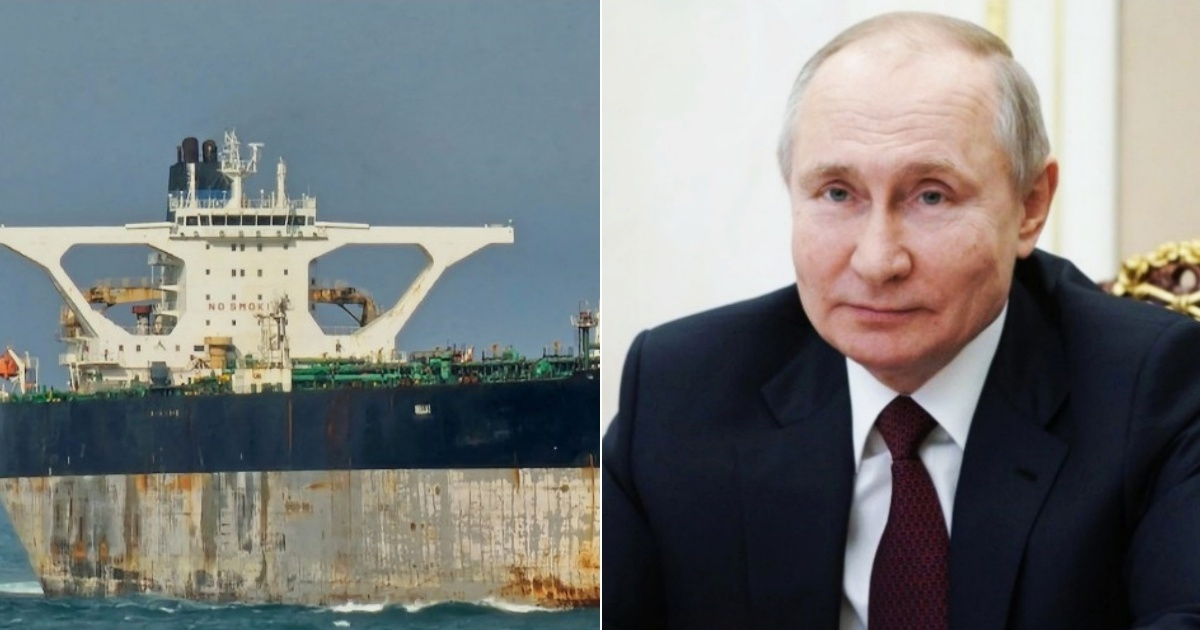
Amid the most severe energy crisis Cuba has faced in decades, the Russian Federation embassy in Havana confirmed that the Kremlin will soon send crude oil and refined products to the island in the form of "humanitarian aid," according to the Russian newspaper Izvestia.
The announcement formalizes what was already a widespread concern: the Caribbean country is on the brink of an energy collapse, lacking reliable oil allies and facing increasing pressure from sanctions imposed by the United States.
"The supply of crude oil and petroleum products from Russia to Cuba is expected in the near future as humanitarian aid," stated a Russian diplomat in Havana, as quoted by Izvestia.
This would be the first shipment since February 2025, when Moscow sent 100,000 tons of oil to the island through a state loan of 60 million dollars.
Although the volume of the new shipment has not been confirmed, experts warn that if it is similar to the previous amount, it would only be enough to keep the island functioning for 19 to 20 days. Cuba consumes an average of 37,000 barrels daily, and the current situation leaves no room for maneuver.
Kremlin Reaction and Risks for Moscow
Although the Kremlin has avoided directly confirming the operation, its spokesperson Dmitri Peskov hinted that there are smooth contacts with Havana.
“We do not wish for any kind of escalation. However, on the other hand, we currently have virtually no trade with the U.S.”, he stated.
"Here we would rely on a constructive dialogue and on solving existing problems through discussion," he added.
Chancellor Serguéi Lavrov also spoke out, condemning the "neocolonial pressure practices by the United States" and reaffirming Moscow's solidarity with the governments of Cuba and Venezuela.
However, the shipment is not without risks.
Izvestia warns that this assistance could entail economic and political costs for Russia, especially if the United States follows through on its threat to intercept Russian oil tankers at sea, as has already occurred with vessels coming from Iran and Venezuela.
Havana without fuel: crisis, blackouts, and canceled flights
The energy emergency has triggered a domino effect in key sectors of the Cuban economy. José Martí Airport in Havana has warned that it is running out of fuel for airplanes, which has led to the suspension of international flights by airlines such as Air Canada and WestJet.
Meanwhile, the power grid is experiencing prolonged blackouts, especially in the eastern provinces like Guantánamo and Santiago de Cuba. Authorities have mandated telecommuting, closed hotels, suspended classes, and are urging the population to “save on everything, including water and food.” In many neighborhoods, charging a mobile phone battery has become a luxury.
According to experts quoted by Izvestia, the fuel reserves on the island could run out in less than three months, and even sooner. “With the cancellation of some flights, Cuba may be able to cope for perhaps three more months."
"There are even worse forecasts: according to the Financial Times, there will be enough fuel reserves for 15 days," warned researcher Viktor Kheifets.
The new oil embargo of the United States
On January 29, 2026, President Donald Trump signed an executive order declaring Cuba an "unusual and extraordinary threat" to national security. The measure imposes a system of punitive tariffs on any country that sells or transports oil to the island.
Washington justifies the sanction by claiming that Havana "hosts transnational terrorist groups such as Hamas and Hezbollah" and allows "the deployment of military and intelligence capabilities from Russia and China."
Cuba has vehemently denied these accusations and described the executive order as a “brutal, fascist, and genocidal act of aggression,” in the words of President Miguel Díaz-Canel.
Chancellor Bruno Rodríguez warned that the country is facing "a harsh scenario that will demand great sacrifice," and denounced the criminalization of energy trade with the island.
Who can -or wants to- help Cuba?
With Venezuela sidelined after the collapse of Nicolás Maduro's government, and Mexico yielding to pressures from Washington, regional allies are in short supply.
The government of Claudia Sheinbaum suspended crude oil shipments in light of the tariff threat, although it has continued sending humanitarian aid on vessels from the Mexican Navy.
In theory, other BRICS members could offer support, especially now that Cuba was admitted as an official member in January 2025. However, their capabilities in the energy sector are limited.
Neither China nor India are net exporters of oil, and "it is unlikely that Brazil will jeopardize its trading relationship with the U.S. for Cuba," explains analyst Viktor Kheifets.
The current energy situation surpasses even the worst years of the Special Period. Izvestia describes the context as an "energy blockade," reflected in long lines to refuel gasoline, sales in dollars, and prices that exceed "twice the minimum wage."
Many hotels have closed, and tourism, one of the few sectors that supported the economy, has collapsed.
The Russian embassy in Havana stated that “unfortunately, power outages in Cuba are not a new phenomenon,” but acknowledged that the current situation is critical. Therefore, it advised Russian tourists to avoid traveling to the island and urged operators to suspend the sale of tour packages.
Filed under: