
Related videos:
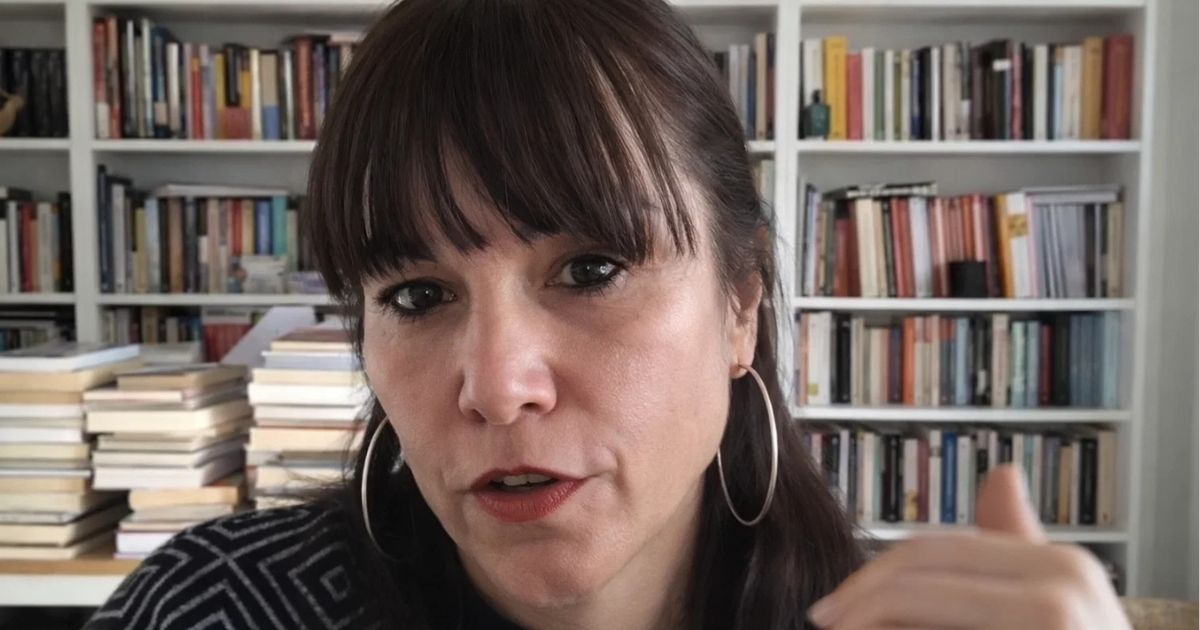
The Spanish political scientist Arantxa Tirado questioned on social media whether Cuba can be defined as a dictatorship and claimed that those who repeat that expression are unaware of the functioning of the island's political system.
“Does the people who repeat 'Cuba dictatorship' really know how the Cuban political model works? I would dare to say no,” wrote the doctor in International Relations and Latin American Studies on her X profile, while referencing a text published in 2021 in the magazine La Marea.
In that article titled A Democracy with Surnames, Tirado argued that “Cuba is not a dictatorship but a socialist democracy” and defended the notion that the country has its own system, different from the liberal one.
He also stated that on the island, the people exercise their sovereignty through a "free, equal, direct, and secret" vote to elect the delegates of the National Assembly of People's Power.
In the same text, he argued that, unlike capitalist democracies, in Cuba there is no separation of powers but rather a "unity of power," and that the Communist Party is the "superior leading political force of society and the State," within a model he defined as socialist and sovereign.
Furthermore, he argued that wanting to reform the system does not mean abolishing it, but rather adapting it.
In his most recent post, he added that "the U.S. has never fought against any dictatorship that is functional to its interests" and argued that Washington has brought down democratic governments to establish favorable dictatorships, citing examples such as Indonesia, Chile, Argentina, and Iran.
His statements sparked a strong reaction from users, many of whom identified themselves as Cubans.
The user @unknow_you_know replied: “Cuba is a dictatorship and I am Cuban. Are you going to give me classes too? Look up the concept of dictatorship and you'll see how perfectly it fits the Cuban model.”
On his part, @maikelmanuel stated: “I know it perfectly well, I lived in Cuba until I was 34 years old, and I never once voted for the president. You vote for the district delegate, a nobody from the neighborhood with no power to act or decide. Then starting from the municipality, they are the ones who decide who is on the ballot.”
The user @l_portilla wrote: “Too many acrobatics to convince us that there is 'good democracy' in Cuba. A democracy that is not free is not a democracy. That's all there is to it.”
From another perspective, @jorgemetal537 criticized what he described as external defense of the Cuban system and pointed out that it is easy to express opinions without living under that model.
Meanwhile, @RobertoLeOr questioned the economic restrictions on the island and asked if it is true that Cubans are prohibited from engaging in certain self-employment activities.
The responses reflect the contrast between Tirado's academic approach, which defends the uniqueness of the Cuban political model, and the personal experiences of those who claim to have lived under that system and label it as dictatorial.
Filed under: