
Related videos:
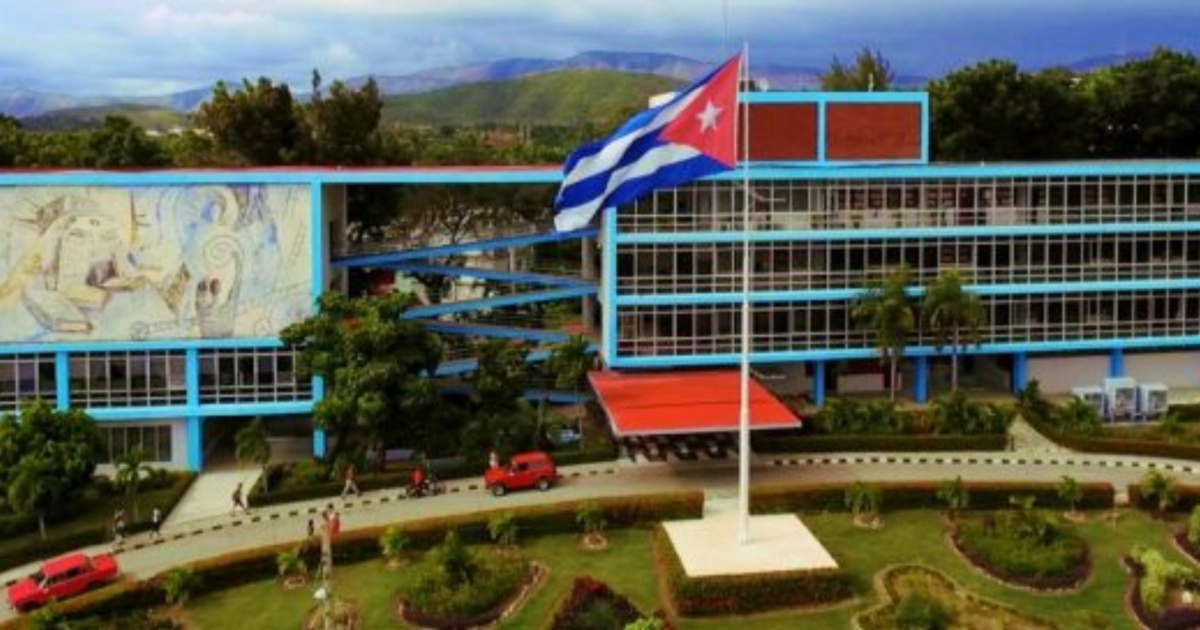
The University of Oriente announced last Friday that it will close its student residence and reduce enrollment to shift to a hybrid format amid the crisis in Cuba.
“Student residences will therefore be closed, except for international students and those who need it for various reasons. Each of the colleges is considering, with the guidance of lead professors and year faculty members, the alternatives that will be implemented for these cases. Additionally, all necessary arrangements are being made with local authorities to establish the deactivation of enrollment,” explained to local media Freider Santana Lescaille, First Vice-Rector of the institution.
The announcement comes amid a severe national energy crisis, exacerbated by the measures taken by the United States government that restrict the supply of oil to the island and have impacted the availability of fuel across all sectors.
Starting this Monday, February 16, the institution will transition to a hybrid format until operations can resume as usual, the executive added.
Also, the postgraduate activities, always with prior coordination, will also move to a hybrid format, he said.
"In this regard, we must take advantage of the benefits that technology offers, the WhatsApp groups that have been established, and the virtual platforms. We will only hold in-person meetings after Monday the 16th for a doctoral thesis presentation, as well as for master’s theses from three programs that were planned. For this, spaces with some form of alternative support will be used," he explained.
Santana Lescaille noted that some programs are "accelerating practical content, which is always a good time to connect the students with each of the job environments where the professional will eventually work."
University of Havana
At the beginning of February, the University of Havana had already announced a set of measures to adjust its academic and administrative operations in response to the energy deficit.
According to the official statement, the institution has decided to extend the hybrid mode to all Bachelor's and University Higher Technician (TSU) programs for a period of 30 days, starting from Friday, February 6.
The university administration explained that the measure responds to the guidelines issued by the ruler Miguel Díaz-Canel and the Ministry of Higher Education, and aims to ensure the continuity of teaching processes amid the fuel crisis.
As part of the adjustment, the University postponed the activities of the Congress Universidad 2026 and specified that each faculty will evaluate which activities will require in-person attendance. The EVEA platform will be the main digital space for accessing and managing academic and scientific materials.
The statement also outlines that scholarship students will receive specialized support until their transfer to their provinces can be organized, and that teaching and administrative staff will operate under semi-presential conditions, with designated groups to maintain the facilities.
The university emphasized the importance of maintaining communication between professors and students during this period and reiterated that the study programs must be adapted to the current conditions of the country.
Similarly, the University of Holguín has temporarily suspended its teaching activities due to the energy situation currently affecting the country, according to messages circulated among students in institutional groups.
Filed under: