
Related videos:
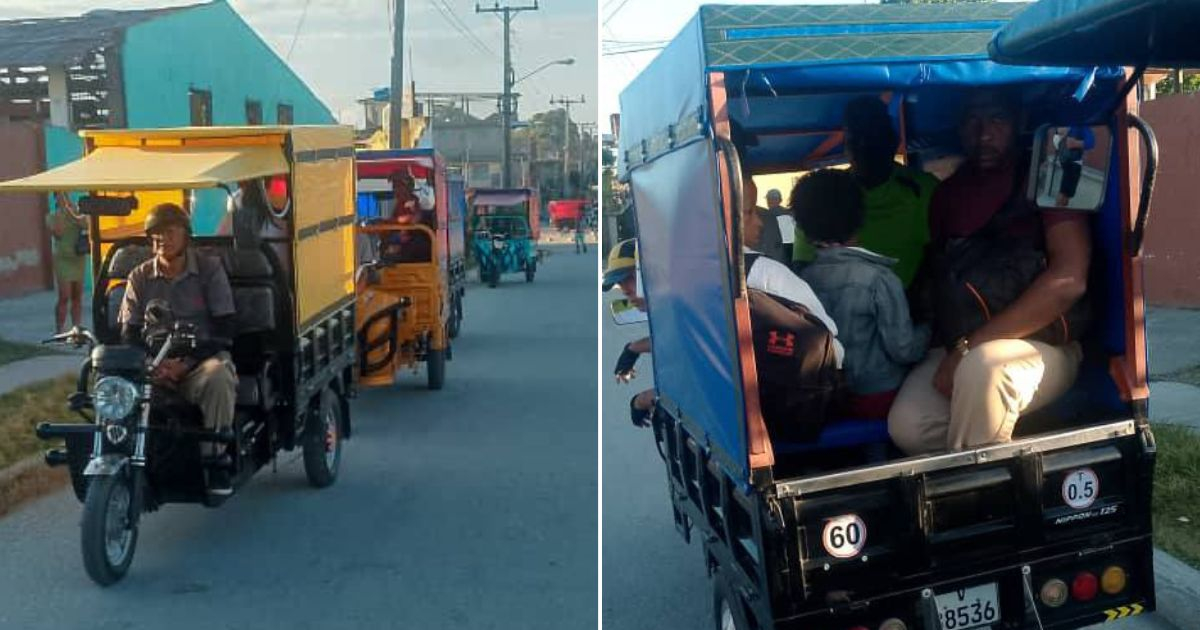
In the midst of one of the greatest energy crises Cuba has faced in its history, several owners of electric tricycles in Guantánamo began offering free rides to the public as a way to alleviate the serious transportation situation and in light of the regime's inability to solve this issue.
The initiative arises in a context marked by extreme fuel shortages, prolonged blackouts, and a drastic reduction in state transportation, which has left thousands of people struggling to get to their workplaces, hospitals, or to carry out basic errands.
Idaliena Diaz Casamayor announced this Monday on Facebook that in various locations throughout the eastern city, electric tricycle drivers decided to cover the service costs and transport residents affected by the lack of mobility free of charge.
The gesture occurs at a time when the energy crisis has paralyzed a large part of the country and forced the government to implement contingency measures.
The lack of petroleum has significantly reduced the circulation of taxis and buses, while prices in the informal market are skyrocketing.
In several provinces, transport routes have been reduced and the frequency of state services remains at a minimum.
According to the agency AFP, in this situation, electric tricycles have become a vital alternative.
Cheaper than traditional taxis and less reliant on fuel, these three-wheeled vehicles have gained prominence on the streets of various Cuban cities.
However, they are not free from difficulties either. The recharging of their batteries depends on an unstable electric system, subject to blackouts that in some areas exceed 10 to 12 hours daily due to a lack of fuel to power the thermoelectric plants.
The scene in Guantánamo reflects the forced adaptation of the population to a collapsed energy system.
While state infrastructure faces severe limitations, individual and community initiatives are striving to mitigate the impact on daily life.
With the country facing a scenario of scarcity that impacts both electricity generation and fuel supply, transportation has become one of the hardest-hit sectors, forcing thousands of Cubans to reinvent their daily routines in order to get around.
Filed under: