
Related videos:
The Venezuelan Episcopal Conference (CEV) stated that the events of January 3 have profoundly altered the political and social reality of the country, following the capture of Nicolás Maduro and his wife, Cilia Flores.
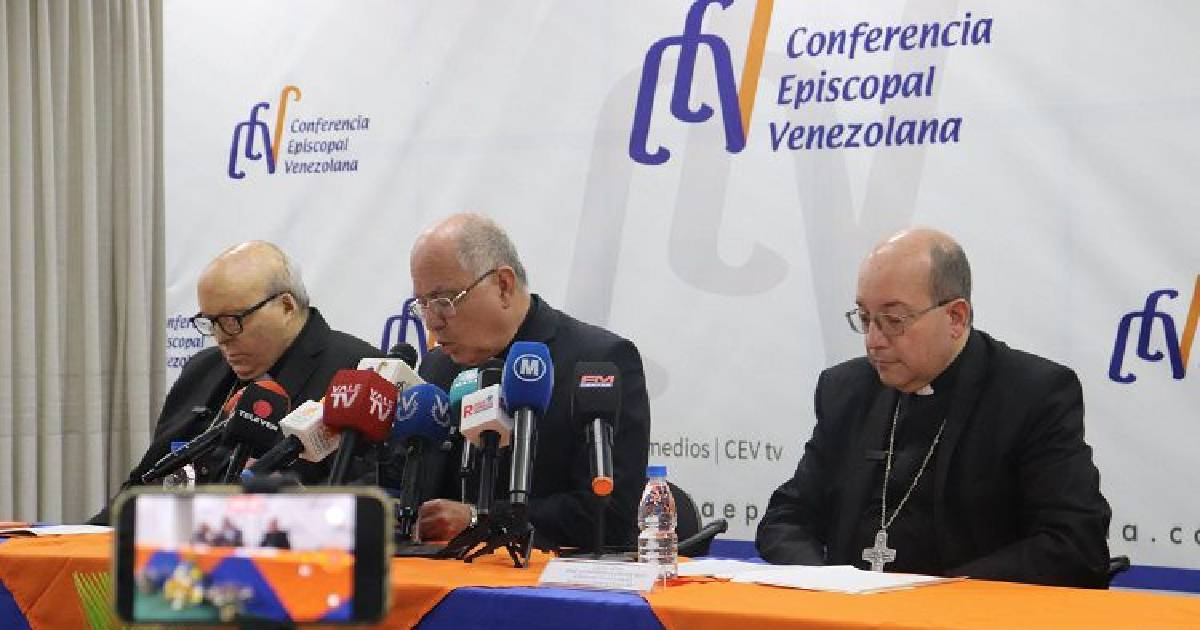
“The events of January third of this year have profoundly changed the political and social landscape,” emphasizes the pastoral exhortation of the CEV, presented to the press by the president of the organization, Monsignor Jesús González de Zárate, according to EFE.
The message, shared by the group on Facebook Vida Cristiana due to its relevance and similarities with the Cuban situation, adds that “the lives of Venezuelans have been characterized in recent years by widespread impoverishment; the lack of opportunities for fairly paid jobs; rampant and impune corruption; violations of human and civil rights,” the text states in one of its excerpts.
According to the bishops, this situation has led to an alarming deterioration in education, health, and public services, as well as personal, legal, and economic security. For these reasons, the members of the CEV "join in the pain of our people."
In light of such circumstances, the CEV also expressed its solidarity with political prisoners and their families, the millions of emigrants forced to leave the country, the elderly who are abandoned, the sick without access to medications, the youth without opportunities, and the workers who receive “miserable wages.”
"We echo the demands of broad sectors of the population that call for the repeal of laws that restrict fundamental rights enshrined in the National Constitution and International Agreements, especially those related to freedom of expression, free voting without coercion, and regulations that significantly limit the actions of civil organizations," the message states.
Questioning of the electoral process
In one of the most emphatic points of the message, the bishops assert that popular sovereignty was "disregarded" following the omission of the detailed publication of the results of the presidential elections held on July 28, 2024.
They also assert that the events that took place on January 3 "have profoundly changed the political and social landscape," and while some have interpreted them as a violation of international law, others believe they could pave the way towards the democratization of the country.
Demands and proposals
The Episcopal Conference echoed the cries of broad sectors demanding the repeal of laws that limit fundamental rights, particularly those related to freedom of expression, free voting, and the action of civil organizations.
"It is a positive sign the release of some prisoners due to their political stance or the free expression of their thoughts. Once again, we call for the full release of all political prisoners or those detained for unjust reasons."
"We closely follow the proposal and the process for the approval of a general amnesty law, which must necessarily be broad and inclusive, resulting from extensive consultations with all sectors of civil society. It would be an important step to embark on the long and difficult path of national reconciliation and the restoration of social and democratic coexistence."
He also described the release of some detained for political reasons as a "positive sign," but reiterated his call for the full liberation of all political prisoners and for the approval of a broad and inclusive amnesty law, resulting from national consensus.
According to the bishops, such a measure would be a key step towards advancing reconciliation and restoring democratic coexistence.
Pastoral commitment
The message concludes with the commitment of the Catholic Church in Venezuela to transform parishes, dioceses, and institutions into spaces for meeting, listening, and support, promoting reconciliation, forgiveness, and brotherhood.
The text has been shared in Cuban Catholic spaces due to the similarities that some observers find between the Venezuelan reality described by the bishops and the social and political situation in Cuba, even evoking the historic document from the Cuban episcopate of 1993, "Love Always Hopes."
Filed under: