
Related videos:
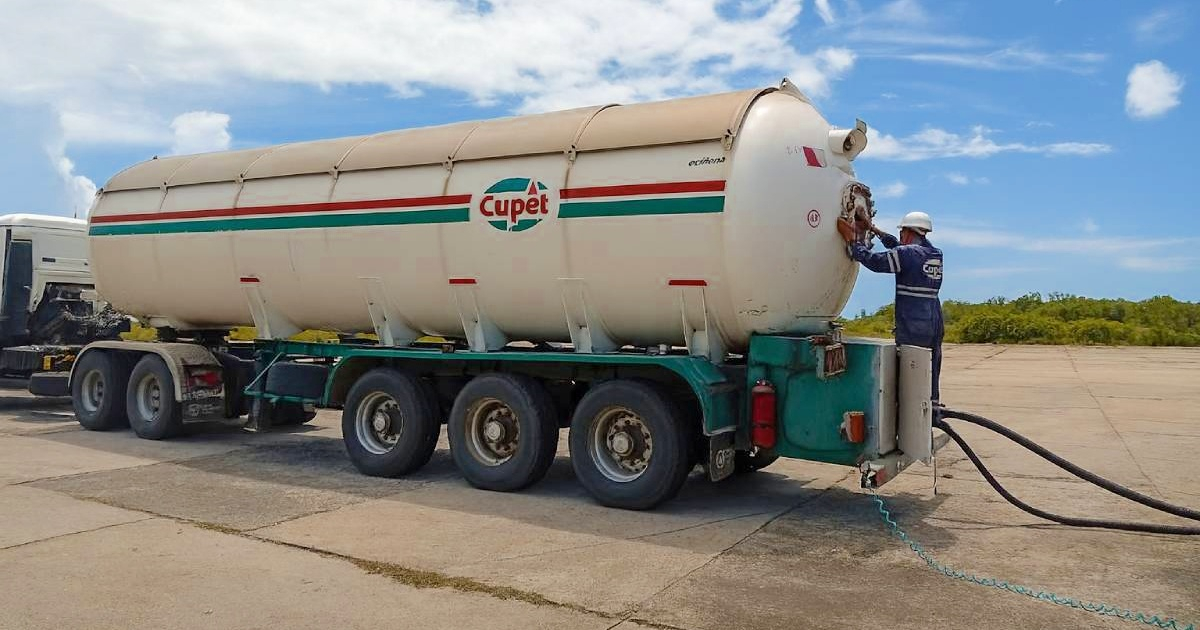
Amid prolonged power outages, transportation disruptions, and a chronic fuel shortage that has impacted both electricity generation and economic activity, limited shipments of fuel from the United States to Cuba have begun to be reported.
The operations, carried out under existing legal mechanisms, do not currently represent a structural solution to the crisis, but they do introduce a new element into the complex framework of sanctions, licenses, and bilateral trade.
Operations under private licenses and schemes
Sources from the private sector consulted by CiberCuba confirmed that transactions are currently being made under valid U.S. federal licenses.
It is not about direct agreements between governments, but rather about business schemes where authorized companies in the United States export the product, and on the Cuban side, state-sanctioned importing entities come into play to facilitate the operations.
According to specialists in international trade, the official export documentation typically lists the Cuban companies that manage the entry of fuel into the country.
However, these entities do not necessarily act as final consumers, but rather as intermediaries within the centralized commercial system of the island, which concentrates strategic imports under state control.
Reduced volumes in a context of structural scarcity
The volume of shipments so far has been described as limited.
Our source revealed that about 10 fuel tank containers have already arrived through this route and anticipated that more will arrive in the coming weeks.
Analysts agree that the amounts being managed are insufficient to reverse the widespread shortages affecting public transportation, the private sector, and electricity generation.
Cuba has been grappling with an energy deficit for months, exacerbated by a lack of foreign currency, a decrease in Venezuelan supply, and difficulties in accessing international financing.
The prolonged blackouts and interruptions in fuel supply have impacted both the state economy and small and medium-sized enterprises (mipymes) as well as self-employed workers.
Political debate and financial limits
The topic has sparked debate in South Florida and among sectors of the Cuban exile community.
For some, any commercial transaction involving fuel could end up indirectly benefiting the Cuban state apparatus, which controls the energy infrastructure and wholesale distribution channels.
Others argue that the involvement of private actors and the use of specific licenses create different economic spaces, independent of traditional government cooperation channels.
Beyond the political debate, the main challenge in expanding these operations is scale. Transporting large volumes of fuel requires suitable infrastructure, marine insurance, complex logistical contracts, and solid banking support.
In the context of sanctions and financial restrictions, these factors often increase the costs and risks for the companies involved.
For now, the process is progressing discreetly and on a small scale. It does not immediately change the reality of blackouts nor does it resolve the precariousness of the internal supply.
However, it sets a precedent: it demonstrates that, under certain legal and commercial conditions, limited energy flows can materialize between both countries.
The real impact will depend on the continuity of federal licenses, the financial viability of operations, political stability in Washington and Havana, and Cuba's ability to maintain payments in an environment of severe foreign currency shortages.
In a country where energy has become a critical factor for daily life and economic activity, even small changes can have significant implications.
Filed under: