
Related videos:
The United States released new images of the aerial transfer of a next-generation nuclear reactor, as part of its strategy to enhance energy security at military bases and modernize its nuclear infrastructure.
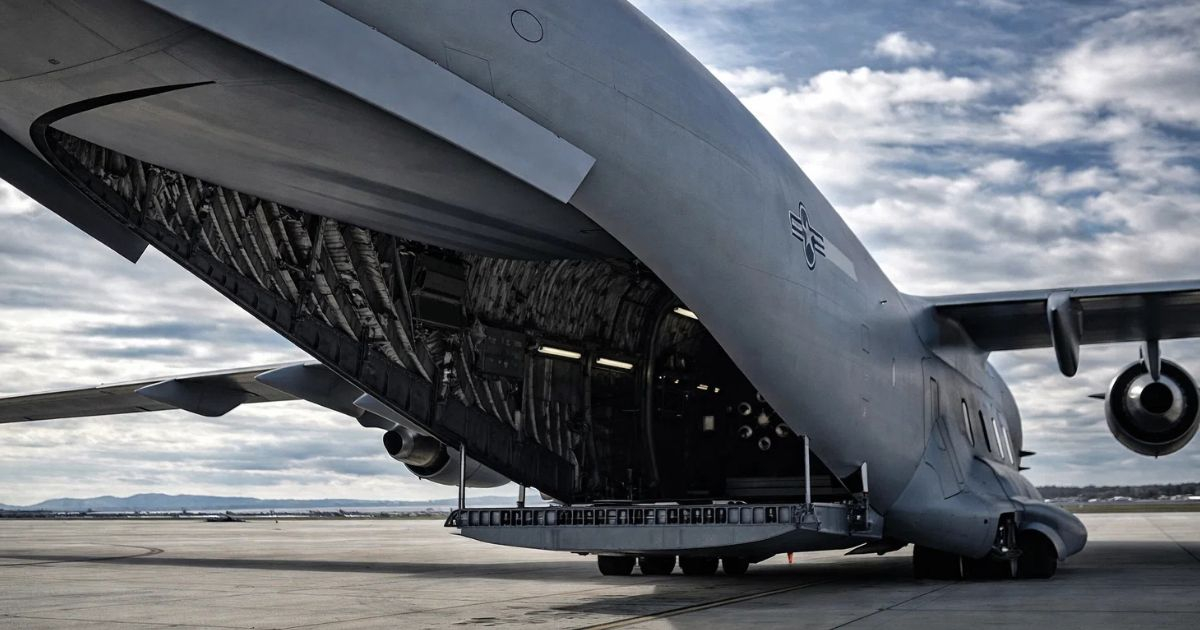
The Department of War and the Department of Energy posted videos on X showing the moment the five-megawatt Ward 250 reactor was loaded onto a C-17 Globemaster III aircraft at March Air Reserve Base in California, for its transfer to Hill Air Force Base in Utah.
It will subsequently be sent to the San Rafael Energy Laboratory, also in Utah, where it will undergo testing and evaluations.
The Ward 250 is a compact reactor that fits in the back of a C-17 and, in theory, could supply electricity to about 5,000 homes.
In the military sphere, its aim is to ensure energy autonomy at U.S. bases, reducing dependence on the civilian power grid and minimizing risks in the event of potential fuel supply interruptions.
U.S. authorities emphasized that this type of technology will enable the armed forces to operate without vulnerability to potential logistical disruptions in international scenarios.
They also emphasized that the development of advanced reactors is part of a broader strategy to strengthen national security.
On May 23, 2025, President Donald Trump signed four executive orders aimed at revitalizing the country's nuclear industry, reforming the reactor testing processes at the Department of Energy, reorganizing the Nuclear Regulatory Commission, and accelerating the deployment of advanced nuclear technologies for national security purposes.
Michael P. Duffey, Under Secretary of Defense for Acquisitions and Sustainment, stated that coordination between the Departments of Defense and Energy is crucial for advancing the president's nuclear priorities.
He pointed out that the future of warfare will be energy-intensive, with data centers for artificial intelligence, directed energy weapons, and space and cyber infrastructure, which means the Department of Defense will need to develop its own energy infrastructure.
For his part, Energy Secretary Chris Wright stated that the United States is aiming for a new phase of nuclear expansion based on innovation and speed.
He indicated that the goal is for three small reactors to be operational or functioning steadily before July 4, as part of what he described as the beginning of an American nuclear renaissance.
Filed under: