
Related videos:
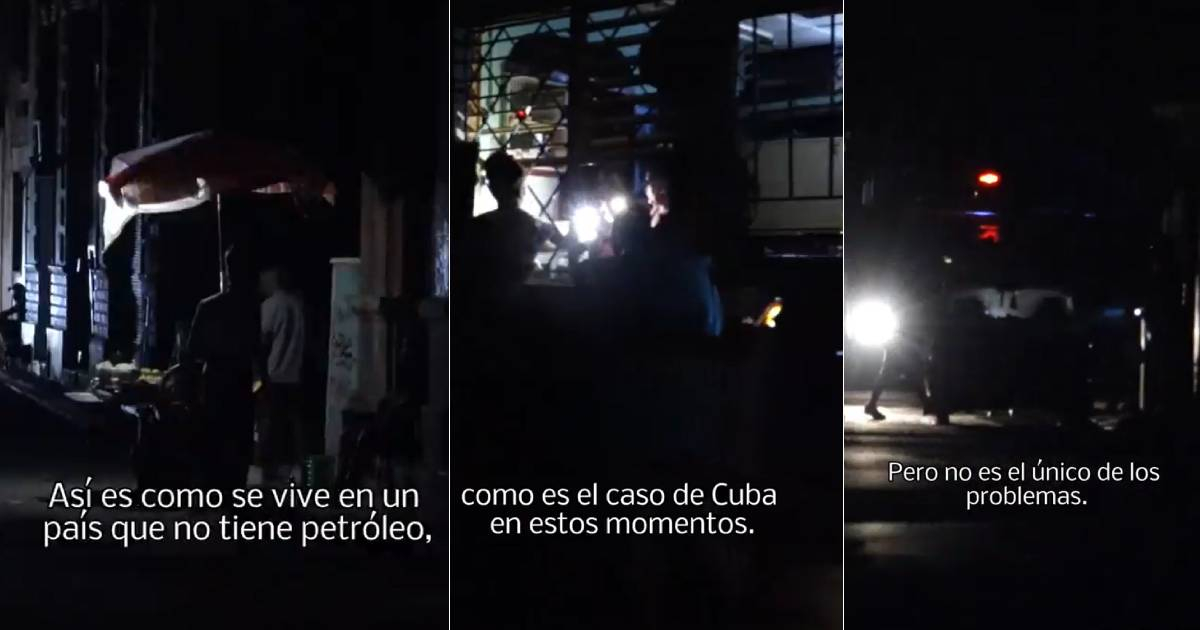
The image is not from a dystopian movie or a war-torn country. It is Havana at night. Fifth Avenue, one of the most important thoroughfares in the Cuban capital, appears almost engulfed in darkness. “As you can see, there is almost no light. The streetlights are off. Few cars pass by here,” describes a reporter from the EFE agency while touring the area.
The scene encapsulates what millions of Cubans experience daily: blackouts lasting over 20 hours, rationed fuel, garbage piling up in the streets, and a country that seems to be moving in slow motion. “Everything has come to a standstill,” states the journalist in the video, filmed in the heart of the capital.
The reporter explains that the lack of gasoline has worsened a crisis that has been ongoing for years, but now it feels different. The lines to buy gasoline, which used to last for days, have now extended to weeks. The service stations that sold diesel have closed. Garbage collection trucks are not operating due to lack of fuel. The accumulation of waste on sidewalks and corners has become a part of the urban landscape.
The situation is also affecting the electricity supply. Previously, power outages lasted around ten to fifteen hours; now they can exceed twenty hours in several areas of the country. Nights pass in darkness, with no fans, no refrigeration, and no way to preserve food in the midst of stifling heat.
According to reports from the agency AFP, around 30 hotels and resorts have temporarily closed due to low occupancy and fuel rationing. Several airlines have canceled routes or are making additional stops to refuel outside the island, due to the lack of fuel at Cuban airports.
“There was a risk that I wouldn’t be able to return because the airport says it doesn’t have enough fuel for the planes,” reported American tourist Liam Burnell to AFP. Other visitors have chosen to cut their trips short due to the uncertainty in finding transportation. “I only found one taxi,” shared Frenchman Frédéric Monnet, worried about running out of options to return to Havana.
But beyond the visitor who fears being stranded, the crisis directly impacts hundreds of thousands of Cubans. About 300,000 depend on tourism to survive. "The situation is critical, critical, critical," stated Juan Arteaga, a driver of one of the classic cars from the 1950s that usually take tourists around the capital. "When I run out of gas, I go home. What else can I do?"
The images from the EFE video depict almost deserted streets, streetlights turned off, and an atmosphere reminiscent of the worst moments of the energy crisis on the island. Without fuel, without transportation, and experiencing extended blackouts, everyday life becomes a constant obstacle course.
For many Cubans, the feeling is not just one of scarcity, but of paralysis. Navigating daily life—finding food, getting around the city, working—becomes an increasingly difficult challenge in a country where electricity and fuel have become unpredictable commodities.
Filed under: