
Related videos:
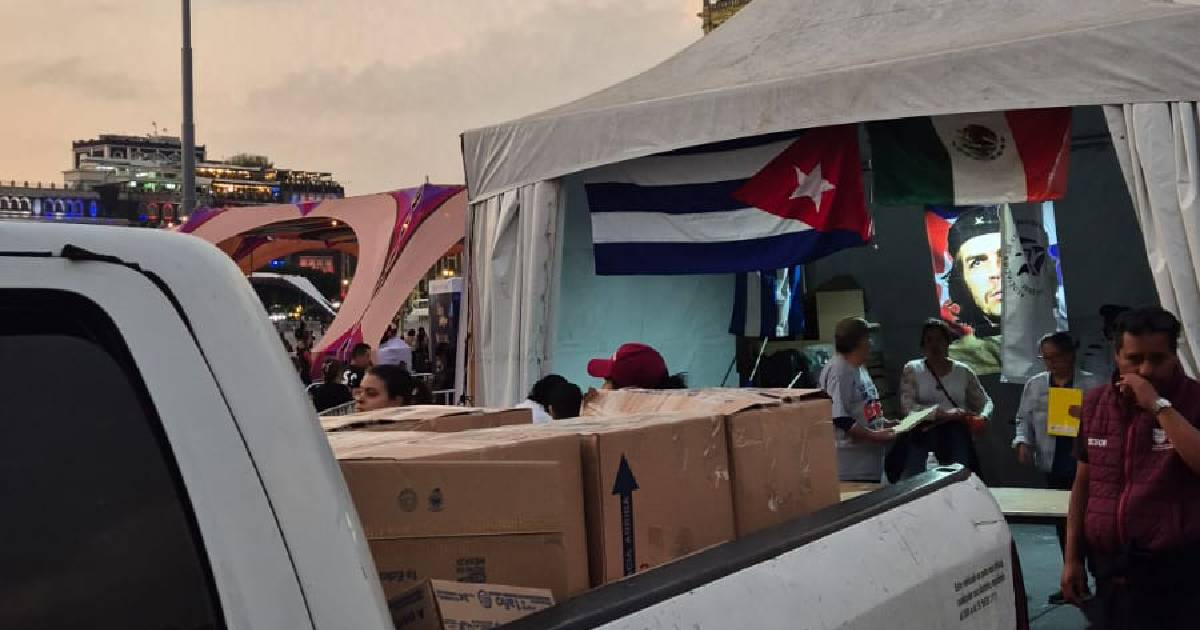
Faithful to their tradition of assisting the Cuban regime, activists and civil organizations from Mexico set up a humanitarian aid collection center this Thursday in the Zócalo of Mexico City, where citizens donate food, medicines, and basic items that will be sent to the island on a vessel from the Mexican Government.
The initiative, shared on social media, shows dozens of volunteers organizing donations under white tents in front of the National Palace, in the famous Zócalo.
According to the promoters, the goal is to support the Cuban population amid the growing scarcity of essential products and the heightened energy restrictions in recent weeks following Nicolás Maduro's fall in Venezuela and the pressures from the United States on Havana.
“Besides the 800 tons of humanitarian aid that Claudia Sheinbaum's government is sending to Cuba, Mexican civil society has also voluntarily joined in collecting food and essential items,” explained journalist Luis de Jesús on social media.
The Mexican government has committed to ensuring the maritime transportation of aid collected by activists, who have a long tradition of uncritical support for the regime, and who have, on numerous occasions, even replicated methods of repression, such as acts of repudiation against Cuban opponents in Mexico.
The campaign has also reached the university level. At the National Autonomous University of Mexico (UNAM), graduate students organized a food drive from February 17 to 20 in the areas of the Faculty of Political and Social Sciences. The youth have mainly requested donations of medications, serums, antibiotics, and first aid supplies.
"The Cuban people are facing a very serious humanitarian situation. We want to contribute in any way we can from here," said a student participating in the university collection.
The new shipment of humanitarian aid comes after the suspension of Venezuelan oil supplies to Cuba, a measure resulting from changes in regional energy policy and sanctions driven by the government of Donald Trump.
The lack of fuel has worsened blackouts, transportation shortages, and the collapse of hospitals on the island, and is part of the pressures from the White House to force a regime change in a country where the population has been suffering from repression, extreme poverty, and systemic crisis for decades, while the government maintains a double standard.
While the Cuban government attributes the crisis to the U.S. embargo, analysts agree that the root of the collapse lies in the exhaustion of the centralized economic model and the lack of structural reforms.
In contrast, Mexican civil solidarity has sought to channel aid "directly to the Cuban people," although human rights organizations have warned that some of the previous shipments ended up under the control of the regime and did not reach the families in need.
Mexico has a long tradition of supporting what is known as Fidel Castro's revolution, and its activists in that country rarely question the true origin of the crisis suffered by the population.
Filed under: