
Related videos:
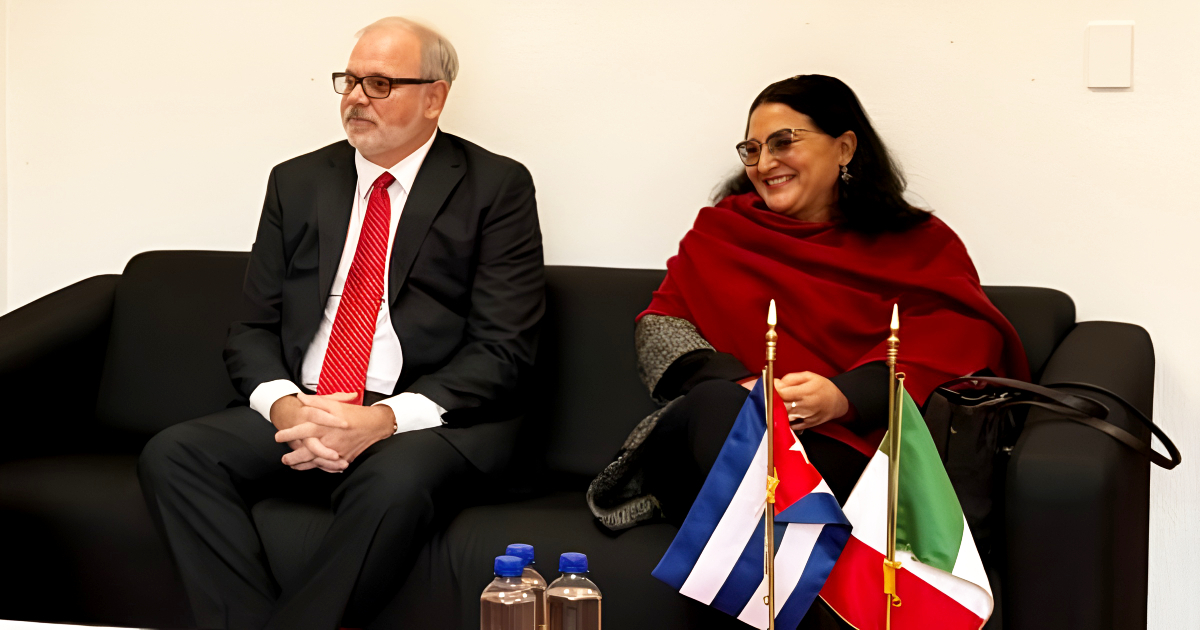
The appointment of Johana Tablada de la Torre as ambassador and deputy chief of mission in Mexico —along with her husband, Eugenio Martínez Enríquez, appointed as ambassador and chief of mission— is not just another bureaucratic move within the Ministry of Foreign Affairs (MINREX). It is a political signal.
Mexico has become one of the most strategic diplomatic hubs for Havana in recent years, especially following the weakening of the Caracas–Havana energy axis.
With Venezuela unable to sustain the oil volumes that bolstered the Cuban economy for over a decade, the regime sought to diversify its support.
In that map, Mexico emerged as a partner with potential: geographical proximity, political affinity under the government of Andrés Manuel López Obrador (AMLO) and sufficient oil capacity to alleviate, at least partially, the island's energy crisis.
During the 2022–2024 cycle, the bilateral relationship reached its most visible moment in decades. Health agreements were signed, hundreds of Cuban doctors were deployed in Mexican territory, the use of the Abdala vaccine was authorized, and shipments of crude oil and derivatives were consolidated through trading schemes defended by the Mexican government as regular contracts.
On a symbolic level, the bond was strengthened through presidential visits—including that of AMLO during the explosion at the Saratoga Hotel, which sparked much controversy—awards, and a shared narrative of sovereignty in the face of U.S. sanctions.
In that context of expansion, the sending of two high-profile diplomats to the embassy in Mexico could be interpreted as a bet to consolidate a strategic alliance. However, the situation has changed.
Since 2025, Washington's pressure on countries that maintain energy cooperation or hire Cuban medical missions has intensified.
The warnings and restrictions associated with the regime's "services export" program have increased the political and reputational cost of these agreements. Meanwhile, the internal debate in Mexico regarding transparency and contractual conditions has gained traction and placed the management of President Claudia Sheinbaum under scrutiny.
The result is not a formal break in the relationship, but rather a shift in tone and approach. Mexico continues to publicly defend its ties with Havana and has reiterated its commitment to sending humanitarian aid during critical moments.
However, the material momentum from the previous stage is now facing more visible limits. Efforts to sustain energy flows occur in a more sensitive environment, where every decision has diplomatic implications with the United States.
It is in this context that Tablada de la Torre and her husband, a diplomat experienced in the Cuban regime's relations with Latin American countries, arrive. For her part, the career of the current deputy head of the mission in Mexico has been characterized by a combative profile.
As Deputy Director General for the United States, Tablada de la Torre became one of the most active voices of the regime in response to Washington, challenging statements from U.S. diplomats, defending the official narrative regarding the internal crisis, and denouncing the embargo as a central cause of the country's economic difficulties.
His career also includes experience in Washington and Europe, and a continual alignment with the ideological discourse of Havana, which has led him to uphold the regime's most cynical and manipulative arguments with a boldness bordering on audacity.
Precisely, this profile aligns with a diplomacy that, in recent years, has prioritized narrative defense in confrontation scenarios.
The double appointment at the Mexican embassy—an unusual practice in formal terms, as there can only be one accredited head of mission—underscores the strategic importance that the regime attributes to this location. Mexico is not just another post: it is a key node in migration, energy, health, and financial matters.
But the mission that Tablada de la Torre and Martínez Enríquez face does not seem to be one of expanding a thriving relationship, but rather to prevent it from wearing thin.
If during the peak of the bilateral approach cooperation was advancing in concrete terms—deployed doctors, signed agreements, increasing trade flows—today the challenge is to sustain what has already been achieved in a less favorable environment.
The so-called "revolutionary diplomacy" is once again operating in familiar territory: insisting on the discourse of solidarity (a specialty of the regime's mendicant diplomats), denouncing sanctions (the tearful aspect of any representative of the dictatorship), and appealing to the principle of non-intervention as a political shield for a "sovereignty" that is questionable given the contemporary developments in International Law.
However, the regional and hemispheric context limits the ability to transform that narrative into substantial increases in material cooperation. Mexico faces its own internal and external balances, and the pressure from the United States introduces variables that were not present with the same intensity in previous years.
The appointment of Tablada de la Torre, rather than symbolizing a diplomatic offensive, can be interpreted as a containment operation. Havana is sending its most trusted figures to a position where the margins are narrowing. The priority no longer seems to be opening new channels, but rather keeping the existing ones open.
In short, the Cuban embassy in Mexico becomes a barometer of the new phase of bilateral relations: less expansive and more defensive. In this context, the task of its main representatives will not be to secure a growing alliance, but to manage a relationship subjected to external pressures and structural limits beyond the control of rhetoric.
Diplomacy can buy time. However, as the recent experience of the regime following the loss of Venezuelan support shows, talk does not replace barrels.
Filed under: