
Related videos:
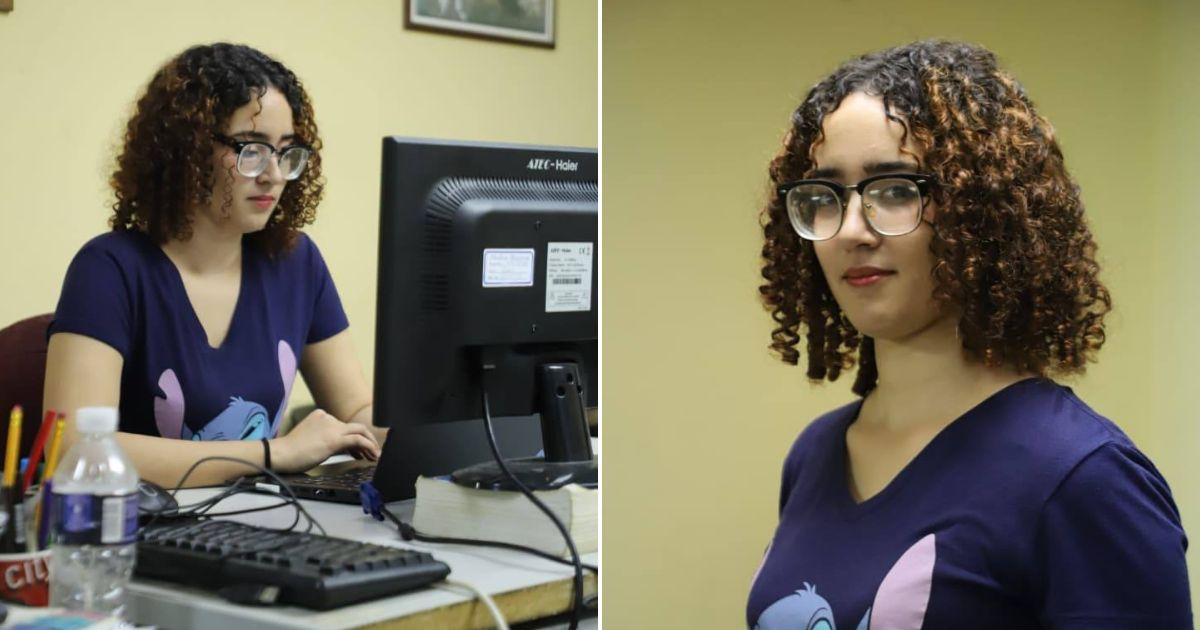
Ariadna Velázquez Rey, a fourth-year Computer Science student at the University of Havana, is trying to complete her thesis on artificial intelligence in a context marked by prolonged blackouts, poor internet connectivity, and transportation challenges.
Her story, which is echoed throughout the country, was shared on Facebook by the official profile Naturaleza Secreta, which recounted how the young woman lost her regular access to her faculty following the temporary closure of the university due to the fuel crisis.
Although the official site presents its case as a sacrifice and undoubtedly deserving of admiration, the truth is that it also inadvertently exposes the level of precariousness in which university life in Cuba is currently unfolding, where researching artificial intelligence depends on a few hours of coinciding electricity and internet connection.
Velázquez, a resident of the Havana municipality of El Cotorro, is facing serious complications in getting to the university campus, a situation created by the regime that has put the young woman in a difficult position.
Public transportation is unreliable, and private vehicles are expensive.
In their home, the frequent power outages without a fixed schedule and the poor quality of the connection further limit their ability to progress in the research.
His project tackles one of the current challenges in artificial intelligence: achieving a greater understanding of human requests by systems, rather than merely reproducing statistically probable information.
The student is also interested in the preservation of cultural identity in digital environments, in light of the predominance of large volumes of data from developed countries.
When electricity and connection coincide, you only have two or three hours to program, validate experiments, and write up results, a timeframe that he considers insufficient for work of this magnitude.
To continue, connect to available wireless networks at the university whenever you manage to arrive.
The case highlights the limitations faced by university students amidst the energy crisis, where even research related to cutting-edge technologies relies on basic conditions such as stable electricity and continuous internet access.
Filed under: