
Related videos:
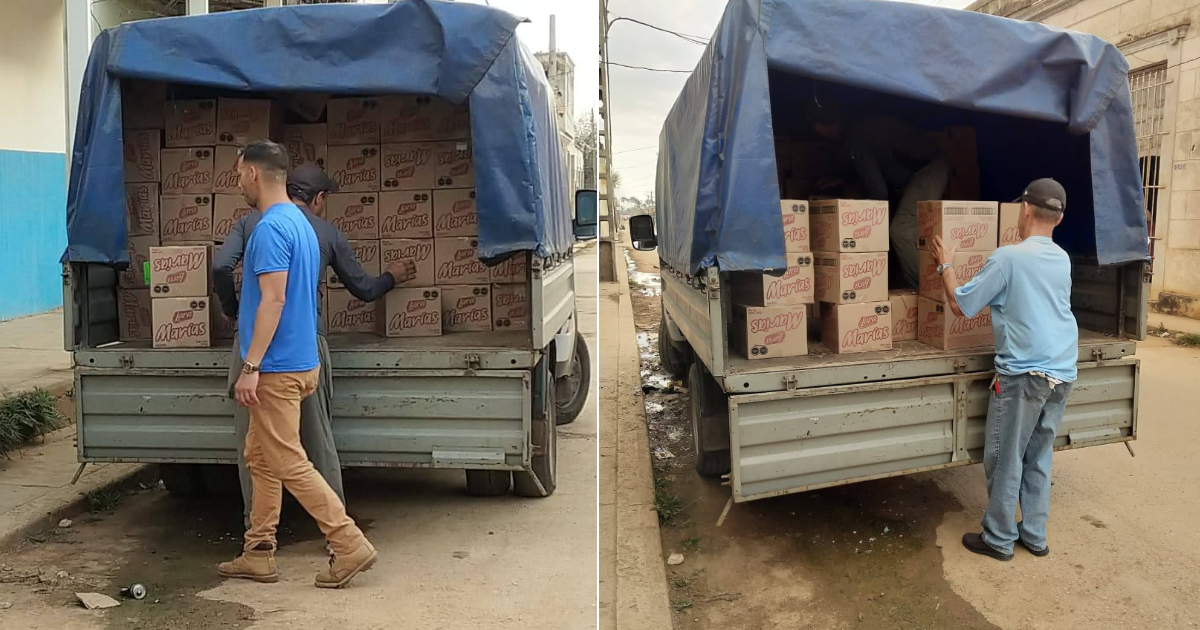
A donation of food from Mexico was received in Artemisa, as reported by Telecentro ARTV on Facebook, detailing the arrival of rice, cookies, and cans of sardines at the Base Business Unit (UEB) Wholesale San Antonio de los Baños 2, with initial distribution to municipalities such as Güira de Melena, as shown in the Facebook post.
The information comes days after two ships from the Mexican Navy arrived at the port of Havana with 814 tons of food and other supplies, including rice, beans, and powdered milk, as part of a humanitarian aid shipment. Subsequently, the Ministry of Domestic Trade indicated that the products would be distributed in Artemisa, Havana, Mayabeque, and Isla de la Juventud, prioritizing children aged 0 to 13, pregnant women, seniors over 65, and people in vulnerable situations, as detailed in a report on the scope of the donation.
When the distribution began in Mayabeque, the clarification that the benefit would be aimed at “children with low weight and height, pregnant women, and adults over 65 years old” raised questions about whether all minors between 0 and 13 years old would be included or only specific cases, which sparked a broad public debate reflected in the reactions that emerged following the start of the distribution in that province.
In Artemisa, the local telecenter's publication has sparked a similar reaction. "Well, didn't they say there was also milk, meat, beans, and hygiene products?" wrote one user. Another added, "Just like that, the donation list shrank."
Doubts about the fate of the remaining products are echoed in dozens of comments: “What happened to the powdered milk?”, “What about the beans, cleaning supplies, and other items that were part of the aid?”, “Mexico donated hygiene and cleaning products, milk, beans, where are those products…?” and “But there were more items, what about the milk and oil, beans, and other things that were included? Cleaning supplies were also included.”
Several internet users claim that they have not received the announced products in their municipalities. “I am from San Antonio de los Baños, and nothing has arrived here,” “I am from Güira, I haven't even seen the label on the cans,” “Nothing has arrived at my store at all,” and “I am from Guanajay, and nothing has arrived for anyone here.”
Others describe partial shipments: “In Güira de Melena, they gave two pounds of rice and nothing else,” “Well, in my store, they only gave me the cookies,” and “We did receive rice, but where are the cans and the cookies?”
The selection of beneficiaries has also caused dissatisfaction. "What I understand is that it's for children aged 0 to 13 and the most vulnerable, while the others receive nothing," commented a user.
Another person expressed: "Donations for ages 0 to 13 and for those over 65, what about the rest of us? I believe all Cubans have needs; for instance, I live with two girls aged 15 and 16, and I'm 57. So, this isn't for everyone; it's not fair. We are all Cubans."
There are also suspicions about the final destination of some of the supplies. "That's for the dollar stores, what a lack of respect," wrote one internet user. Another stated: "Well-stocked USD stores, rush to keep fattening the government with dollars."
Amid the ongoing shortage of food and basic products, the comments reflect a notable distrust in the distribution process. "I hope everything that was donated reaches the people; I hope it doesn't take another route," one person said. Another was more straightforward: "It's all about stealing, stealing, and stealing so many hands before it reaches the end."
While the arrival of over 800 tons of food destined for various territories, with priority given to vulnerable sectors, was announced, many citizens in Artemisa claim they do not see this volume reflected in their deliveries. In a context of widespread difficulties in accessing basic products, the most frequent question echoed in the comments encapsulates the dissatisfaction: “What about the others? Don’t they eat?”
Beyond the specific distribution, there is also a feeling of exhaustion regarding the constant reliance on external aid. "You can't live on donations," wrote one internet user. Another commented: "We are ashamed to be living off handouts." In a similar vein, a user pointed out: "How long will the handouts last? We want jobs and to earn what we sweat for."
Amidst reproaches about the lack of transparency and criticisms of internal management, several comments converge on one idea: aid may provide temporary relief, but it does not address the underlying issue in a country where scarcity has become part of daily routine.
Filed under: