
Related videos:
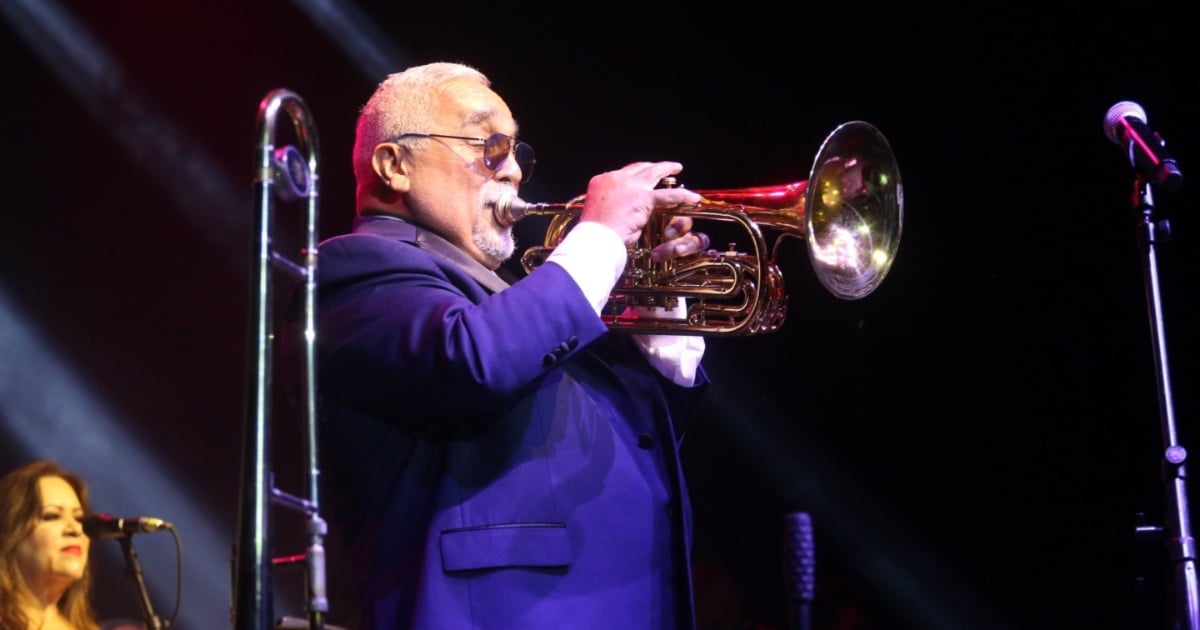
The legendary musician Willie Colón passed away this Saturday at the age of 75, his family confirmed through a statement published on their social media, in which they assured that the artist "departed in peace" in the morning, "surrounded by his beloved family."
So far, the cause of death has not been officially reported. Reports indicate that Colón was receiving medical attention for respiratory complications.
Willie Colón, born in 1950, was one of the most influential musicians in the history of salsa, a trombonist, composer, producer, and a key figure in the internationalization of the genre from New York to Latin America and the world.
Born in the Bronx, New York, of Puerto Rican descent, Colón grew up at the cultural crossroads of jazz, Cuban son, and Caribbean music that shaped the Latin diaspora in the United States.
At the age of 17, he signed with Fania Records, the epicenter of the salsa boom of the 60s and 70s, and quickly became one of its most prominent artists.
The harsh sound of the trombone and the alliance with Héctor Lavoe
Colón revolutionized salsa by placing the trombone as the leading instrument, giving the genre a more aggressive and urban sound, known as "salsa dura."
His first great phase was marked by his historic collaboration with Héctor Lavoe, with whom he recorded iconic albums such as El Malo (1967), The Hustler (1968), and Cosa Nuestra (1969).
Together, they defined the sound of New York salsa, with lyrics that captured life in the Latino neighborhoods, cultural pride, and social tensions. Songs like "Aguanilé," "Che Che Colé," and "Calle Luna, Calle Sol" became classics in the salsa repertoire.
In the 1970s, Colón took an artistic turn by teaming up with the Panamanian Rubén Blades. This collaboration produced essential albums such as Metiendo Mano! (1977) and, above all, Siembra (1978), which is regarded as one of the most important albums in the history of salsa and one of the best-selling in the genre.
Themes like "Pedro Navaja" and "Plástico" expanded the reach of salsa, incorporating social narratives, political critique, and more complex structures, thus establishing Colón not only as a musician but also as a cultural architect of the salsa movement.
Beyond the music
In addition to his artistic career, Willie Colón ventured into politics and community activism in New York.
He was an influential voice within the Latin community and participated in social initiatives related to education, civil rights, and cultural representation.
His legacy includes dozens of productions, collaborations with key figures in Latin music, and a central role in establishing salsa as a global phenomenon. With his trombone and artistic vision, he helped transform a musical movement into a cultural identity shared by millions.
Willie Colón is remembered as a pioneer, an innovator, and one of the undisputed legends of salsa.
Filed under: