
Related videos:
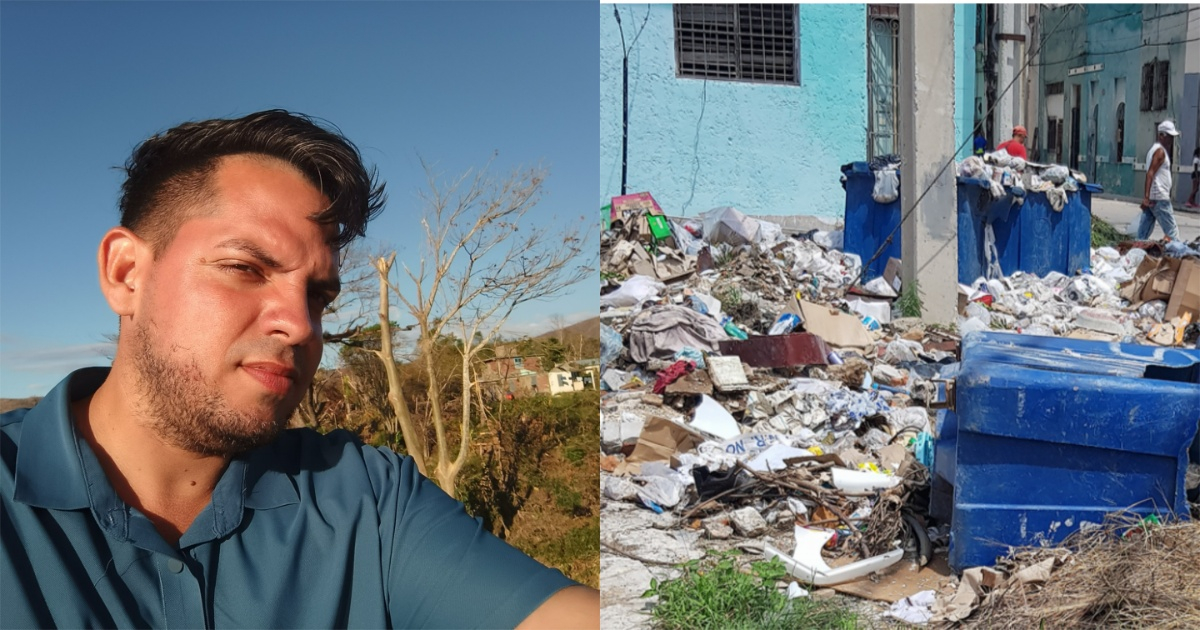
The official journalist Lázaro Manuel Alonso criticized the waste management in Havana and called for “a new strategy to prevent waste from growing in corners like mountains.”
In response to a post from the state monopoly ETECSA, which blames the population for the burning of trash near its technical equipment, Alonso opined that, although the incident is “unfortunate and irresponsible,” the issue goes beyond that.
"It requires a new strategy so that waste does not pile up in the corners like mountains without being collected. If it was already inadequate before, imagine now in a context of fuel shortages," he said.
The official spokesperson believes that "we need to explore other ways to manage waste collection and its final destination. It is the responsibility of decision-makers to build that 'other way' together with the communities."
"Communal efforts haven't happened and won't happen every day; yesterday due to diminished resources and today with the added challenge of oil. There are local projects that have managed to transform their surroundings. It is up to the authorities to encourage these few to multiply for the well-being of the people and the cleanliness of our neighborhoods," he added.
Trash in Havana
The increasing accumulation of garbage in Havana has made headlines in the international press, after Reuters published a report on the health crisis affecting the Cuban capital.
Mountains of waste are piled up in corners and avenues, emitting a strong smell of decay, swarming with flies and increasingly visible rats.
Cited data indicates that only 44 of the city's 106 collection trucks are operational due to fuel shortages, which has dramatically slowed down the service.
"More than 10 days have passed without a garbage truck," stated a resident of Havana, reflecting the citizens' discontent.
The Cuban regime attributes the waste crisis to the tightening of U.S. sanctions and the decline in oil supply—following the suspension of shipments from Venezuela and Mexico—yet the reality is that the issue of solid waste in Cuba is not a recent phenomenon.
For at least two decades, structural inefficiency, lack of investment in infrastructure, and the obsolescence of the vehicle fleet have hindered a sustainable solution to the problem.
The accumulation of garbage directly impacts the quality of life for Cubans, deteriorates the urban landscape, and worsens unsanitary conditions in densely populated neighborhoods.
Experts have warned for years that the proliferation of vectors such as mosquitoes and rodents increases the risk of contagious diseases, including dengue and leptospirosis.
While the United Nations expresses concern over the humanitarian situation on the island, thousands of Cubans continue to navigate piles of garbage in their daily lives, amidst a crisis that reveals long-standing structural deficiencies plaguing the country.
Filed under: