
Related videos:
The case of the Santiago father who reported a shortage of medications at the "La Colonia" Children's Hospital has taken a turn that raises more questions than answers.
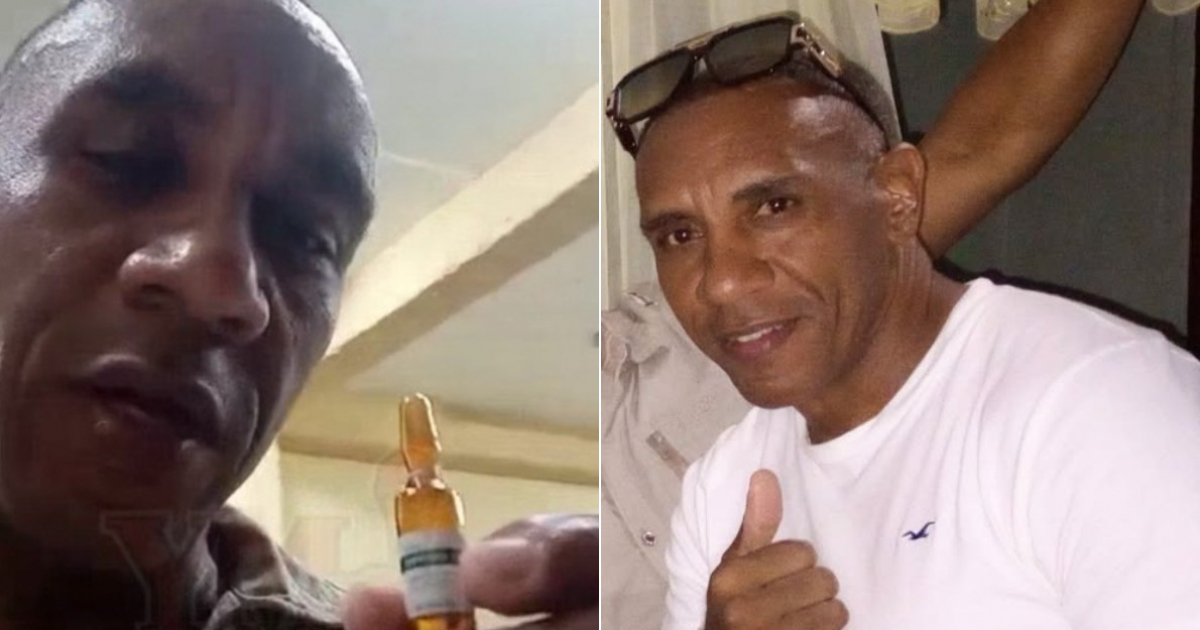
Just 48 hours after publicly exposing the shortage of supplies to care for his ill daughter, Juan Matute Martínez completely changed his story and claimed in a message to independent journalist Yosmany Mayeta that the video initially circulated "is from artificial intelligence."
The revelation was made by Mayeta himself, who had originally posted the complaint.
"Just two days ago, Juan Matute Martínez, a father from Santiago, publicly denounced from the 'La Colonia Española' Children’s Hospital the lack of medications to care for his sick daughter," Mayeta recalled.
In the initial video, sent directly from the father's own profile, he appeared visibly distressed inside the hospital, where his daughter was suffering from fever, headaches, and nausea.
"Look here, I had to go out and buy a dipyrone on the street, so they could reduce a child's fever in the hospital," he said.
He also reported the lack of diagnostic tools to determine the cause of the children's fevers and even issued a warning that is especially relevant today: "If you want, then have gasoline, have everything you need to come to my house to ask me why I made this video."
However, two days later, the same father sent a message with a completely different tone. According to Mayeta, he claimed that the published video "is from artificial intelligence," that he "trusts the revolution," in "the party and the government," and that "the Cuban healthcare system is the best in the world."
Mayeta raised the central question: "How does a father, distressed over his daughter's health, go from reporting a shortage of medications to claiming that it was all artificial intelligence in just 48 hours?"
And he emphasized: "The video exists. It was sent from his own profile. It showed his face. It showed the hospital. It showed his desperation. And now a message filled with political slogans appears."
The journalist was emphatic: "Our page does not create videos with artificial intelligence. We publish what citizens send us. And when someone changes their story after facing pressure and threats from the regime, we report that too."
The final sentence summarizes the seriousness of the situation: "Beyond slogans, what matters is a sick girl… and a father who first spoke with pain, and then wrote with fear."
The shift in discourse occurs in a context where publicly denouncing the shortcomings of the system can have consequences.
In Cuba, questioning state management, even when it concerns the health of a child, is not an act free of risks. When a parent states in their own video that they might be sought after for speaking out, and shortly thereafter retracts their comments with praise for the very system they criticized, doubts are inevitable.
The backdrop is a deep health crisis. In recent years, reports have multiplied about hospitals lacking essential medications, without reagents for clinical tests, and with deteriorating facilities.
The shortage of foreign currency for importing supplies, along with structural problems in management and procurement, has left hospitals without essential resources. In a pediatric hospital, the lack of antipyretics and diagnostic tools directly jeopardizes the care of children with potentially serious conditions.
While the official discourse insists on the strength of the system, testimonies like that of Juan Matute - before his retraction - reveal a reality marked by severe shortages. The fact that a father has to go out to buy a vial to reduce the fever of his hospitalized daughter is a striking portrait of deterioration.
The change of version does not erase the images or the initial words. Rather, it adds another layer to the problem: fear. In an environment where speaking out can have consequences, silence—or forced retraction—becomes part of the same drama experienced by patients and their families.
Filed under: